
Ranoji Rao Scindia: the general who changed Malwa
Ranoji Rao Scindia (c. 1700–1745) was the founder of the Scindia dynasty - known in Marathi as the Shinde gharana. His ancestors had served as shiledars (cavalrymen) under the Bahmani Sultanate. As a young man, Ranoji entered the service of Peshwa Balaji Vishwanath. A Peshwa diplomat named Ramchandrababa Sukhtankar recognised his abilities and had him appointed as the personal attendant of the Peshwa's son, Bajirao I.
After Bajirao I became Peshwa, Ranoji's position rose quickly. He led Maratha forces in campaigns at Palkhed, Bundelkhand, Mandsaur, and Vasai. In 1726 he was entrusted with Maratha conquests in Malwa. By 1731, Peshwa Bajirao formally appointed him governor of Malwa. He made Ujjain his capital.
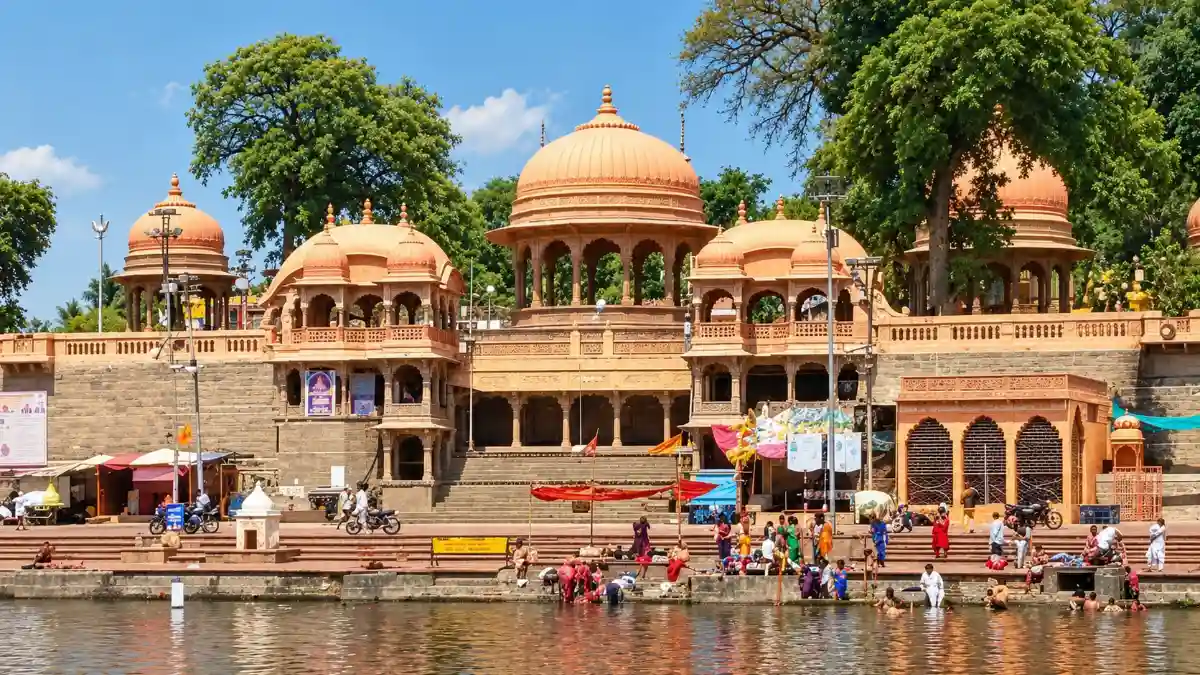
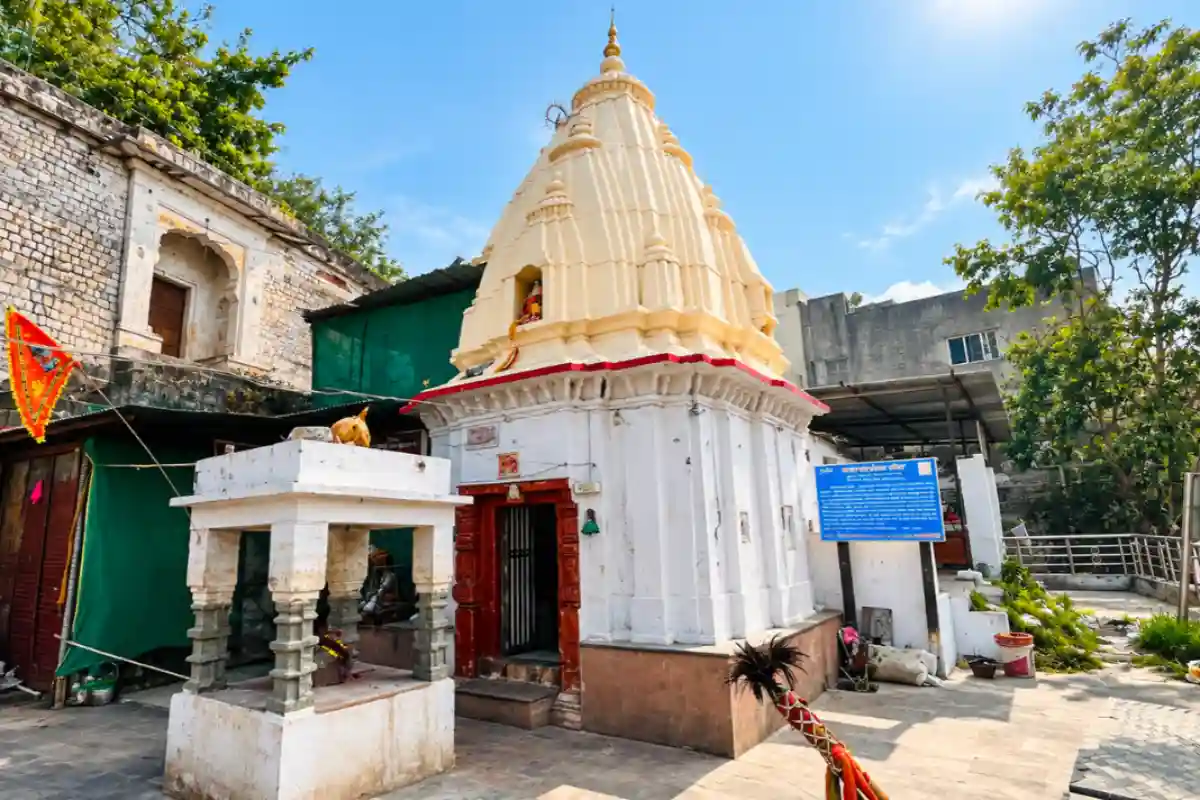
In Ujjain, Ranoji did not merely administer. In 1732, he commissioned the renovation of the Mahakaleshwar Jyotirlinga temple - which had fallen into disrepair after Iltutmish's destruction centuries earlier. He also renovated Harsiddhi temple, Siddhvat Ghat, Ram GhatRam Ghat, the most prominent bathing ghat in Ujjain., and Mangalnath. Ujjain under Ranoji became the primary centre of Maratha Malwa.
He died on 3 July 1745 in Shujalpur, Malwa, aged approximately 44 to 45. [Note: The source document states 19 July 1745 and Ranoganj village, Shajapur district. Wikipedia gives 3 July 1745 and Shujalpur. The two sources conflict. Verify against the Panchjanya article (July 2026) before publishing.]
Key facts at a glance
- Memorial for: Ranoji Rao Scindia, founder of the Scindia/Shinde dynasty
- Built by: His son Jayappaji Rao Scindia
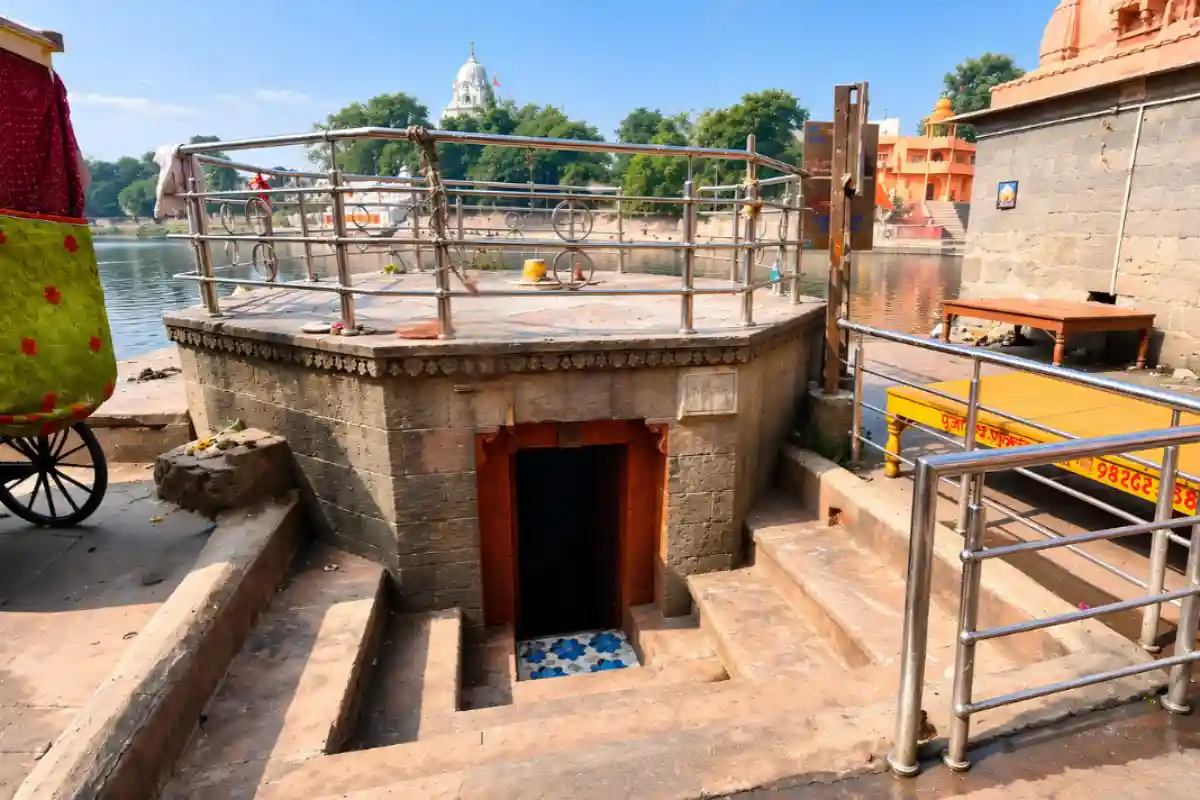
- Location: Ramghat, on the bank of the Kshipra riverThe sacred river where millions take the holy dip during Simhastha., Ujjain
- Architecture: Rajasthani-Maratha style
- Current entry: From Ramghat Marg, opposite Ramanuj Kot
- Beautification project: Rs 78 crore proposed by MPSTDC (two tenders: Rs 32.34 crore and Rs 45.66 crore)
The chhatri: a son's tribute
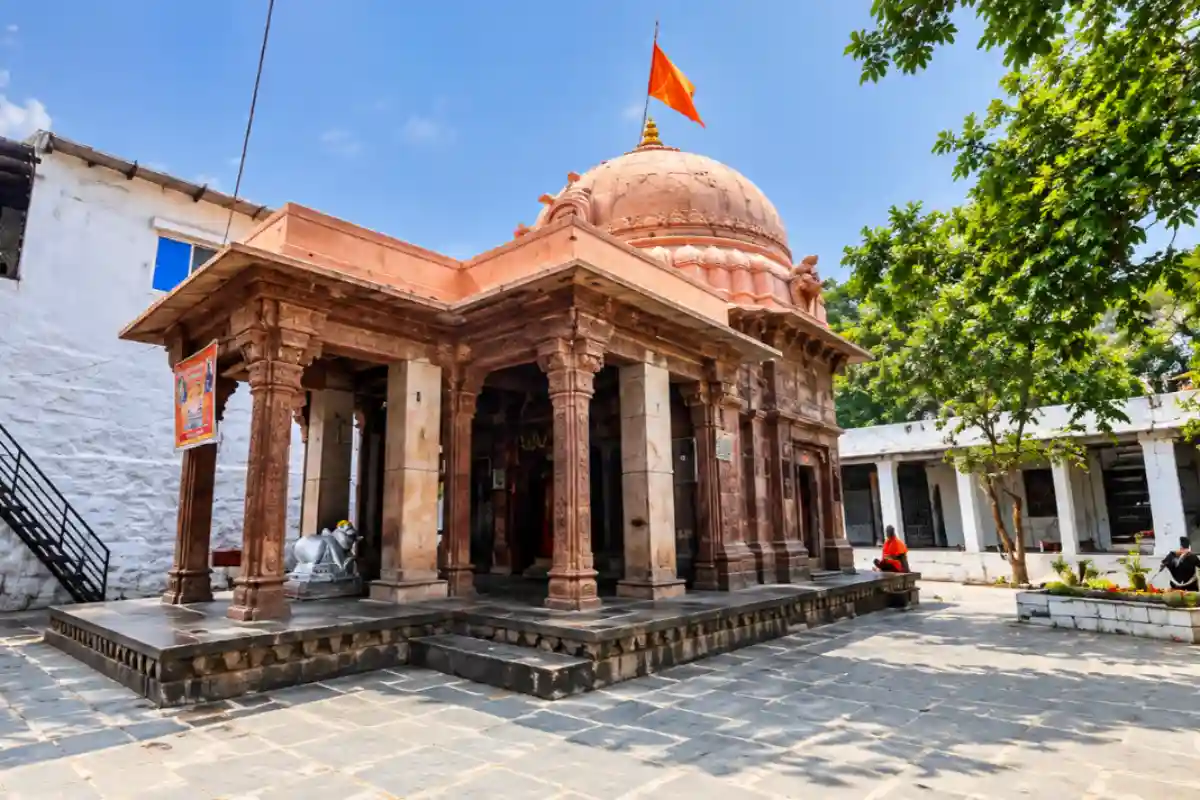
After Ranoji's death, his son Jayappaji Rao Scindia immersed a portion of his father's ashes in the Kshipra at Ramghat. Here he built the memorial chhatri.
Ramghat was not an incidental choice. It is believed that in the Treta Yuga, Lord Ram performed the last rites (tarpan) for his father King Dasharatha at this ghat. For centuries, Ramghat has held a special place in Hindu tradition for asthi visarjan (immersion of ashes) and pitru tarpan (ancestral rites) by royal and Kshatriya families. Ranoji's ashes being immersed here followed that tradition directly - Ujjain had been his capital, and Ramghat was his spiritual connection to the city.
Architecture: two traditions in one structure
The chhatri combines Rajasthani and Maratha architectural traditions. The domed form, the fine stone carvings, and the decorative pavilion canopies reflect the Maratha building tradition of that period - which absorbed Mughal, Rajput, and Deccani influences simultaneously.
The Scindia dynasty built chhatris at Gwalior, Ujjain, and Shivpuri. The Gwalior chhatris are built in yellow and pink sandstone and are considerably more elaborate. Ujjain's chhatri derives a distinct visual character from its position at the river's edge - the Kshipra behind it, Ramghat's activity in front.
The location also makes it a natural photography spot: the chhatri's silhouette against the Kshipra, especially in the early morning or at the time of evening aarti, is among the more striking images of Ujjain that visitors take away.
Ramghat's spiritual atmosphere
Ramghat is one of Ujjain's most active religious ghats. Morning and evening aarti, pilgrims bathing in the Kshipra, priests conducting rituals on the steps - this is the daily rhythm of the ghat. The chhatri is part of that atmosphere.
Most visitors who come to Ramghat also see the chhatri, since it sits directly on the ghat. The proximity to Mahakaleshwar Jyotirlinga means this entire zone has a continuous flow of pilgrims. The chhatri adds a layer of historical depth to what is already a site of intense religious activity.
The beautification project
The Madhya Pradesh State Tourism Development Corporation has floated two tenders for the conservation and beautification of the chhatri complex - one for Rs 32.34 crore and one for Rs 45.66 crore, totalling approximately Rs 78 crore. The same project also covers the beautification of Shri Ram Janardan temple, Chaubis Khamba, and Chamunda Mata temple.
Currently, the main entry to the chhatri is from Ramghat Marg, opposite Ramanuj Kot. The planned project will create a direct entry from Ramghat itself, removing the detour and connecting the chhatri more naturally to the ghat it overlooks.
What to see nearby
The Ramghat area around the chhatri connects to several other historically and spiritually significant sites within easy walking or short auto-rickshaw distance:
- Mahakaleshwar Jyotirlinga temple: The renovation of which Ranoji commissioned in 1732 - the original reason that ties him to Ujjain most directly.
- Ramghat: Directly adjoining the chhatri. The evening aarti on the ghat steps, with the Kshipra illuminated by lamps, is the most atmospheric time to be here.
- Chaubis Khamba temple: Part of the ongoing beautification project; within walking distance of the chhatri.
- Harsiddhi temple: Renovated by Ranoji Rao Scindia - another piece of the Scindia dynasty's imprint on Ujjain.
Comments
No comments yet. Be the first to share your thoughts!
Leave a Comment