

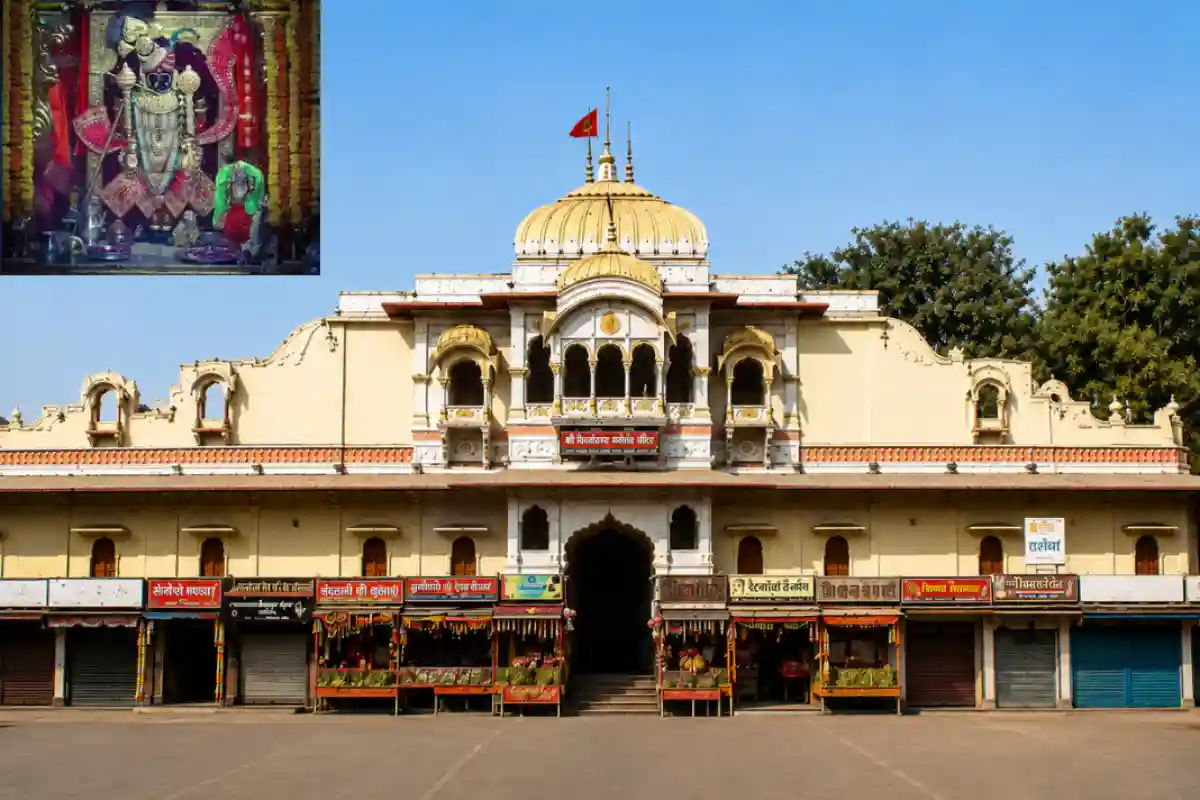
Who built Gopal Mandir Ujjain and when
Maharani Baiza Bai Scindia (also spelled Bayajibai Shinde) commissioned the temple. She was the wife of Maharaja Daulat Rao Scindia of Gwalior and served as regent of the Gwalior state from 1827 to 1833. Ujjain was under Scindia administration at the time.
The exact construction year comes from temple tradition, not from any archaeological record. The temple's priestly tradition places construction in Vikram Samvat 1901 (1844 CE) and the idol installation in VS 1909 (1852 CE). Other sources cite 1848. All accounts point to the mid-19th century; no single year is confirmed by inscription or government notification.
Gopal Mandir Ujjain: at a glance
- Builder: Maharani Baiza Bai Scindia, Gwalior Scindia dynasty
- Period: Mid-19th century (tradition: 1844, idol installed 1852) [verify]
- Deity: Lord Krishna, Dwarkadhish form
- Architecture: Maratha style, white marble spire, black-stone halls
- Notable: Silver-plated sanctum doors, Harihar Milan tradition
- Location: Patni Bazar / Bada Sarraf, Ujjain (approx. 1.5 km from Mahakaleshwar)
- Entry: Free
- Management: Scindia family / Devasthan Trust
Baiza Bai was born in 1784 at Kagal in present-day Kolhapur district. She married Daulat Rao Scindia in 1798. When the Scindia capital shifted from Ujjain to Gwalior (Lashkar) in 1810, her connection to Ujjain remained. She also developed the Daulatganj area of the city. She died in 1863 and was, in her later years, regarded with suspicion by the East India Company for her opposition to British expansion.
Architecture: what makes this a Maratha-era temple
The temple is a specimen of Maratha architecture with North Indian and Rajput influences woven in. The sanctum (garbhagriha) and spire (shikhar) are white marble. The assembly hall, pillars, and galleries are black stone.
The inner pillars carry detailed stone carving. The ceiling panels depict scenes from Krishna's life. A large courtyard handles the crowds that gather during festivals without feeling cramped.
The assembly hall (mandap) has a black-stone Murli Manohar (Krishna with flute) idol. The sanctum houses the main Dwarkadhish idol with silver images of Radha and Rukmini on either side. The complex also has marble figures of Shiva-Parvati and of Maharani Baiza Bai herself, and the dvarapalas Jaya-Vijaya at the entrance gate.
The main idol: black stone or marble?
Sources disagree on the material of the main sanctum idol. Several well-regarded sources describe a black-stone Krishna idol; some tourism websites describe a silver-coated marble figure. The black-stone description is better attested across historical and encyclopedic sources.
Regardless of material, the priests perform a panchamrit mahabhishek (ritual bath with five sacred liquids) each morning. The idol is worshipped in the royal Dwarkadhish form, dressed and adorned according to the ritual calendar.
The silver doors: what tradition says and what history records
The sanctum doors are silver-plated and set with gemstones. They are the temple's most talked-about feature.
A popular local account holds that these are the original doors of the Somnath temple, looted by Mahmud of Ghazni in 1026 CE and later recovered by a Scindia ruler. A state archaeology department board at the site repeats this claim.
The story does not hold up against documented history. The "Somnath gates" that actually exist on record are deodar-wood tomb doors brought from Ghazni to India in 1842 under Lord Ellenborough's orders. On examination, they turned out to be non-Gujarati in workmanship and bore an Arabic inscription naming Mahmud. They have been stored in Agra Fort ever since. Historian Romila Thapar, in her detailed study of Somnath's history, notes that neither Turko-Persian sources nor Indian sources from the period mention any gates being taken during the 1026 raid.
The true provenance of Gopal Mandir's silver doors is not recorded in any verified historical document. The most likely explanation is that they are 19th-century Scindia-era craftsmanship. Treat them as what they are: fine Maratha metalwork with a well-travelled legend attached.
Harihar Milan: the night Mahakal visits Gopal
On Vaikuntha Chaturdashi in the month of Kartik, Ujjain holds one of its most distinctive religious events. Mahakaleshwar's silver palanquin leaves the Mahakal temple at around 11 pm and travels to Gopal Mandir.
At Gopal Mandir, Shiva (Har) and Vishnu/Krishna (Hari) meet. The two deities exchange garlands: Bilva leaves go to Gopal, Tulsi goes to Mahakal. The puja lasts about two and a half hours. Temple priests say this tradition is over 100 years old and dates to the Scindia period.
Harihar Milan is one of the clearest expressions of Ujjain's long tradition of treating Shaiva and Vaishnava worship as complementary rather than competing.
Janmashtami: the five-day ritual no other Ujjain temple follows
The midnight aarti on Janmashtami marks Krishna's birth. At Gopal Mandir, a specific tradition begins immediately after and runs for five days, until Bachh Baras.
During these five days, the nightly shayan aarti (the bedtime prayer that closes the temple each night) is suspended. The deity is treated as a newborn infant, and a newborn is not put to sleep with formal ritual. On Bachh Baras, a traditional matki-phod (pot-breaking) ceremony is held at noon, after which the nightly shayan aarti resumes.
On Janmashtami 2026, 1,100 kg of peda (milk sweet) was offered as mahaprasad during the morning Rajbhog aarti. Infant-Krishna darshan continued until 2 am that night.
If you are in Ujjain on Janmashtami, visit Mahakaleshwar first for the midnight aarti, then walk or take an e-rickshaw to Gopal Mandir. The two temples are about 1.5 km apart and both stay open through the night. Gopal Mandir's infant-Krishna darshan runs until 2 am.
Location and how to reach Gopal Mandir
The temple is in Ujjain's central market area, known as Patni Bazar or Bada Sarraf, near Kartik Chowk. It is walkable from Mahakaleshwar.
| From | Distance / Time |
|---|---|
| Mahakaleshwar Temple (on foot) | Approx. 1.5 km, 15-20 minutes |
| Ujjain Railway Station | Approx. 2-2.5 km, 10 minutes by e-rickshaw or auto |
| Indore Devi Ahilyabai Holkar Airport | Approx. 55-60 km, about 1 hour by road |
Distances are approximate. Tell your auto or e-rickshaw driver "Gopal Mandir, Patni Bazar."
Darshan timings and entry
Entry is free. Timings vary across sources: some report 5 am to 7 pm, others 6 am to 10 pm. Confirm locally before you visit.
| Aarti | Approximate time |
|---|---|
| Mangala Aarti | Approx. 7:00 am |
| Rajbhog Aarti | Midday |
| Sandhya Aarti | Approx. 7:30 pm |
| Shayan Aarti | Night (suspended for 5 days after Janmashtami) |
Timings can shift with seasons and festival calendars. Verify locally before planning around a specific aarti.
Gopal Mandir's place in Ujjain's history
Ujjain had been a major Scindia administrative centre before Daulat Rao shifted the capital to Gwalior in 1810. Even after that shift, the city retained religious and cultural importance under Scindia oversight. Baiza Bai's patronage of Gopal Mandir and the Daulatganj locality was part of that continuing Scindia investment in Ujjain.
The temple remains under the Scindia family/Devasthan Trust today, making it one of the few active temples in Madhya Pradesh still administered by the family that originally built it.
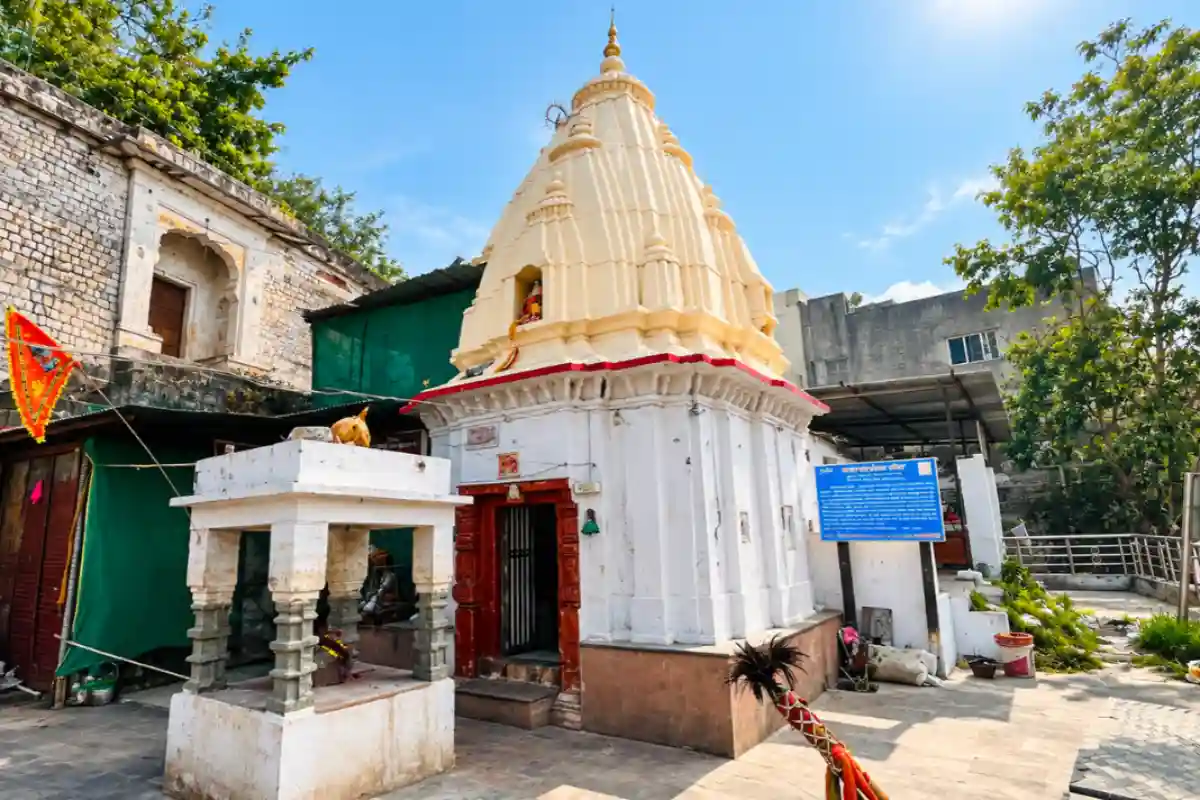
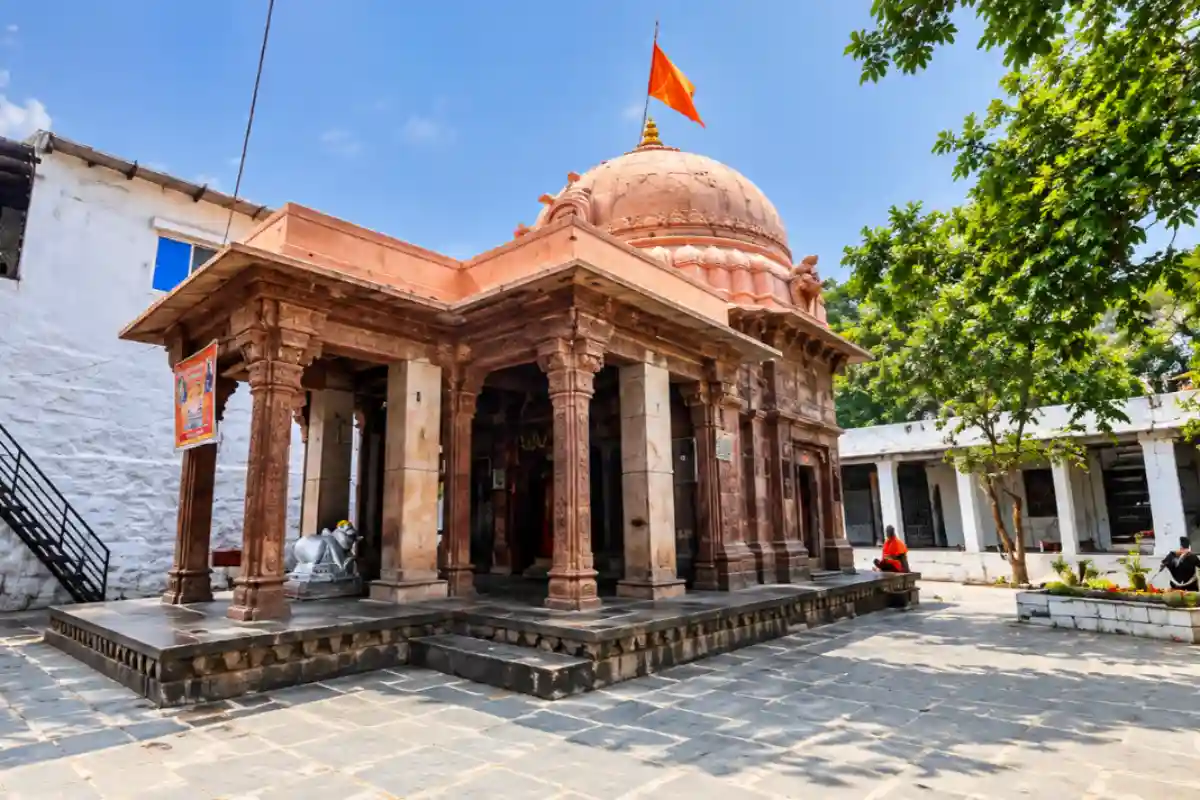
Nearby temples: what to combine in one visit
| Temple / Site | Distance from Gopal Mandir | Why visit |
|---|---|---|
| Mahakaleshwar Temple | Approx. 1.5 km | Jyotirlinga, Bhasma Aarti |
| Harsiddhi Mata Temple | Approx. 1.2 km | Shaktipeeth |
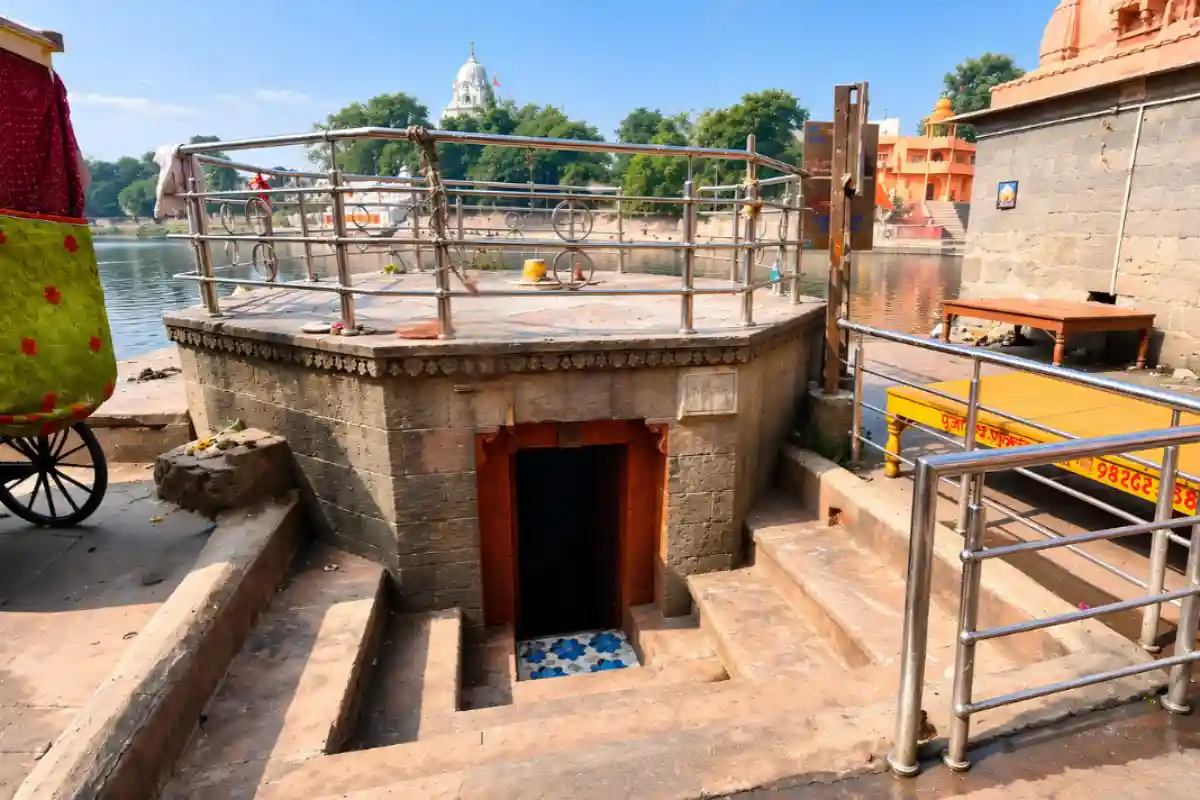
| Ram GhatRam Ghat, the most prominent bathing ghat in Ujjain. | Approx. 1.8 km | Shipra river, evening aarti |
Distances are approximate.
Comments
No comments yet. Be the first to share your thoughts!
Leave a Comment