

Where is Chintaman Ganesh Temple and how do you reach it?
The temple stands in village Jawasya, on the Fatehabad railway line, roughly 7 km south-west of central Ujjain. The nearest station is Chintaman Ganesh (station code CNN), about 1 km from the temple, so you can actually take a local train from Ujjain Junction and get off almost at the gate. Ujjain Junction is approximately 6.6–7 km away; autos and city buses cover the distance in 20–25 minutes.
For those coming from outside Madhya Pradesh, the nearest airport is Indore's Devi Ahilyabai Holkar Airport, roughly 55 km from the temple. From Indore, taxis or buses reach Ujjain in about 1.5 hours.
Quick facts
- Location: Village Jawasya, Ujjain, Madhya Pradesh
- Distance from Mahakaleshwar: ~6 km
- Nearest railway station: Chintaman Ganesh (CNN), ~1 km
- Nearest airport: Indore (~55 km)
- Temple direction: East-facing; entrance from north side
- Administration: Shri Chintaman Ganesh Temple Prabandh Samiti (under Ujjain district administration)
- Darshan timings: Morning 6:00 am – 12:00 noon; Evening 5:00 pm – 10:00 pm [verify current timings with temple before visiting]
What does history say about this temple?
The Chintaman Ganesh Temple is generally considered Ujjain's oldest Ganesha shrine, though fixing an exact founding date is complicated by the gap between architectural evidence and legend.
The carved stone pillars in the mandap are Paramara-period work. The Paramara dynasty ruled Malwa roughly from the 9th to the early 13th century, and several scholars place the original temple structure in the 11th–12th century window. BhaktiBharat's documentation extends the Paramara attribution to "mid-9th century to 13th century," but neither figure comes with an inscription to anchor it precisely, so treat both as scholarly estimates, not confirmed dates.
A local tradition attributes the original construction to Raja Vikramaditya, said to have built the temple in Vikram Samvat 155 following the geometry of the Shri Yantra. There is also a claim linking the temple to the Jain text Prabandha Chintamani (composed around 1304 CE by Merutunga). The Prabandha Chintamani is primarily a collection of narratives about Vikramaditya and Malwa; if a reference to this specific temple appears in it, that would be a meaningful historical anchor, but the exact passage should be independently verified before citing in print.
What is historically cleaner: the current temple structure, including its shikhara, enclosing walls, and much of the visible stonework, dates to Ahilyabai Holkar's period (late 18th century). The Paramara pillars were retained inside the rebuilt structure; you can see them in the mandap today. A separate renovation happened during the Peshwa period before Ahilyabai's work. In July 2026, an anonymous donor funded a silver lining for the sanctum walls; different news sources report the weight as either approximately 35 kg or 41 kg; the temple administration's figure of roughly Rs 85 lakh in silver value is the more cited official number.
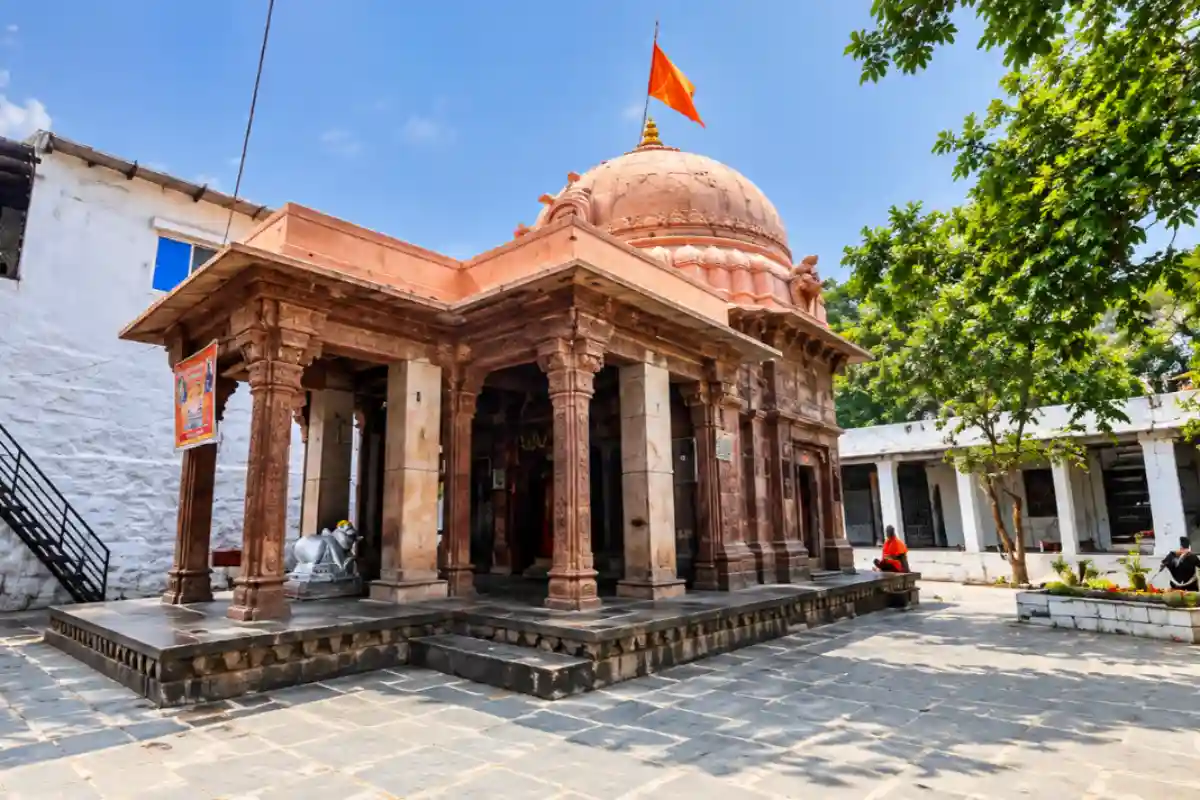
When you enter the mandap, look at the carved stone columns closely. Their style and the motifs on them belong to the Paramara tradition of temple architecture, the same school that produced the famous temples at Khajuraho (partly) and several sites in Malwa. The shikhara above them is Holkar-era construction, but the columns themselves are likely 900+ years old. No signboard points this out; most pilgrims walk past without noticing.
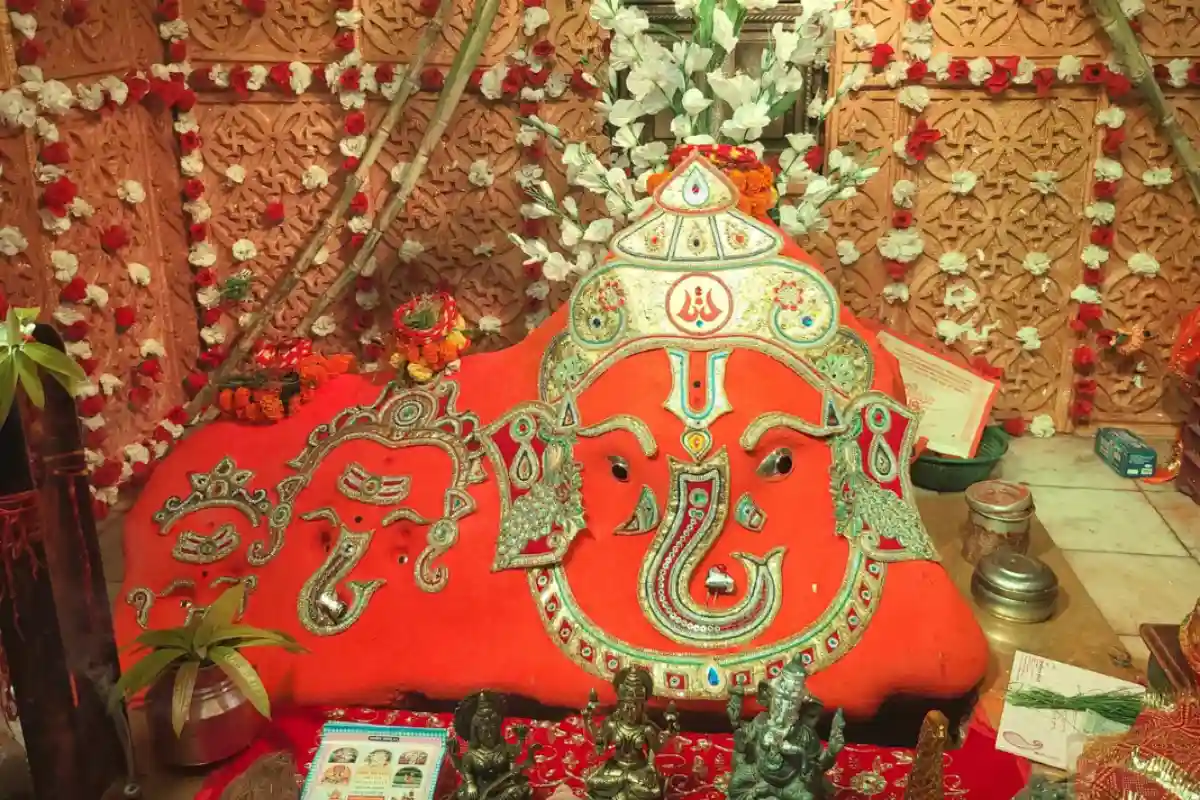
The three Ganesha idols: Chintaman, Ichhaman and Siddhivinayak
Three self-manifested forms of Ganesha sit together in the sanctum, a combination rare in India. Each idol is distinct in theological role, and local tradition assigns each to one member of the Rama-Sita-Lakshmana group said to have visited Ujjain.
| Form | Meaning / Role | Mythological association |
|---|---|---|
| Chintaman Ganesha | Remover of worries and anxieties (chinta = worry, man = mind) | Said to have been established or worshipped by Shri Rama; considered the presiding deity of the temple |
| Ichhaman Ganesha | Fulfiller of desires and wishes (icchha = desire) | Associated with Lakshmana in local tradition |
| Siddhivinayak Ganesha | Bestower of siddhi (accomplishment) and riddhi (prosperity); also called the remover of obstacles to success | Associated with Sita in local tradition |
All three idols are swayambhu (meaning they are believed to have emerged from the earth rather than been carved or installed by human hands). Layers of sindoor and vermilion applied over centuries mean the three forms appear as distinct raised surfaces in the stone rather than separately sculpted pieces. The main idol stands upright (a less common posture for Ganesha), and is partially embedded in the earth; only the upper portion is visible.
Riddhi and Siddhi, Ganesha's consorts, are also installed on either side of the central trio. Ganesha's vehicle, the mouse (mushaka), sits in the mandap facing the sanctum.
The Lakshman Baoli: the stepwell on the temple grounds
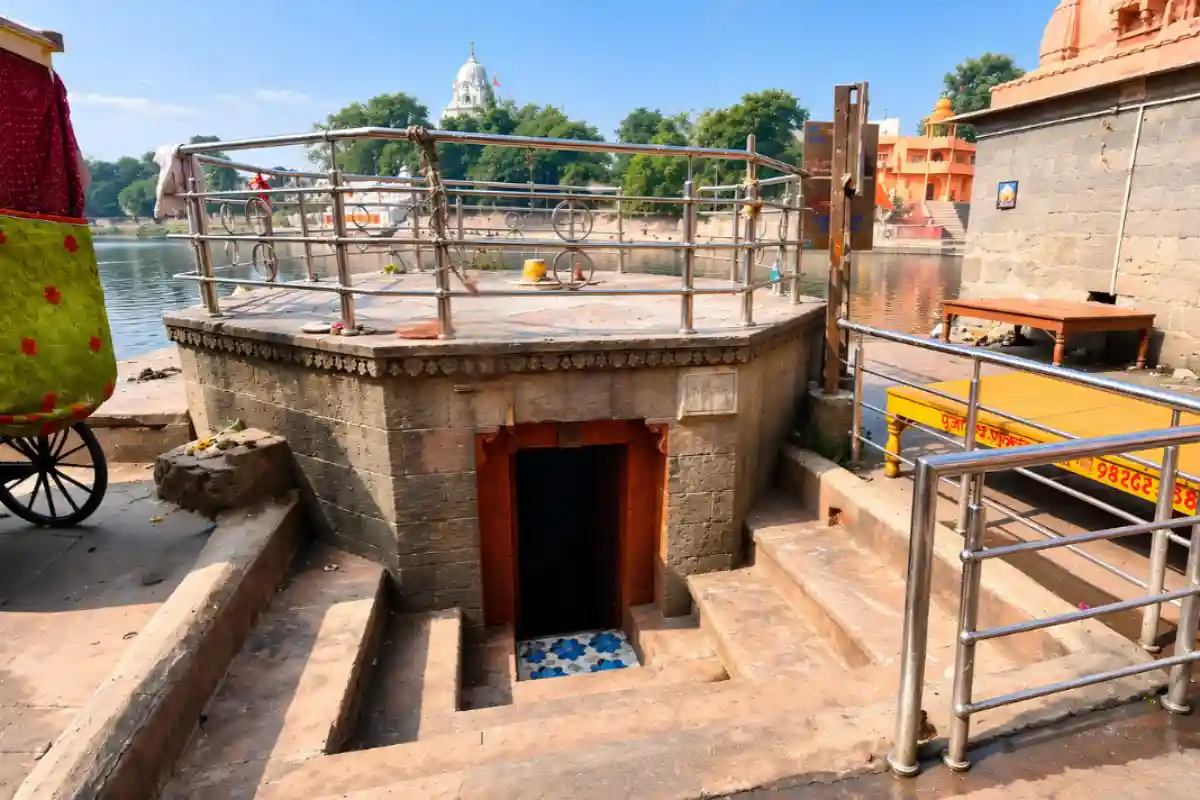
Just in front of the main temple is an ancient stepwell called Lakshman Baoli, about 80 feet (roughly 24 metres) deep by the accounts most sources agree on. The tradition says Lakshmana struck the earth with an arrow to bring water to the surface for Sita when she was thirsty during the group's passage through the Mahakal forest; the well marks where water appeared.
This is religious narrative, not an archaeological finding. But the stepwell itself is a real and very old structure, and it is worth visiting as part of the temple circuit. Its depth (unusual for a stepwell in this part of Malwa) does suggest considerable antiquity, though no formal study of its construction date appears to be in the public record.
Temple architecture: what you will see
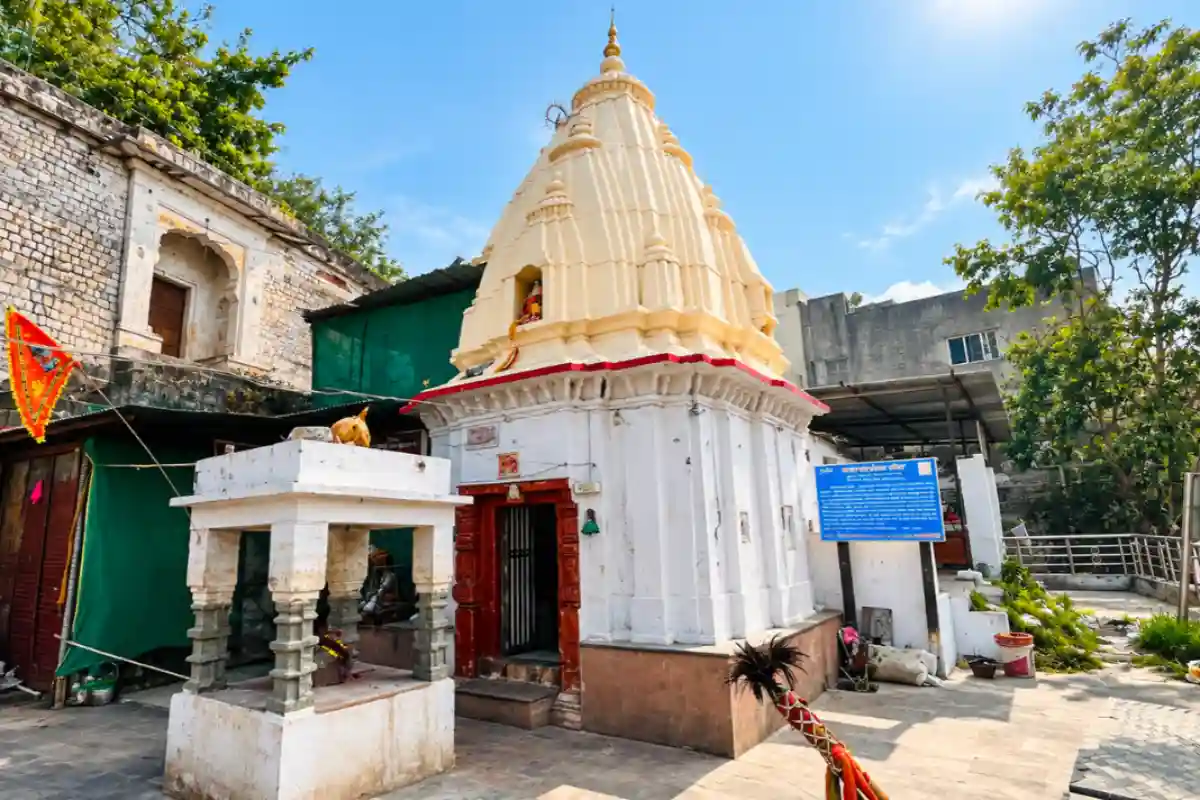
The temple faces east. Entry is from the north side, through a mandap (pillared hall) that leads into the sanctum. The overall plan follows a standard north Indian Nagara format: garbhagriha (sanctum), ardha-mandap (vestibule), and maha-mandap (main hall), with a pradakshina path (circumambulation passage) around the sanctum.
The shikhara above the sanctum is built in Nagara style: the curvilinear tower that typifies north Indian temple design. Stone lion figures appear on the shikhara. The enclosing compound wall with its fortified appearance and main gateway reflects the Maratha-period reconstruction under the Holkars.
The Paramara-period carved stone pillars in the mandap are the oldest surviving structural element. Their carving style (dense geometric and floral patterns typical of Malwa's 11th–12th century workshop tradition) differs visibly from the plainer stonework of the Holkar-era additions. If you have visited the temples in Gyaraspur or the earlier temples near Ujjain, the similarity will be apparent.
Festivals, rituals and what happens on Wednesdays
Wednesday is Ganesha's day in the Hindu calendar, and the temple fills up every week. The crowd on a Wednesday is noticeably larger than on other weekdays, and on Chaturthi tithis (the fourth day of the lunar fortnight), it grows further.
The main festivals:
- Ganesh Chaturthi to Anant Chaturdashi (Bhadrapada, August–September): ten-day festival, the temple's largest annual event
- Every Wednesday through Chaitra month (March–April): a weekly fair on the temple grounds; local farmers bring the first grain of the rabi harvest here before selling it
- Til (Sankashti) Chaturthi (Magha, January–February): women observe a fast; a mahabhog of 1.25 lakh (125,000) modaks is offered
- Makar Sankranti: sesame-based offerings
Daily aarti follows five rounds: morning shringar aarti (around 7:30–9:00 am), bhog aarti (noon), afternoon aarti (around 4:00–4:30 pm), sandhya aarti (around 7:00–8:00 pm), and shayan aarti (around 9:00–9:30 pm). Timings can shift on festival days; check with the temple before planning around a specific aarti.
Rituals you will not see at most Ganesha temples
Two practices here are specific to this temple and worth knowing before you visit:
Ulta swastika (inverted swastika): Devotees draw an inverted swastika on the temple walls or pillars when making a wish. Once the wish is fulfilled, they return and draw a right-side-up swastika in the same spot. The walls of the mandap are covered with these marks: thousands of them, in varying states of completion. Temple priest Pandit Ganesh Guru has cited this as a centuries-old practice.
Tula daan (weight offering): Families who receive a child after praying here return to offer modaks equal to the child's weight. This is a commitment made at the time of the original prayer and fulfilled at the temple after the child is born.
Other common practices: tying a raksha sutra (sacred thread) on a pillar with a wish, and releasing it once the wish is fulfilled. New vehicles are brought for a blessing before first use. In Malwa, it is traditional to deliver the first wedding invitation to Chintaman Ganesha before any human guest.
Chintaman Ganesh Temple's place in an Ujjain pilgrimage
Ujjain's primary pilgrimage circuit centres on Mahakaleshwar. Most visitors spend their main darshan time there and then move to the ghats on the Shipra river. Chintaman Ganesh temple is slightly off this axis; it requires a separate trip of about 7 km, and many first-time visitors skip it.
That is worth reconsidering. Mahakaleshwar and Chintaman Ganesh represent different periods of the city's religious history and different architectural traditions. If you want to understand Ujjain's temple heritage across time rather than just complete the main darshan list, this temple is one of the few places where Paramara-era stonework is still visible in active use.
The temple also connects to Ujjain's identity as Avantika, the ancient city mentioned in texts as Mahakal Van. The mythological association with Rama's passage through Avantika is part of how the city positions itself in pan-Indian religious geography, and Chintaman Ganesh is one of the key sites in that narrative.
Wednesdays and Chaturthi dates bring significant crowds. For a quieter darshan where you can actually see the three idols and the Paramara pillars clearly, come on a Tuesday or Thursday morning, shortly after the temple opens at 6:00 am. The Lakshman Baoli is best seen in morning light and is usually deserted outside festival periods.
Practical tips for your visit
- Footwear: Remove shoes at the entrance; carry a small bag for them or use the cloak room if available.
- Photography: Check current rules at the entrance; sanctum photography policies vary.
- Prasad: Modaks (especially sesame modaks in winter) are the traditional offering here. Available from vendors outside.
- Return trip: Ujjain's Chintaman Ganesh railway station has limited services; check the timetable before planning your return by train. Autos and shared taxis are more flexible.
- Combine with: Bhartrihari Caves (also on the Shipra's outskirts) are roughly in the same general direction, making a combined half-day itinerary possible.
Comments
No comments yet. Be the first to share your thoughts!
Leave a Comment