


Is Gadhkalika one of the 18 Shakti Peethas?
Ujjain genuinely holds a classical Maha Shakti Peetha. But the claim that Gadhkalika specifically is that Peetha, and that the upper lip of Sati fell there, mixes up two different classification systems and three neighbouring shrines.
Adi Shankaracharya's Ashtadasha Shakti Peetha Stotram, verse 3, names the Ujjain goddess as "Mahakali" with no body part specified. In the separate 51-Peetha tradition, the upper lip of Sati goes to the Avanti / Bhairav Parvat shrine (Devi as Avanti, Bhairava as Lambakarna) on Bhairav Parvat by the Kshipra. Gadhkalika, Avanti, and Harsiddhi are all in the Bhairavgarh area and are all locally called "Ujjain Mahakali." Tourism sources merge the three, and the upper lip tradition moves to whichever shrine the article happens to be about.
Some travel sources acknowledge that Gadhkalika is "not officially a Shakti Peetha" but "holds equal importance." That is a fair position. Ujjain has a classical Maha Shakti Peetha named Mahakali, but which building that designation actually attaches to is contested across three shrines.
The nearby Harsiddhi Temple separately claims that Sati's elbow fell there. The Ujjain district administration confirms this from the Shiva Purana. Each shrine has its own legend. They are not the same shrine.
Shakti Peetha: what the sources actually say
- Shankaracharya's Ashtadasha Stotram: Ujjain goddess named Mahakali, no body part given
- 51-Peetha tradition: upper lip assigned to Avanti / Bhairav Parvat shrine, not Gadhkalika
- Harsiddhi Temple: claims Sati's elbow,confirmed by the Ujjain district administration from the Shiva Purana
- Gadhkalika: described by some sources as a Siddha Peetha of equal religious standing
What the Archaeological Survey of India found at Gadhkalika
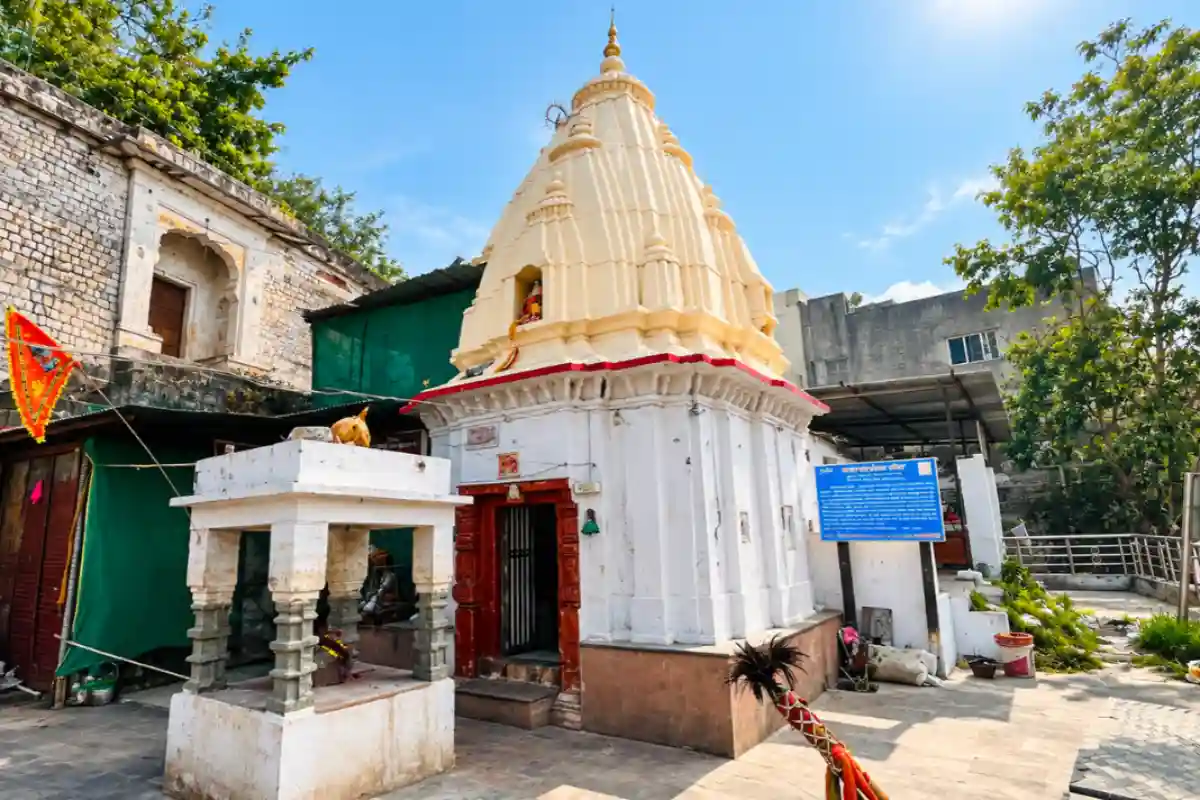
The most solid thing we know about Gadhkalika is archaeological, and it concerns the mound, not the temple building standing there now.
In 1956–57 and 1957–58, the ASI's Excavations Branch under N. R. Banerjee excavated the Garh-Kalika mound, described in the ASI's own publication as "the ancient Ujjayini, on the northern outskirts of the city of Ujjain." Five successive culture-periods turned up, running from pre-Mauryan to Gupta. Period I, the earliest, produced a fortified township dated c. 700–500 BCE: a rampart 245 feet broad at the base, a surrounding moat 152 feet wide at the top, iron spear-heads, arrow-heads, knives, and a characteristic double-slipped ware. Periods II through V carried the sequence through Mauryan, Shunga, Saka-Kushana, and Gupta times, with burnt brick appearing in the final Gupta layer.
Independent scholars confirm the dating, placing the city defences between the 6th and 4th centuries BCE.
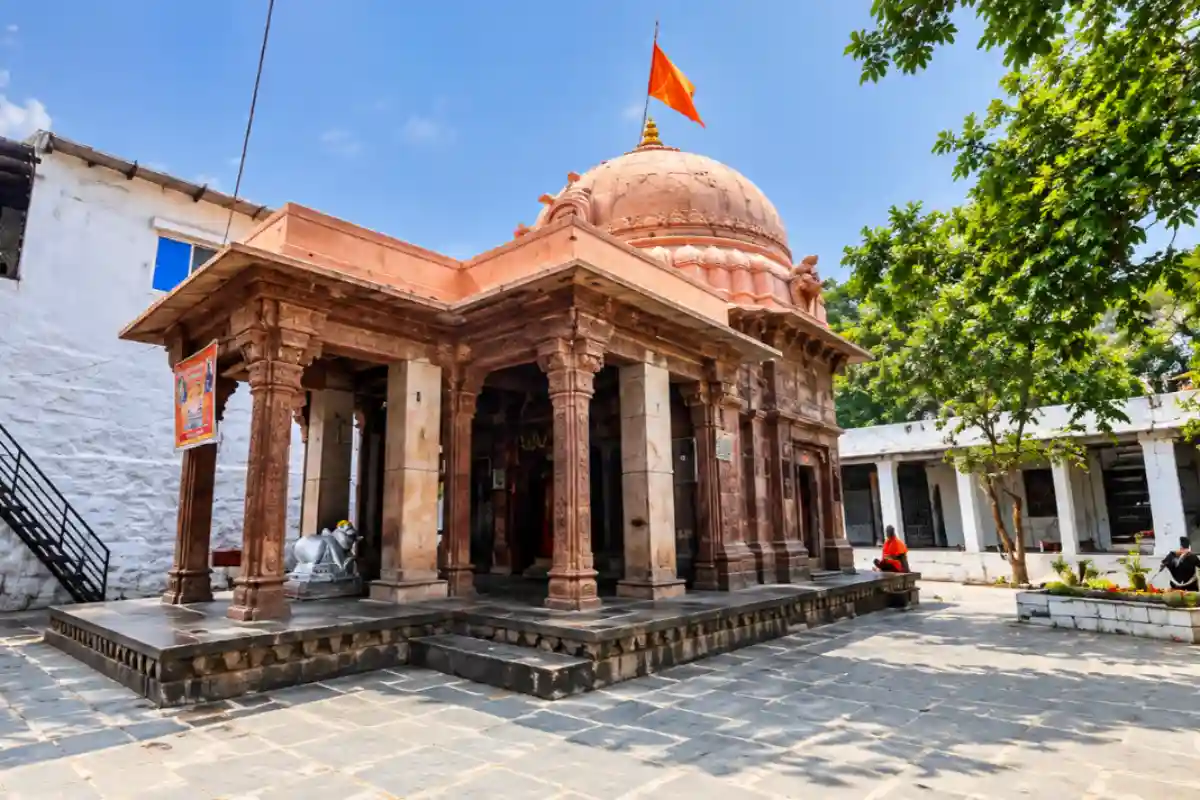
That is the antiquity of the city and the mound. The standing temple building has been rebuilt multiple times. A heritage source records Shunga-period (c. 1st century BCE) images and bricks from the temple basement, a Gupta-era (4th century CE) Yakshini sculpture reportedly found on the premises, and a Paramara-era (10th century CE) renovation. A 20th-century renovation by Shri Siddhanath Maharaj is recorded in Samvat 2001 (1944 CE). A rebuilding in the Gwalior / Scindia period is widely cited and plausible given Maratha control of Ujjain,
A Harshavardhan renovation (Emperor Harsha of Kannauj, r. c. 606–647 CE) is also traditionally attributed to the temple.
| Period | Approximate date | Evidence / source | Status |
|---|---|---|---|
| Earliest fortified settlement (Period I) | c. 700–500 BCE | ASI excavation, N. R. Banerjee, 1956–58 | Documented (mound / city, not temple building) |
| Shunga-period artefacts | c. 1st century BCE | Images and bricks from temple basement | Traditional attribution |
| Gupta-era Yakshini sculpture | 4th–5th century CE | Reportedly recovered from premises | Traditional attribution |
| Harshavardhan renovation | c. 606 CE | Traditional attribution | Traditional, plausible |
| Paramara renovation | 10th century CE | Heritage source; Bhartrihari Caves adjacent, also Paramara period | Traditional attribution |
| Gwalior / Scindia rebuilding | Maratha period | Widely cited tradition; consistent with Scindia control of Ujjain | Traditional attribution |
| Modern renovation by Siddhanath Maharaj | Samvat 2001 (1944 CE) | Heritage essay | Traditional attribution |
Kalidasa and Gadhkalika: the legend that belongs to this specific temple
The Kalidasa transformation story is attached specifically and consistently to Gadhkalika. Most of Ujjain's legends drift across multiple shrines. This one stays here.
Tradition holds that Kalidasa, an uneducated man mocked as a fool and banished by the learned princess Vidyottama after a marriage by trickery, came to Gadhkalika on the Kshipra, performed tapasya, and received the grace of Kali. His name means "servant of Kali." His hymn to Mahakali, Shyamala Dandak, is believed to have been first recited here; it opens: "Manikya-veenam upalalayantim." The annual Kalidasa Festival begins with a puja at Gadhkalika.
Kalidasa's historical dates remain unresolved. The dominant scholarly view places him at the Gupta court of Chandragupta II, who ruled c. 375–415 CE and took the title "Vikramaditya." Proposed dates run from the 1st century BCE, based on the Shunga king Agnimitra in his play Malavikagnimitra, to no later than the Aihole Prashasti of 634 CE, which references his work. Chandragupta II, who made Ujjayini a second capital, is the "Vikramaditya" scholars most often point to as Kalidasa's patron.
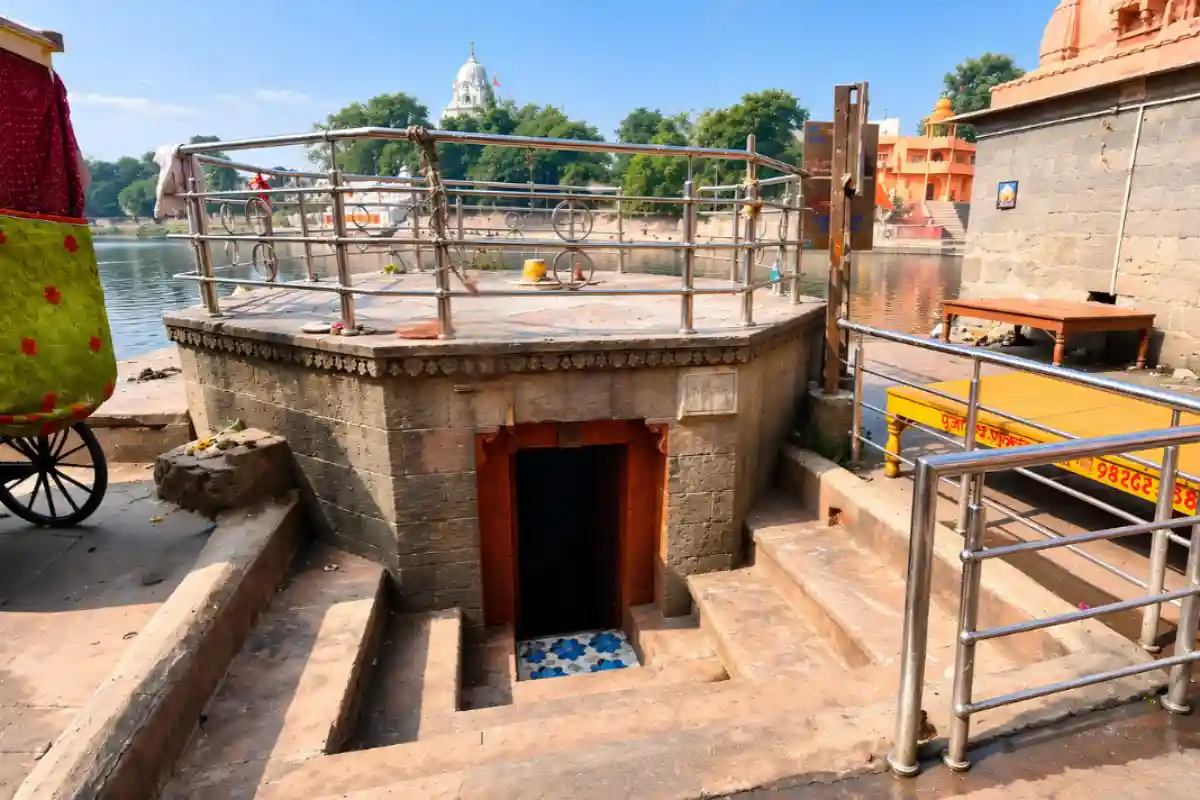
The Bhartrihari Caves sit immediately next to the temple, on the Kshipra. These 11th-century, Paramara-period rock-cut caves are tied to Bhartrihari, stepbrother of Vikramaditya and author of the Nitishataka, Shringarashataka, and Vairagyashataka. They house Nath-sampradaya shrines, which explains the Nath character of the whole Bhairavgarh area.
Before the Kalidasa Samaroha moves to Kalidasa Academy, devotees worship at Gadhkalika as the first ritual act. If you are in Ujjain during the Festival, the opening puja here is worth attending — it happens at the actual site the Festival commemorates, before the proceedings shift to an auditorium.
The Deep Stambha confusion: Gadhkalika has one lamp-pillar, not two
The famous twin Deep Stambhas, those lamp-pillars lit with hundreds of diyas that appear in photos labelled as Ujjain Shakti shrines, belong to Harsiddhi Temple, not Gadhkalika. The Ujjain district administration confirms this about Harsiddhi: the 2 pillars are features of Maratha art, reported at 84 feet tall, and during Navratri they put on what the site calls "a glorious spectacle."
Gadhkalika has a single ancient lamp-pillar holding 108 lamps, lit every night during Navratri. A Maratha-built deepastambha is also noted near the temple's premises. The claim that Gadhkalika's lamps light themselves by divine energy without human help is devotional lore from a single tier of tourism sites. No documented basis exists for it; read it as legend.
Worship, priests, and daily rituals
Priests at Gadhkalika belong to the Nath sect and conduct both standard Shakta rituals and tantric worship. The recorded lineage of worship rights ran through Roop Nath, Siddh Nath, Manohar Nath, Deepak Nath, and more recently a woman mahant, Karishma Nath. The temple operates under government administrative oversight, with the tehsildar holding authority over priest appointments. A dispute over a recent appointment has been reported in local media.
The pre-dawn Kakada Aarti is the central daily ritual. Tradition holds that after it, the goddess appears in her child form. Devotees queue from around 2:30 AM. Darshan timings vary across sources: the most common figure is 6:00 AM to 9:00 PM, with some giving 5:00 AM to 10:00 PM and extended pre-dawn access during Navratri. Confirm locally before visiting.
Both Chaitra and Sharad Navratri bring very large crowds, special havans, shringar, jyoti kalash and chunri offerings, and overnight melas. Prasad includes halwa, kheer-puri, and puran poli. As at Kal BhairavThe revered Kaal Bhairav temple of Ujjain. Temple, the deity is offered liquor.
How to visit Gadhkalika
The temple is in the Bhairavgarh area on the eastern bank of the Kshipra. From Ujjain Junction it is roughly 3–5 km (most precise sources put it at about 3 km; others give 4–5 km). From MahakaleshwarExplore the divine Mahakaleshwar Jyotirlinga in Ujjain. Temple, it is 2–4.6 km depending on route.
The Bhartrihari Caves are immediately next door. Kal Bhairav, Mangalnath, and Sandipani Ashram are all on the same riverside circuit and fit into a single day trip without much backtracking.
Comments
No comments yet. Be the first to share your thoughts!
Leave a Comment