
What is Kalakaleshwar Mahadev in Ujjain?
Kalakaleshwar Mahadev is the eighteenth of Ujjain's 84 Mahadev lingas, with its account in the Skanda Purana, Avantya Khanda, chapter 18 of the Chaturashiti Linga Mahatmya. The story begins with Shiva calling Parvati "Kali," and an older chapter of the same Purana ties the name to the Shiva and Gauri quarrel, from which a deity arose and was called Kalakaleshwar.
Tagare's translation spells the name Kalakaleshwar, and this article uses it throughout. You will also see Kalkaleshwar, which is a variant reading of the same name.
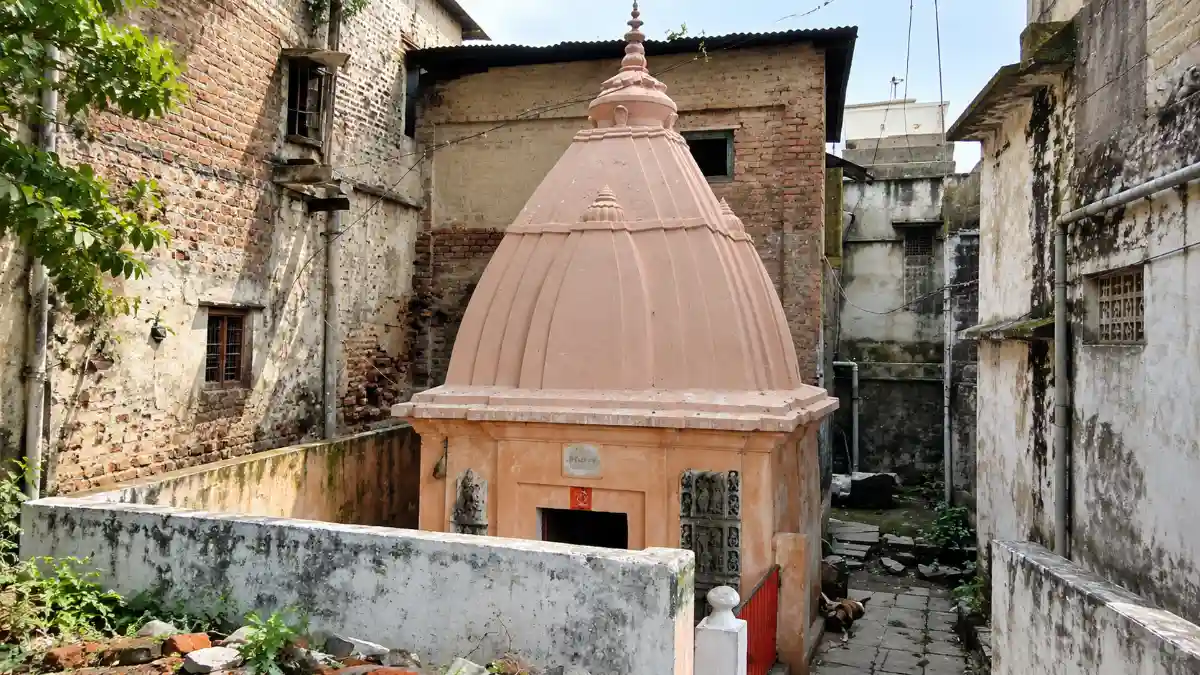
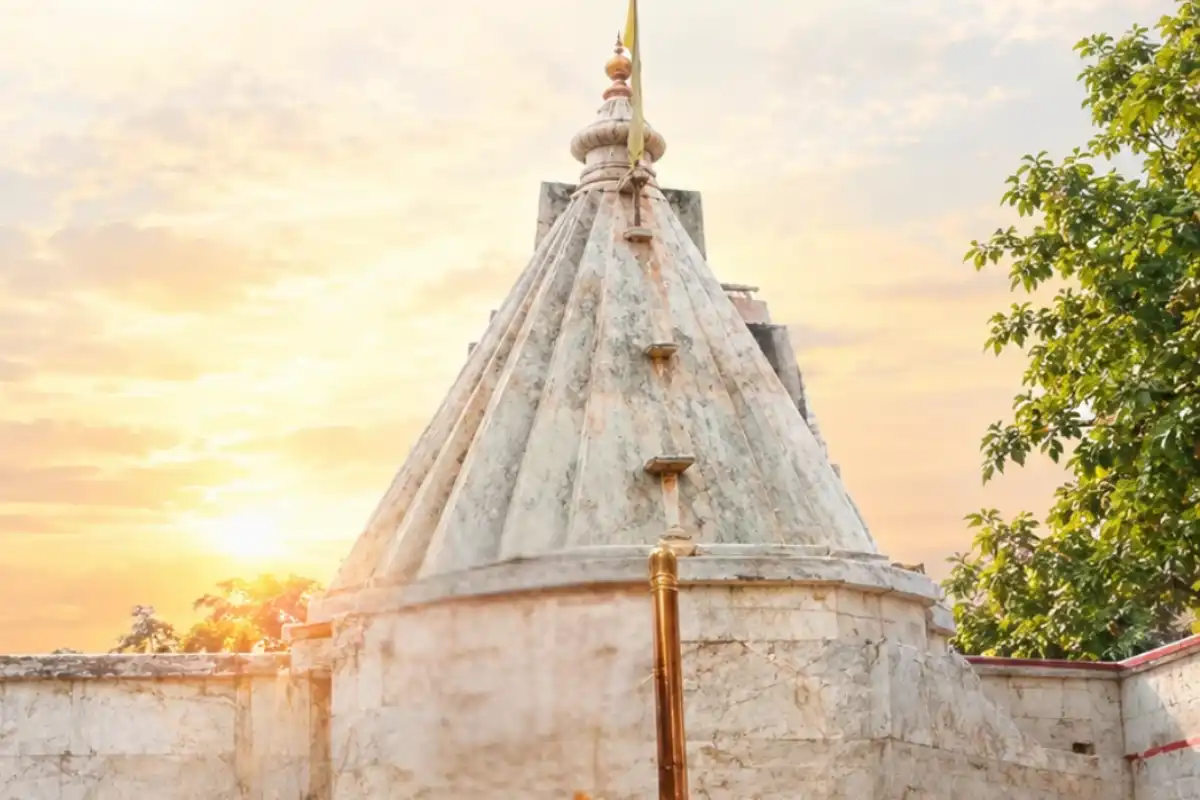
Local tradition places the temple in Modi ki Gali in the Patni Bazar area of Ujjain, near Gopal Mandir.
At a glance
- Shiva calls Parvati "Kali" and asks her to sit by him, in verse 7 of the chapter.
- An older chapter says a deity arose from the Shiva and Gauri quarrel and was called Kalakaleshwar.
- Kalakala means noise or tumult, and it is also a name of Shiva.
- The name does not come from kalaha, quarrel, nor from kala, time.
Kalakaleshwar Mahadev: quick facts
| Topic | Detail |
|---|---|
| Meaning of the name | Lord (Shiva) named Kalakala, meaning tumult or noise |
| Deity | Shiva, in linga form |
| Source text | Skanda Purana, Avantya Khanda, Chaturashiti Linga Mahatmya, Chapter 18 (5.2.18) |
| Position among the 84 Mahadevs | Eighteenth |
| Parallel account | Skanda Purana 5.1.8, Avantikshetra Mahatmya, chapter 8 |
What is the story of Kalakaleshwar Mahadev in the Skanda Purana?
The chapter on Apsareshwar ends by saying that the power of the next linga will be heard, and chapter 18 follows. One verse of it, verse 7, could be read in the Sanskrit text:
कालि सुंदरि मत्पार्श्वे वल्लभे त्वमुपाविश ।
शरीरे मम तन्वंगि सिते भास्यसितद्युतिः ॥
Meaning: Kali, beautiful one, beloved, sit beside me; slender one, on my white body you shine with a dark glow (Skanda Purana 5.2.18.7).
Here Shiva himself says "beside me," so he is telling the story as an event of his own. The dark colour is the point of the word "Kali," and in the older account it is what angers the Goddess.
The older account in chapter 8 of the first section
Chapter 8 of the Avantikshetra Mahatmya, which Sanatkumara tells to Vyasa, gives the same episode in full. Tagare translates it like this:
"Formerly the Goddess was rebuked by Śaṅkara calling her 'Kālī' ('Dark-coloured') and 'Pārvatī' ('Mountain-girl'). Then the Goddess became angry with Śaṅkara in the Kaṭaka (tableland). When the quarrel between Śiva and Gaurī broke out a deity originated there itself. It is called Kalakaleśvara."
The same passage adds that a holy kunda named Kalahanashana was made in front, and that a bath there ends a beloved's quarrelling. Bathing in that tirtha, worshipping Maheshwara and keeping a fast for a night, it says, redeems a hundred members of the devotee's family.
What does the Skanda Purana promise for worshipping Kalakaleshwar Mahadev?
The results of chapter 18 itself could not be read. The parallel account in chapter 8 names these:
- A bath at the Kalahanashana kunda ends a beloved's quarrelling.
- Bathing in that tirtha, worshipping Maheshwara and keeping a night's fast redeems a hundred members of the family.
Which popular claims about Kalakaleshwar Mahadev don't match the text?
The story of Kalakaleshwar Mahadev is often retold with changes. These are the claims that could not be matched to the Skanda Purana.
| Popular claim | What can be said from the text | Status |
|---|---|---|
| The name means "remover of quarrel" (kalaha) | Kalakala means tumult or hubbub; the quarrel caused the tumult, but the word is not kalaha | Wrong derivation |
| The name relates to Kala, time, or "calms the turbulence of time" | Kala (time) and kalakala (noise) are different words, and the dictionaries do not link them | Wrong |
| The name is the same as Kaalakaal, "death of death" | Kaalakaal, with long vowels, is a different word used for Shiva in other Puranas; the dictionaries give kalakala as noise | Wrong |
| The chapter's first verse reads "devamashtadasham viddhi... kalhaunaiva jayate" | The printed second line is not valid Sanskrit; a likely reading is "kalaho naiva jayate," but that is a guess, not matched to the original | Not confirmed |
| Seeing the linga ends quarrel between husband and wife | In the parallel account, it is a bath in the Kalahanashana kunda; the chapter 18 result is not read | Partly in the text |
| The linga breaks the earth open, a voice speaks from the sky, and the gods worship it | The older account says only that a deity arose where the quarrel broke out | Not confirmed |
| It frees from disease, snakes and fire; Shravan and Chaturdashi are special | Not found in the passages read | Not confirmed |
| It is linked to the Pushya nakshatra, with a donation of silver | An astrologer's tradition of pairing the 84 Mahadevs with stars; the Purana does not say it | Later tradition |
Is this the same Kalakaleshwar as the ones in other texts?
The name Kalakaleshwar appears at more than one tirtha, and they should not be merged.
| Text | Name | Link to Ujjain's 18th linga |
|---|---|---|
| Skanda Purana 5.2.18 | Kalakaleshwar | This chapter |
| Skanda Purana 5.1.8 (Avantikshetra Mahatmya) | Kalakaleshwar, with Kalahanashana kunda | A parallel account of the same Mahakalavana episode |
| Skanda Purana 5.3.154 (Reva Khanda) | Kalakaleshwar tirtha on the Narmada | A different tirtha |
| Skanda Purana 7.1.75 (Prabhasa Khanda) | Kalakaleshwar or Kalakalesha at Prabhasa | A different tirtha |
| Shiva Purana and Saura Purana | Kalakala (Kaalakaal) | Different word; Shiva burning Kala, death |
In the chapter on Indradyumneshwar, Markandeya sends the king to a sin-removing linga "near the god Kalkaleshwar, on the left side" (5.2.15.18). So Kalakaleshwar is already a known place in the text before its own chapter arrives. The same text prints the name as Kalkaleshwar there and as Kalakaleshwar in the chapter list, which is probably a variant reading.
In his introduction to the Chaturashiti Linga Mahatmya, G. V. Tagare writes that the author sometimes modifies an older Puranic legend to suit his purpose. His list of examples does not name Kalakaleshwar, but the older account in chapter 8 of the first section is the same episode, so this chapter appears to belong in that group.
What else do people ask about Kalakaleshwar Mahadev?
What does Kalakala mean?
In Apte's dictionary, kalakala means the murmur or hum of a crowd, or indistinct and confused noise, and also a name of Shiva and a word for resin. It is not kalaha, quarrel. The quarrel of Shiva and Gauri caused the noise, so the story and the word fit together, but the derivation is not from kalaha.
Why did Shiva's word "Kali" cause a quarrel?
In the older account, Shankara rebuked the Goddess by calling her Kali, meaning dark-coloured, and Parvati, meaning mountain-girl, and she grew angry. In chapter 18, verse 7 shows Shiva speaking to her as Kali and noting that she shines dark against his white body. The text does not say more in the lines read.
Is this the Kalakaleshwar of Prabhasa or the Narmada?
No. The Skanda Purana has other tirthas of the same name in the Reva Khanda on the Narmada and in the Prabhasa Khanda. They are separate places with their own accounts. Ujjain's eighteenth Mahadev belongs to the Chaturashiti Linga Mahatmya of the Avantya Khanda, and nothing links it to those two.
Is today's temple the spot the Purana describes?
Chapter 15 places a linga near Kalkaleshwar, on the left, and chapters 15, 16 and 18 are all close to each other in the text. Today's lanes of Modi ki Gali fit that closeness. No source ties "on the left" to a building today, so the link between the text and the shrine rests on tradition.
Why is Kalakaleshwar the eighteenth in Ujjain's 84 Mahadev order?
Chapter 18 of the Chaturashiti Linga Mahatmya is the chapter named Kalakaleshwar. The chapters around it are Apsareshwar (17) before and Nagachandeshwar (19) after.
The tirtha-name sequence runs the same way in this stretch. For the full sequence, see the complete guide to Ujjain's 84 Mahadev temples.
Which linga comes after Kalakaleshwar in the 84 Mahadevs?
The next chapter, 19, is Nagachandeshwar. Its name has a retroflex d (ṇḍa) in the Purana, so it is not the same as the Nagachandreshwar of the MahakalShree Mahakaleshwar Jyotirlinga, the heart of Ujjain. temple. Apsareshwar, the 17th, comes just before.
Comments
No comments yet. Be the first to share your thoughts!
Leave a Comment