

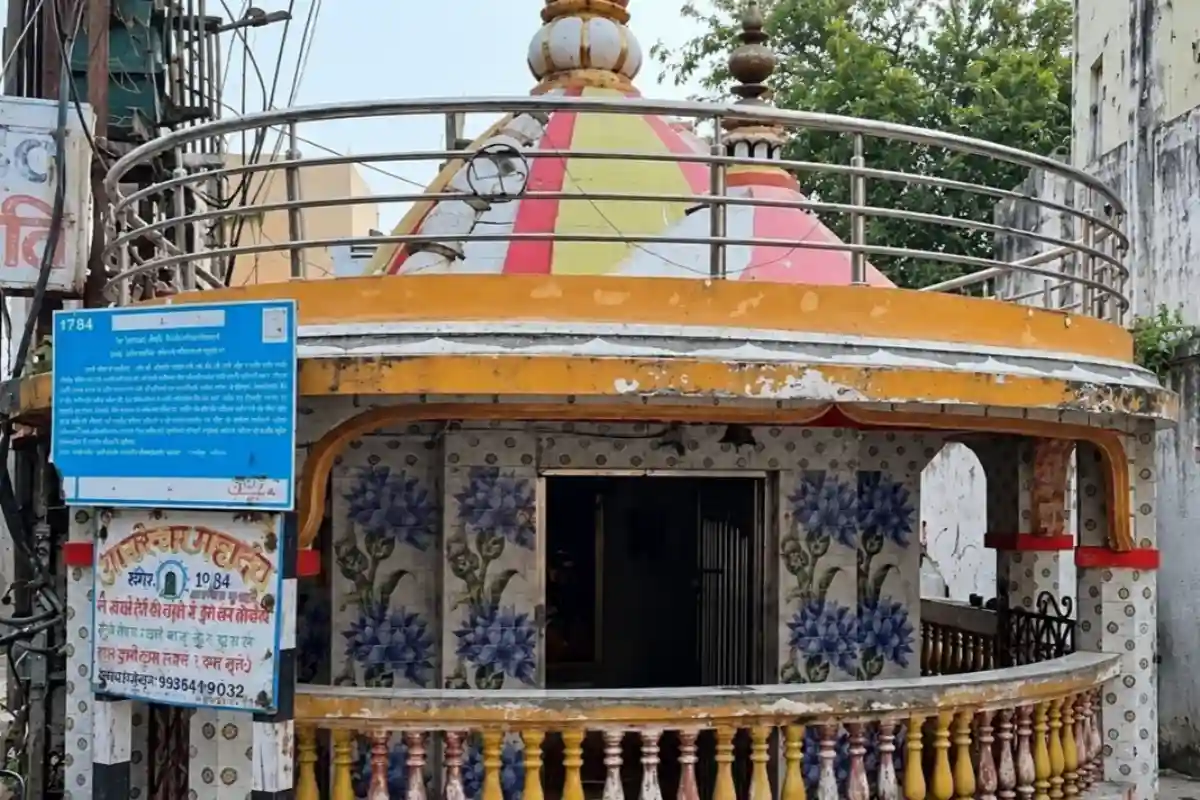
What is Apsareshwar Mahadev in Ujjain?
Apsareshwar Mahadev is the seventeenth of Ujjain's 84 Mahadev lingas, with its story in the Skanda Purana, Avantya Khanda, chapter 17 of the Chaturashiti Linga Mahatmya. The apsara Rambha, cursed by Indra, worships a linga in Mahakalavana. Shiva promises her good fortune, heaven and a return as Indra's beloved, and the linga is named for the apsaras who worship it.
The name joins apsaras and Ishwara. Some lists print it as Appareshwar, which is a corruption; this article uses Apsareshwar throughout.
Local tradition places the temple in the Patni Bazar area, in Modi ki Gali, which one newspaper list also calls Sugandhi Gali.
At a glance
- The central figure is the apsara Rambha, not Menaka, Tilottama or Urvashi.
- Indra curses her, and the sage Narada points her to a linga in Mahakalavana.
- Shiva promises her good fortune, heaven and a return as Indra's beloved.
- The linga is named Apsareshwar because apsaras worship it.
Apsareshwar Mahadev: quick facts
| Topic | Detail |
|---|---|
| Meaning of the name | Lord (Shiva) of the apsaras |
| Deity | Shiva, in linga form |
| Source text | Skanda Purana, Avantya Khanda, Chaturashiti Linga Mahatmya, Chapter 17 (5.2.17) |
| Position among the 84 Mahadevs | Seventeenth |
| Narrator and listener | Shiva speaking to Parvati |
| Central figure | The apsara Rambha |
What is the story of Apsareshwar Mahadev in the Skanda Purana?
The previous chapter, on Ishaneshwar, ends with Shiva telling Parvati to listen next to the power of Apsareshwar. The story that follows is usually told like this.
Rambha's curse
Indra sits in assembly, and the apsara Rambha dances before him. Her mind wanders and she misses the rhythm and beat. Indra curses her to lose her radiance and go to the world of mortals. Rambha falls to the earth and weeps, and her fellow apsaras come to her.
Narada's advice
The sage Narada arrives, meditates, and tells them what to do: go to Mahakalavana, where a linga fulfils wishes, and worship it.
Shiva's boon
The apsaras, Rambha among them, worship the linga, and Shiva is pleased. The boon he gives Rambha is the one verse of this chapter that is confirmed in the Sanskrit text:
रंभे प्राप्स्यसि सौभाग्यं स्वर्गलोकं यशस्विनि ।
भविष्यसि महाभागे जिष्णोस्त्वं वल्लभा ध्रुवम् ॥
Meaning: Rambha, glorious one, you will gain good fortune and the world of heaven; fortunate one, you will surely become the beloved of Jishnu (Indra) (Skanda Purana 5.2.17.19).
Because apsaras worshipped it, the linga is known as Apsareshwar.
What does the Skanda Purana say Apsareshwar gave Rambha?
Verse 19 names three things:
- Good fortune (saubhagya).
- The world of heaven.
- A return as the beloved of Indra.
Which popular claims about Apsareshwar Mahadev don't match the text?
The story of Apsareshwar Mahadev is often retold with changes. These claims could not be matched to the Skanda Purana.
| Popular claim | What can be said from the text | Status |
|---|---|---|
| Narada said the linga stands in front of the Harsiddhi peeth | Not confirmed in the chapter text; today's temple is not in front of Harsiddhi either | Not confirmed |
| Urvashi won Pururava as her husband by worshipping this linga | The chapter's confirmed verse names Rambha; two retellings of the Urvashi episode differ from each other | Not confirmed |
| The linga restores a lost position and prestige, even if someone else is sent to worship | Not found in the verses read | Likely later belief |
| Touching the linga gives kingdom and liberation | Not found in the verses read | Not confirmed |
| The popular verse "देवं सप्तदशं विद्धि विख्यातं अप्सरेश्वरम्" is the opening line | It does not match the original verse 1 as far as checked, and its Sanskrit is faulty as printed | Not confirmed |
| The linga is a protected monument | No source shows protected status | Not confirmed |
How is this different from other Rambha and apsara stories?
Apsara curses are a common theme, so several stories are easy to confuse with this one.
| Story | Text | Who curses | Link to Apsareshwar |
|---|---|---|---|
| Rambha turned to stone | Valmiki Ramayana, Bala Kanda 1.64 | Vishwamitra | A different story; do not join the two |
| Menaka and Vishwamitra | Mahabharata and others | No curse | Unrelated; it leads to the birth of Shakuntala |
| Urvashi and Pururava | Rigveda, Vikramorvashiya, Puranas | Varies by text | Not confirmed in chapter 17 |
| Apsara Kunda | Skanda Purana 5.1.8 | Not checked | Tagare counts chapter 17 as a repeat of this legend |
In his introduction to the Chaturashiti Linga Mahatmya, G. V. Tagare writes that the author sometimes modifies an older Puranic legend to suit his purpose, or gives a new legend mythological names. He lists "Apsarah Khanda (chapter 17)" among the repeated stories. In the first section of the Avanti Khanda, chapter 8 is "The Greatness of Apsara Kunda," so the Apsareshwar tale appears to rework that earlier one.
A line widely shared online, beginning "devam saptadasham viddhi," is offered as the opening verse of this chapter. As printed, its Sanskrit is faulty (the elision mark is missing in "लोकोऽभीष्टान्"), and it has not been matched to the original. Until it is, quote only verse 19.
What else do people ask about Apsareshwar Mahadev?
Which apsara is the story about?
The Skanda Purana verse that could be checked addresses Rambha directly ("Rambhe"). Popular retellings sometimes bring in Urvashi, but that is not confirmed in the chapter. Menaka and Tilottama are not part of this story. Rambha is the apsara whose curse is undone at the linga.
Who cursed Rambha, and who advised her?
In the usual retelling, Indra curses Rambha after she misses the rhythm of her dance, and the sage Narada advises her to worship the linga in Mahakalavana. Verse 19 supports the Indra side, since the boon makes her Jishnu's, meaning Indra's, beloved. Narada's part comes from summaries and is not confirmed.
Is the Rambha of this story the one who was turned to stone?
No. The Ramayana tells of Rambha turned to stone by Vishwamitra, and that is a different story. In the Apsareshwar chapter, Indra is the one who curses her, and Shiva restores her hope of heaven. Nothing links the two stories, so do not mix them in one retelling.
Is today's temple the spot the Purana describes?
The Purana places the linga in Mahakalavana, and the text of the direction or landmark could not be read. Today's Apsareshwar temple is identified by tradition, in the Patni Bazar area. No source matches a Puranic landmark to the present site, so the link between the text and the shrine is a matter of faith.
Why is Apsareshwar the seventeenth in Ujjain's 84 Mahadev order?
Chapter 16, on Ishaneshwar, ends by saying that the power of Apsareshwar will be heard next, and chapter 17 is Apsareshwar. The tirtha name list (5.1.70) also includes "one famous as Apsareshwar."
The chapter that follows, 18, is Kalkaleshwar. For the full sequence, see the complete guide to Ujjain's 84 Mahadev temples.
Which linga comes after Apsareshwar in the 84 Mahadevs?
The next chapter, 18, is Kalkaleshwar. Ishaneshwar, the 16th, comes just before.
Comments
No comments yet. Be the first to share your thoughts!
Leave a Comment