

The name: what "Gebi" actually means
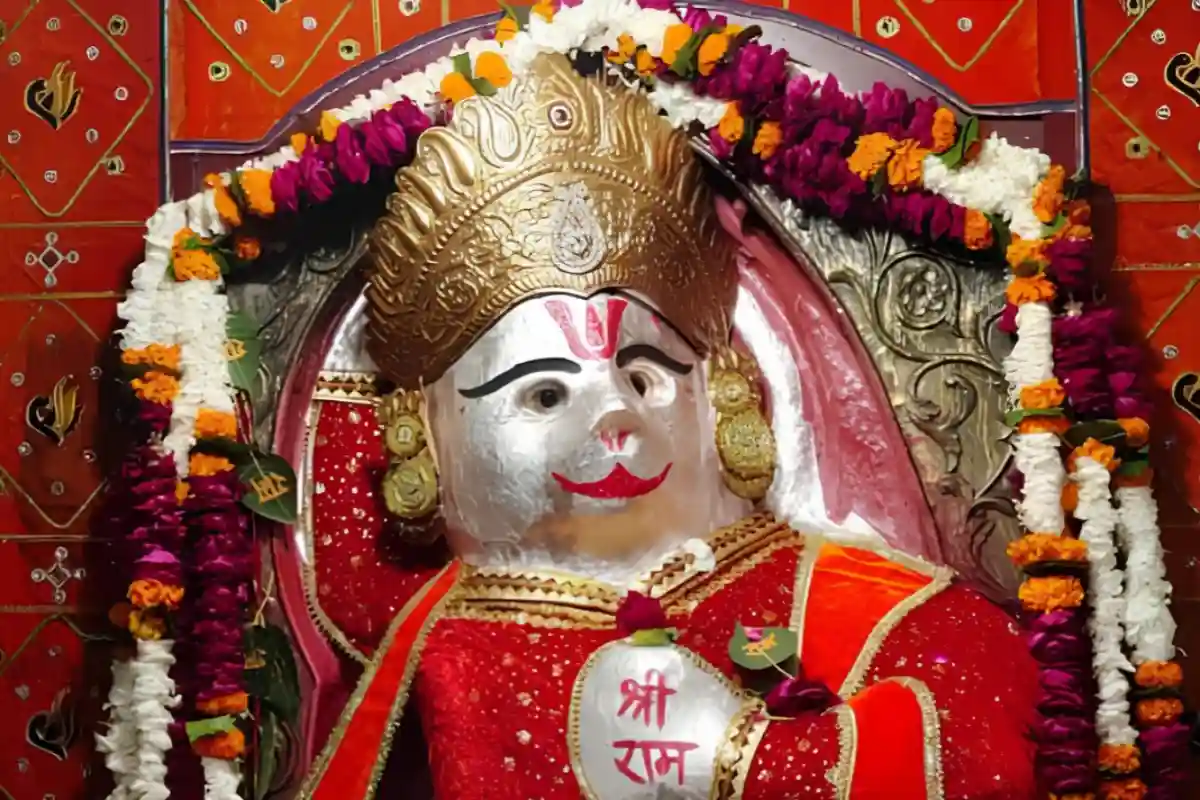
Locals use "Gebi" and "Gaibi" interchangeably. Both come from a Hindi-Urdu root meaning hidden, secret, or mysterious (गुप्त/रहस्यमयी). The deity got the name because the idol appeared without being installed by any human hand: it came out of a stepwell, already formed, already red. That mystery sits right there in the name.
The temple is also widely called Doctor Hanuman. Devotees say that even broken bones heal after sincere darshan here. This is a faith-based belief, not a medical claim, but it tells you something about the kind of devotion the temple commands.
The legend of the stepwell
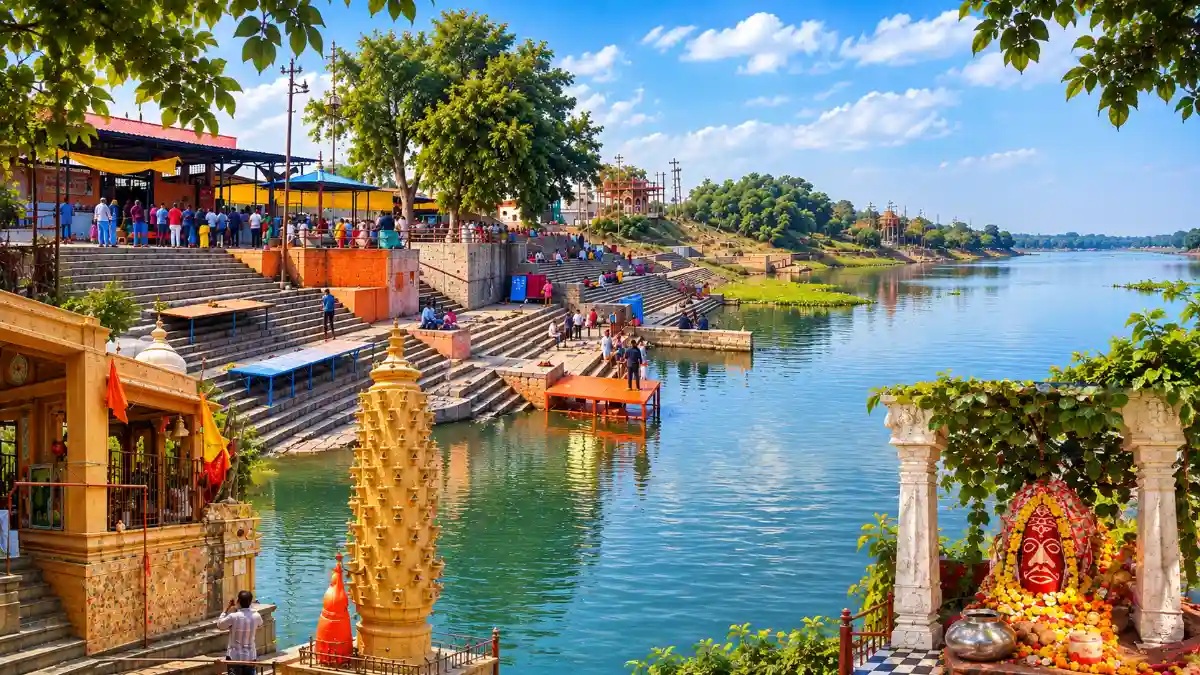
No documented founding date exists for this temple. What the tradition carries is a story: years ago, Lord Hanuman appeared in the dream of a devotee and directed him to a local bavdi (stepwell), saying the deity was inside and needed to be brought out. When the water was drawn back, a radiant, red idol emerged. It was installed on a large stone slab at this spot and named Gebi: the hidden one.
A second layer of legend ties the shrine to the Ramayana episode of Ahiravana, the demon king who abducted Rama and Lakshmana into the netherworld (patal). Hanuman descended into patal, killed Ahiravana, and emerged victorious. At this temple, the belief is that Ahiravana's kuldevi (clan goddess) lies crushed beneath Hanuman's feet, and the idol shows Hanuman in exactly that form of patal-loka return. Similar iconography exists at a few other Hanuman shrines across India, including the reclining Hanuman at Prayagraj.
The temple's own social media claims it is the 71st of Ujjain's 108 traditional Hanuman temples and more than 1,200 years old. No archaeological or mainstream historical source confirms this. It remains an unverified devotional claim.
The idol: what you see when you stand in front of it
The murti is about 6 feet tall and bright red (not painted red, but coated every single day with hinglu (a type of sindoor) and chameli (jasmine) oil). The priest describes it as swayambhu: self-manifested, not carved or commissioned by anyone. Prasad here is simple: gud-chana, jaggery with roasted gram.
Key facts at a glance
- Deity: Lord Hanuman (swayambhu, self-manifested)
- Idol height: Approximately 6 feet
- Daily shringar: Hinglu (sindoor) and chameli (jasmine) oil
- Prasad: Gud-chana (jaggery and roasted gram)
- Specialty: Consecrated black thread (gop/gopi) for protection
- Peak days: Tuesday and Saturday
- Location: Dhaba Road / Kamri Marg, Danigate, Ujjain 456006
- Nearest landmark: Gopal Mandir, approx. 1.1 km from Ujjain Junction
The black thread: what it is and who takes it
The temple distributes an abhimantrit (consecrated by ritual) black thread called gop or gopi. Devotees tie it on the wrist or ankle as protection against buri nazar (the evil eye) and negative energy. Parents bring children here specifically for this blessing. It's one of the temple's most-requested offerings and a big reason first-time visitors return.
Ujjain's 108 Hanuman temples: where Gebi fits
Ujjain has a tradition of 108 Hanuman temples believed to guard the city's four cardinal directions. The Avantika Khand of the Skanda Purana is cited as the textual basis for this network. Gebi Hanuman is counted among these 108.
Every year, the Dharm Vigyan Shodh Sansthan organizes a parikrama of all 108 temples called the Hanuman Yatra. It starts at the Uttar Mukhi (north-facing) Hanuman temple in the Khak Chowk area. The yatra completed 100 years in December 2024.
Ujjain also celebrates Hanuman Ashtami in a way said to be unique to the city. On that day, Mahakal is dressed in Hanuman's form during the Bhasma Aarti. Gebi Hanuman sees special puja and bhandara on both Hanuman Ashtami and Hanuman Jayanti.
When to visit: timings, crowds, and the aarti
| Day / occasion | What to expect | Recommended arrival |
|---|---|---|
| Tuesday or Saturday (evening) | 2,000+ devotees; 30-40 min aarti with dhol | By 8:15 PM for ~8:45 PM aarti start |
| Hanuman Jayanti | Special puja, bhajan-kirtan, bhandara | Morning; expect heavy crowds all day |
| Hanuman Ashtami | Special shringar, puja; city-wide 108-temple yatra | Morning; pair with Mahakal Bhasma Aarti |
| Regular weekday | Quieter; shorter queue; good for unhurried darshan | Any morning between 6-9 AM |
Timings above are based on local listings and visitor accounts. Confirm with the temple before visiting, as schedules can change on festival days.
General hours: The temple is broadly open from around 5:00 AM to 11:00 PM daily. The sandhya (evening) aarti falls around 8:30-9:00 PM. October through March is the most comfortable season for visiting Ujjain's old city.
How to reach the temple
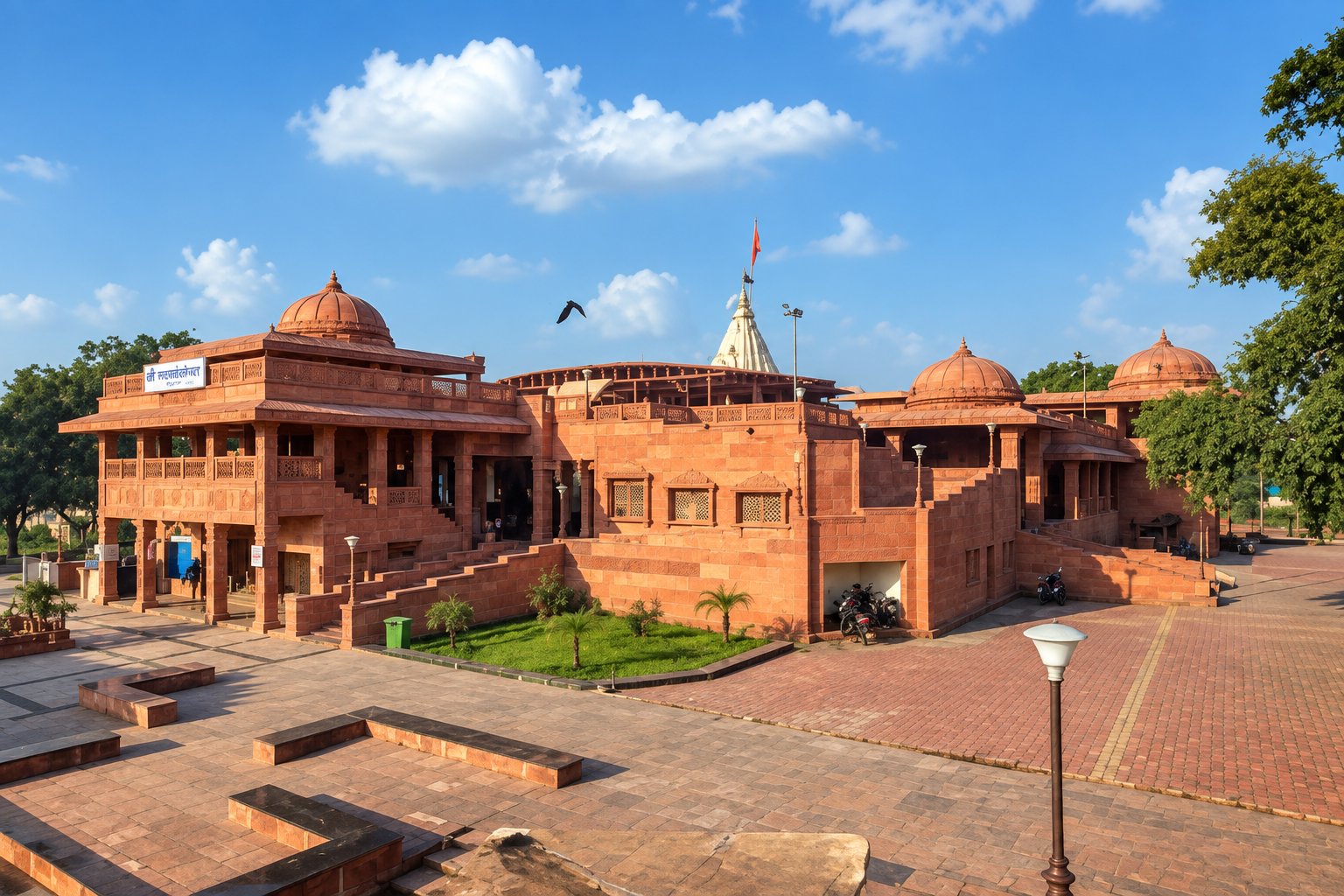
The temple is in the Dhaba Road / Kamri Marg / Danigate area of Ujjain's old city, roughly 1.1 km from Ujjain Junction railway station.
The aarti runs 30-40 minutes with sustained dhol playing, louder and more charged than a typical temple aarti. The narrow lane fills fast. Arrive at 8:15 PM, not 8:45 PM. Standing near the back means you hear the drums but barely see the murti. On festival days the crowd can double.
Dress code and practical notes
Modest, traditional dress is the norm. Remove footwear before the entrance. Photography inside the sanctum is generally not encouraged; check with the priest first.
Bollywood actor Amitabh Bachchan is among the temple's well-known devotees. He has not visited in person but shares images of the temple's shringar about 12 times a year. The temple's Instagram handle is @gebi_hanuman_official.
One important note: don't confuse with Khade Hanuman
If you've read recent Ujjain news about a Hanuman temple caught in road-widening work for Simhastha 2028Explore the world's largest spiritual gathering in Ujjain., that is the Khade Hanuman temple near Sati Gate (Kanthal Chowk / Bada Sarafa area): a completely separate shrine. Gebi Hanuman Mandir is not involved in that controversy.

Comments
No comments yet. Be the first to share your thoughts!
Leave a Comment