

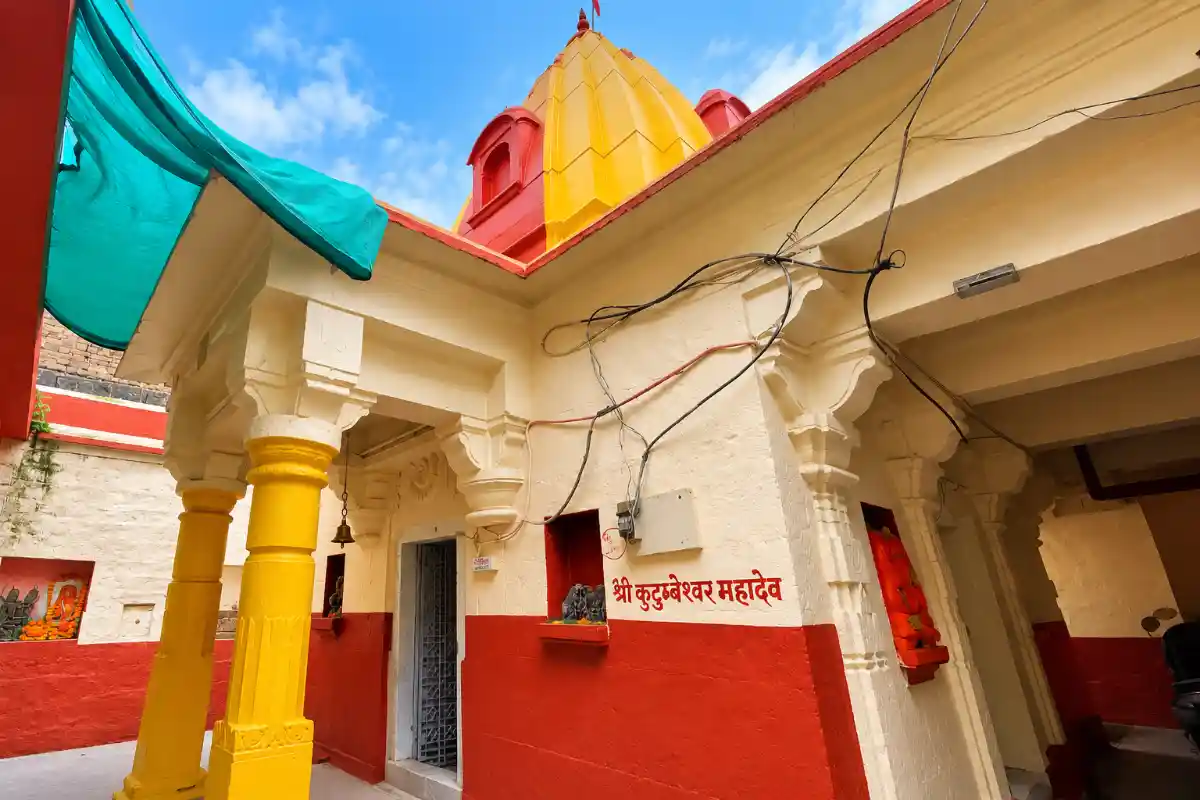
What is Kutumbeshwar Mahadev in Ujjain?
Kutumbeshwar Mahadev is the fourteenth of Ujjain's 84 Mahadev lingas, with its story in the Skanda Purana, Avantya Khanda, chapter 14 of the Chaturashiti Linga Mahatmya. Shipra placed the Kalakuta poison on a supreme linga in front of Kameshwar. After the sage Lakulisha climbed onto it, the linga became safe to touch and took the name Kutumbeshwar.
The name joins kutumba, the family, and Ishwara. Newspaper lists sometimes spell it Kutumbakeshwar, a later folk spelling; the Sanskrit text has Kutumbeshwar, and this article uses it throughout.
Local tradition places the temple in Singhpuri, near Kartik Chowk, beyond the haveli of Shri Govardhannathji.
At a glance
- Shiva holds the Kalakuta poison in his throat after taking a peacock form.
- Ganga, Yamuna and Sarasvati say they cannot carry it, and Shipra agrees to.
- The poison killed every living thing that saw the linga, until Shiva revived them with a glance.
- Lakulisha climbs onto the linga by Shiva's order, and the linga becomes safe to touch.
Kutumbeshwar Mahadev: quick facts
| Topic | Detail |
|---|---|
| Meaning of the name | Lord (Shiva) of the family (kutumba) |
| Deity | Shiva, in linga form |
| Source text | Skanda Purana, Avantya Khanda, Chaturashiti Linga Mahatmya, Chapter 14 (5.2.14), 41 verses |
| Position among the 84 Mahadevs | Fourteenth |
| Narrator and listener | Shiva speaking to Parvati |
| Place in the story | Mahakalavana, in front of Kameshwar |
Some blog retellings say the poison was poured on the Kameshwar linga. The Sanskrit text says otherwise: the word is "puraḥ," so the poison is placed on a supreme linga that stands in front of Kameshwar. Tagare translates it "in front of Kameshwar." The word puraḥ can also mean "to the east," which would suggest a direction, but the text does not make that explicit, so "in front of Kameshwar" is the safest reading.
What is the story of Kutumbeshwar Mahadev in the Skanda Purana?
Shiva opens the chapter by naming the linga:
कुटुंबेश्वरसंज्ञं तु देवं विद्धि चतुर्दशम् ।
यस्य दर्शनमात्रेण गोत्रवृद्धिश्च जायते ॥
Meaning: know the deity named Kutumbeshwar as the fourteenth; by merely seeing him, the family (gotra) flourishes (Skanda Purana 5.2.14.1).
The Kalakuta poison and the peacock form
The chapter begins with the terrible Kalakuta poison, fearsome with its flames. The gods and asuras were afraid of its flames. Out of compassion for the gods, Shiva took a peacock form and held the poison in his throat:
मायूरं रूपमास्थाय देवानामनुकंपया ।
कंठे धृतं महारौद्रं कालकूटाह्वयं तदा ॥
Meaning: taking a peacock form out of compassion for the gods, he then held in his throat the extremely terrible poison called Kalakuta (Skanda Purana 5.2.14.9).
Shiva then tells Parvati why he was sad. She had fled in fear on seeing his form, which was like a poison tree not to be approached, and that made him unhappy (verse 10).
The rivers that refused
Shiva asked Ganga to carry the poison swiftly to the great ocean, and she said she had no power to carry it. Yamuna and Sarasvati could not do it either. Then he turned to Shipra, born of Brahma.
Shipra takes the poison to Mahakalavana
Shiva told Shipra, "Daughter, by my order go to Mahakalavana. Take the Kalakuta there and place it on the supreme linga that stands in front of Kameshwar":
शिप्रे पुत्रि ममादेशान्महाकालवनं व्रज ।
गृहीत्वा कालकूटं तु पुरः कामेश्वरस्य हि ॥
विद्यते परमं लिंगं तस्मिँल्लिंगे नियोजय ।
Meaning: Shipra, my daughter, by my order go to Mahakalavana, take the Kalakuta, and place it on the supreme linga that stands in front of Kameshwar (Skanda Purana 5.2.14.16 to 17).
The poison-linga
Shipra placed the poison on the head of the linga. A poison-linga arose, and seeing it brought death. Animals, birds and men died, and so did ascetics who had come on pilgrimage. Shiva revived all of them with a glance.
The brahmins asked only for the protection of the people. Shiva said the linga would grant welfare and health, and he added a condition:
कायावरोहणाद्विप्राः स्वयमत्रागमिष्यति ।
लकुलीशस्तदा चायं देवः स्पृश्यो भविष्यति ॥
Meaning: from Kayavarohana, O brahmins, Lakulisha will himself come here; then this deity will be safe to touch (Skanda Purana 5.2.14.30 to 31).
Lakulisha climbs the linga
Shiva said the linga would become famous in the world as Kutumbeshwar. Lakulisha then climbed onto the linga by Shiva's order, a sight that caused wonder in the world and spread his fame through the country.
What does the Skanda Purana promise for worshipping Kutumbeshwar Mahadev?
The chapter lists these results:
- Merely seeing the linga makes the family flourish (stated in the opening verse and again after Lakulisha's arrival).
- Whoever sees the linga on the fifth lunar day of the dark half of Ashwin will have many sons and much wealth, without doubt.
- Visitors also gain great prosperity and freedom from disease, and go to Shiva's world.
- Visiting frees a person from sin.
- Whoever bathes in Shipra with a settled mind on a Sunday or Monday, and then sees Kutumbeshwar on the eighth or fourteenth lunar day, receives the fruit of a thousand Rajasuya and a hundred Vajapeya sacrifices.
Which popular claims about Kutumbeshwar Mahadev don't match the text?
The story of Kutumbeshwar Mahadev is often retold with changes. These are the claims that do not match the Skanda Purana.
| Popular claim | What the Skanda Purana says | Status |
|---|---|---|
| The poison is Halahala | The chapter calls it Kalakuta throughout | Contradicts the text |
| Shiva became a peacock and drank the poison | He took a peacock form and held the poison in his throat; the words "drink" and "Neelkantha" are not used | Partly in the text |
| Shiva could not bear the poison's flames | The gods and asuras feared the flames; Shiva was sad because Parvati fled in fear at his form | Contradicts the text |
| Shiva handed the poison straight to Shipra | Ganga declined first, then Yamuna, Sarasvati and others; Shipra, born of Brahma, was asked | Partly in the text |
| Shipra poured the poison on the Kameshwar linga | She placed it on a supreme linga in front of Kameshwar | Contradicts the text |
| Only brahmins died | Animals, birds, men and ascetics on pilgrimage died as well | Partly in the text |
| Brahmins of Lakulisha's lineage came and worshipped | Lakulisha himself came and climbed onto the linga by Shiva's order | Contradicts the text |
| Shiva revived the dead and gave family growth on the spot | A glance of Shiva revived them; the linga would bring welfare and health, and family growth follows Lakulisha's arrival | Partly in the text |
| Monday, Pradosh and Mahashivratri are the special days | The text names the Ashwin dark-half fifth, and Sunday or Monday with the eighth or fourteenth; Pradosh and Mahashivratri are not named | Partly in the text |
| The linga removes negative energy and gives peace of mind | The text names family growth, sons, wealth, prosperity, freedom from disease, freedom from sin and Shiva's world | Later wording |
Tagare, in a note to chapter 82 on Kayavarohaneshwar, reads Kayavarohana as modern Karvan in Vadodara district, Gujarat, the birthplace of Lakulisha, who is counted as Shiva's twenty-eighth incarnation and founder of the Pashupata sect. The same note calls the Purana author's version "garbled," because there Kayavarohana has become the name of a linga south of Mahakalavana. Ujjain's own tradition also has a Kayavarohaneshwar, number 82 on the list, at a village called Karohan.
Kaundinya's commentary on the Pashupata Sutra (placed by scholars around the fourth to sixth century CE) says that Shiva, in a brahmin's body at Kayavatarana, went on foot to Ujjayini and initiated his first pupil, Kushika. That makes Lakulisha's coming to Ujjain a reported event in the Pashupata tradition. No reliable source describes a Lakulisha image or a Pashupata practice in today's Kutumbeshwar temple.
What else do people ask about Kutumbeshwar Mahadev?
Why did Ganga, Yamuna and Sarasvati refuse the poison?
Shiva asked Ganga to carry the Kalakuta swiftly to the great ocean, and she answered that she had no power to carry it. Yamuna, Sarasvati and other rivers were also unable. Shipra, born of Brahma, was then asked. Shiva promised that every tirtha on earth and below it would come to serve her.
Why a peacock form?
The chapter says only that Shiva took a peacock form out of compassion for the gods, and gives no reason for the peacock. Interpreters offer links: the peacock is thought to eat venomous snakes, and yoga tradition says a practitioner of mayurasana can digest Kalakuta. These are readings, not statements of the text.
How does this differ from the usual Neelkantha story?
In the familiar account, Shiva swallows the poison, it stays in his throat, and he is called Neelkantha. In chapter 14, Shiva holds the Kalakuta in his throat, but the poison is then carried out by Shipra to a linga. The chapter does not use the name Neelkantha, so it is a separate local tradition.
Is today's temple the spot the Purana describes?
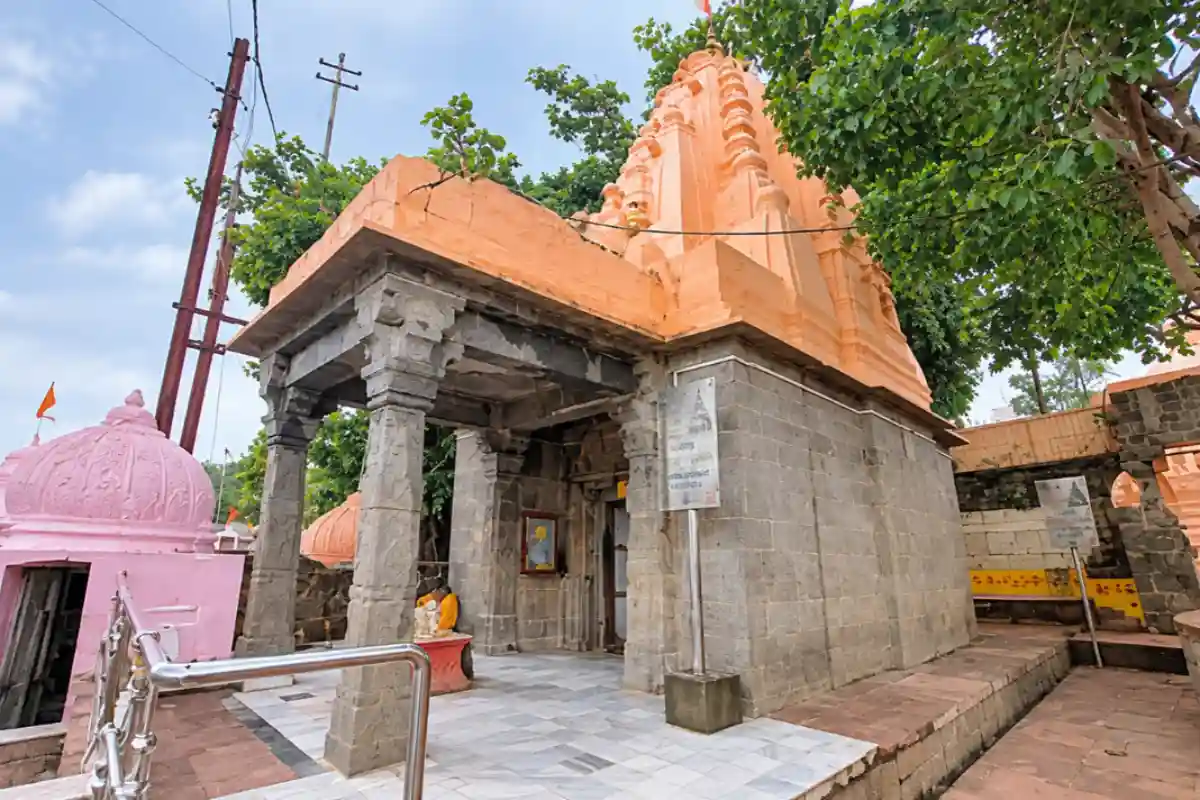
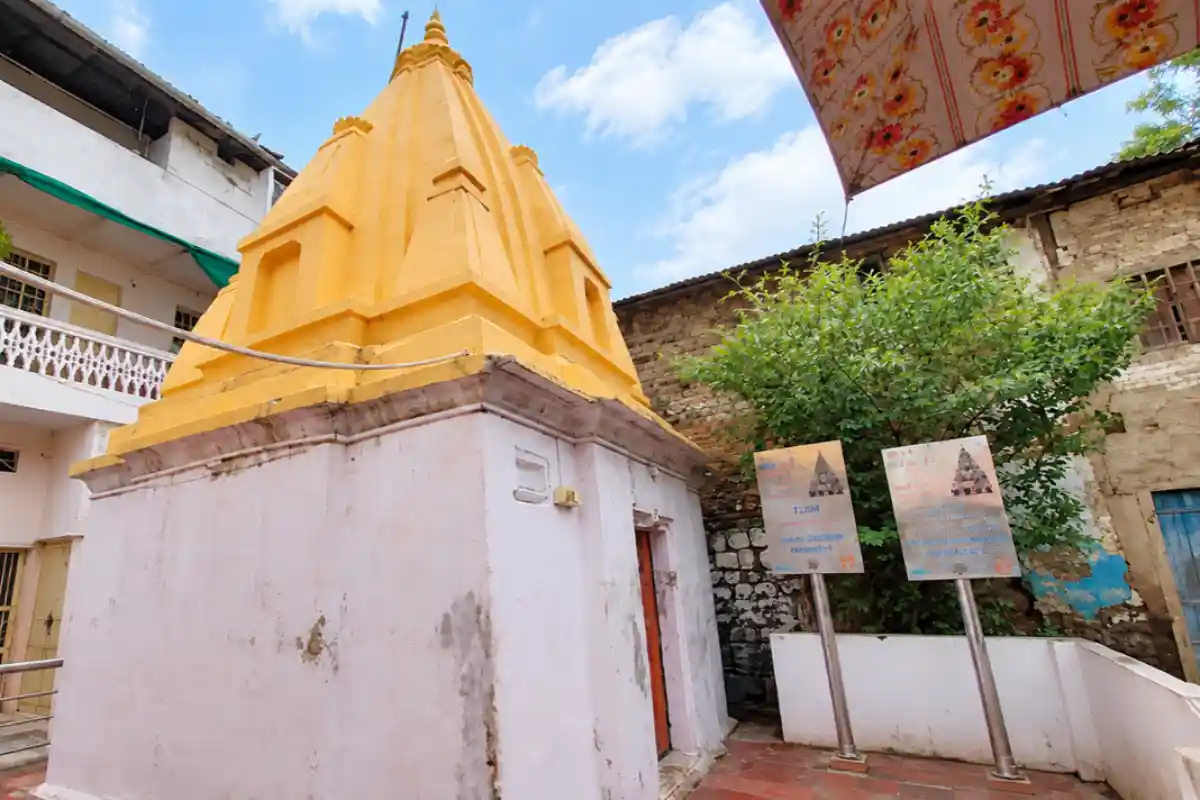
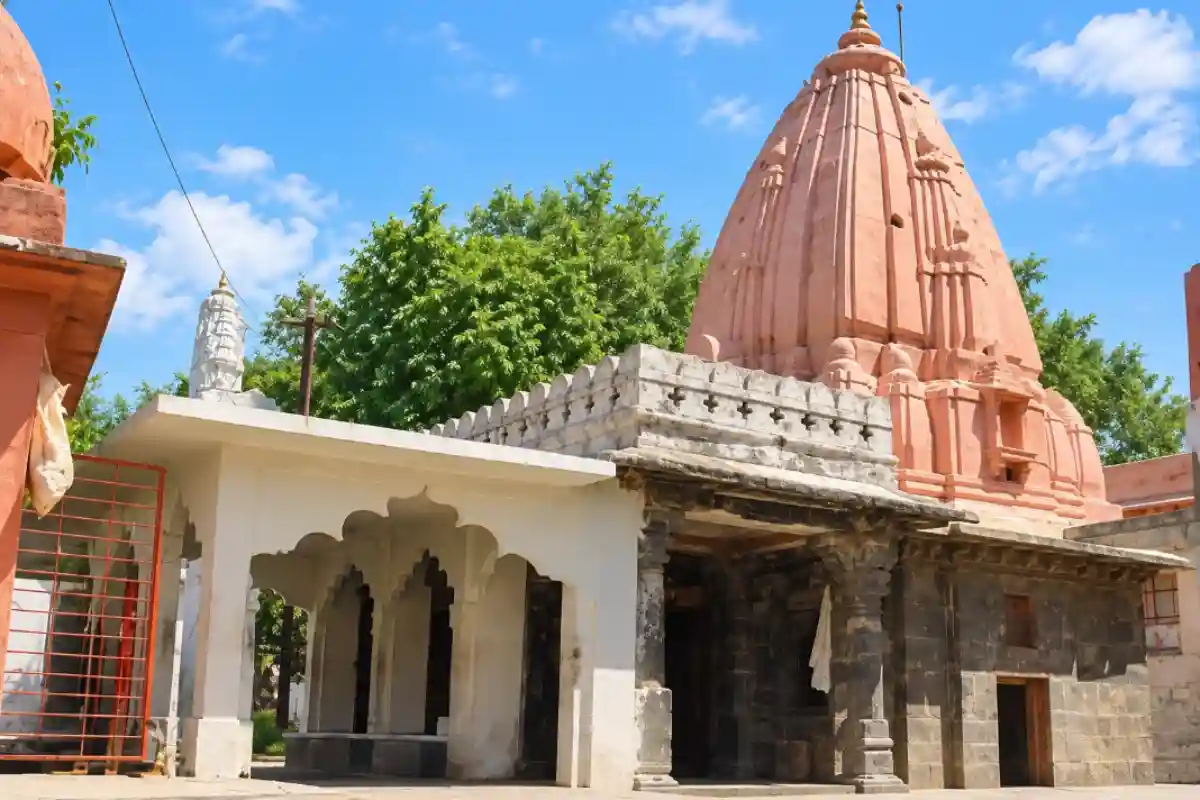
The identity of today's Kutumbeshwar shrine rests on tradition. Verse 38 says the river Shipra flows nearby with a stepwell and a well, and the linga lies in front of Kameshwar. No source proves that Singhpuri matches either clue, so the match with the text is a matter of faith.
Why is Kutumbeshwar the fourteenth in Ujjain's 84 Mahadev order?
In the Avanti Khanda, chapter 13 on Kameshwar ends with the line "Henceforth listen to the power of Kutumbeshwar," and chapter 14 is Kutumbeshwar. The tirtha name list (5.1.70) carries the same run: one famous as Kameshwar, thereafter Kutumbeshwar.
Chapter 14 has 41 verses. Its last line invites the listener to hear of Indradyumneshwar next. Its closing colophon calls it the chapter that describes the greatness of Kutumbeshwar. For the full sequence, see the complete guide to Ujjain's 84 Mahadev temples.
Which linga comes after Kutumbeshwar in the 84 Mahadevs?
The next chapter, 15, is Indradyumneshwar. Kameshwar, the 13th, comes just before.
Comments
No comments yet. Be the first to share your thoughts!
Leave a Comment