

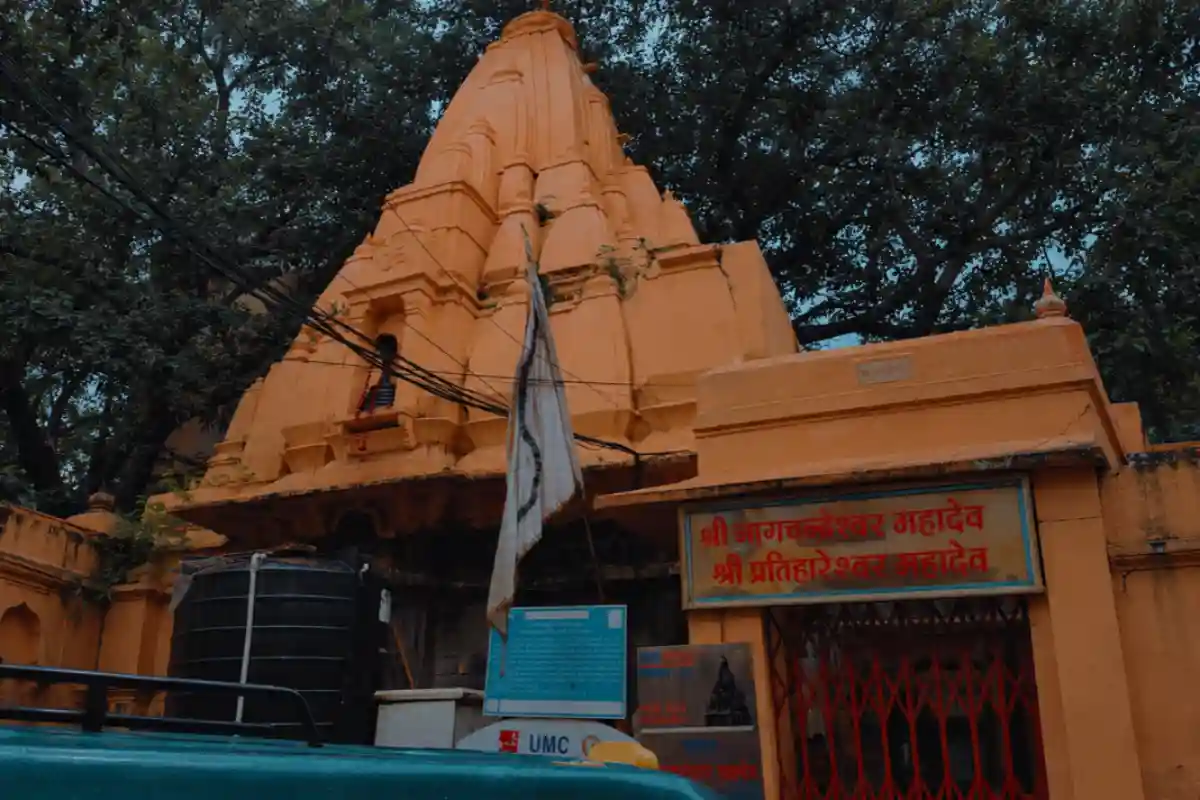
What is Pratihareshwar Mahadev in Ujjain?
Pratihareshwar Mahadev is the twentieth of Ujjain's 84 Mahadev lingas, with its story in the Skanda Purana, Avantya Khanda, chapter 20 of the Chaturashiti Linga Mahatmya. Nandi, Shiva's doorkeeper, is cursed after Agni tricks him. He worships a linga in Mahakalavana, is freed, and the linga is named for the doorkeeper who worshipped it.
Pratihara means doorkeeper, so the name means the Lord worshipped by the doorkeeper. Local lists spell it Pratihareshwar, and the Sanskrit text has Pratiharesvara with a long i; this article uses Pratihareshwar throughout.
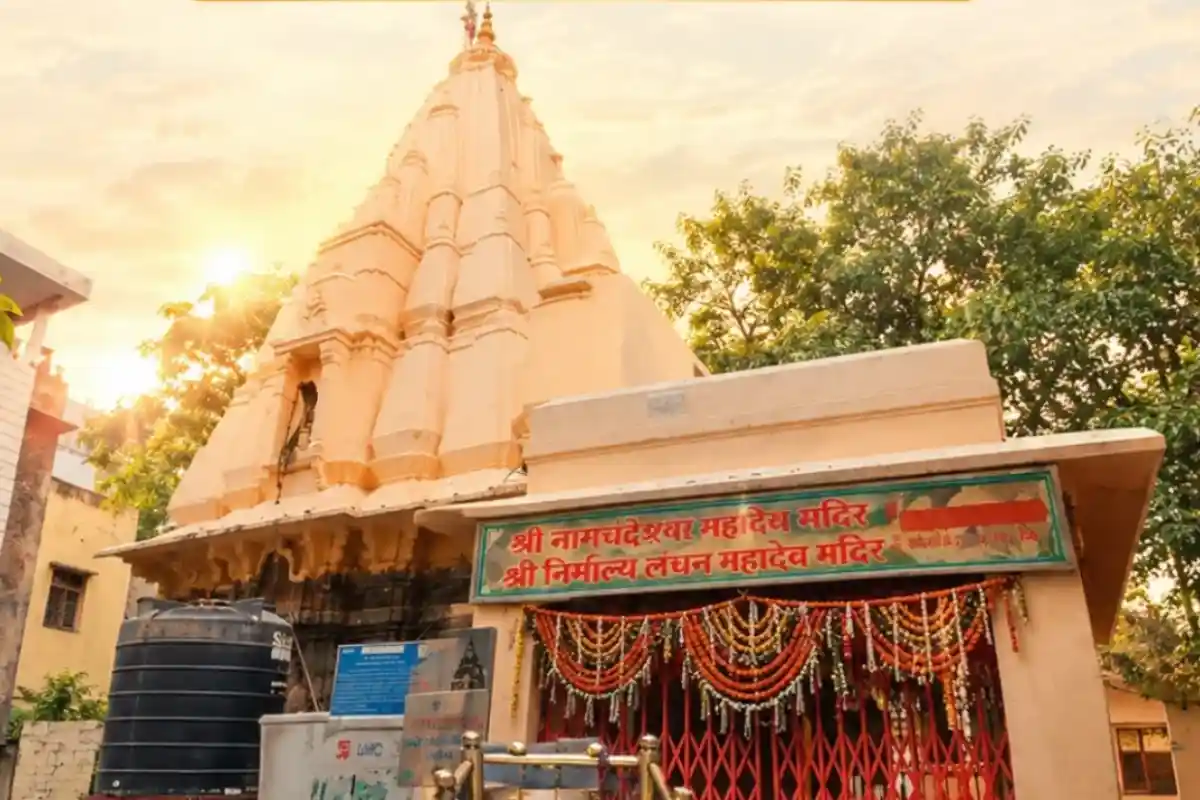
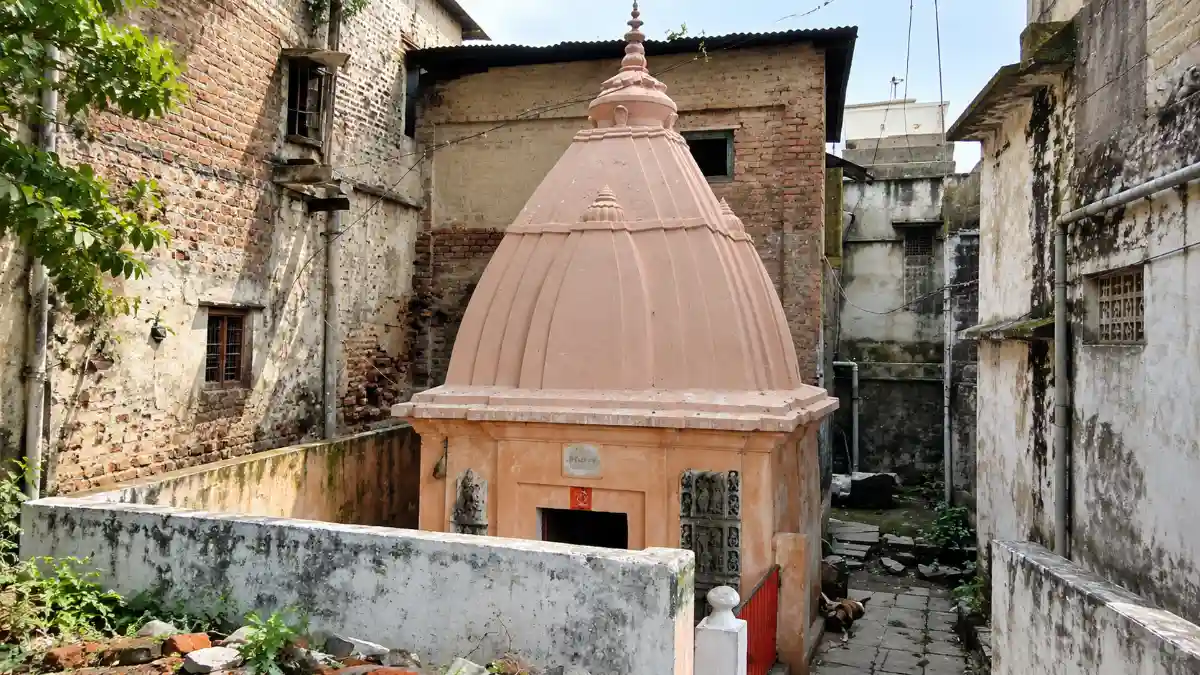
Local tradition places the temple near Patni Bazar, in the compound of the Nagachandreshwar temple in Nagnath ki Gali.
At a glance
- Nandi, the leader of the ganas, stands at Shiva's threshold alertly.
- Agni suggests taking a swan's form to deceive the gatekeeper, and Shiva curses Nandi.
- On the Lokapalas' advice, Nandi worships a linga in Mahakalavana in the guise of a Kapalika.
- A voice from the linga frees him, and the linga is named Pratihareshwar.
Pratihareshwar Mahadev: quick facts
| Topic | Detail |
|---|---|
| Meaning of the name | Lord worshipped by the pratihara, the doorkeeper |
| Deity | Shiva, in linga form |
| Source text | Skanda Purana, Avantya Khanda, Chaturashiti Linga Mahatmya, Chapter 20 (5.2.20) |
| Position among the 84 Mahadevs | Twentieth |
| Narrator and listener | Shiva speaking to Parvati |
| Central figure | Nandi, the doorkeeper of Shiva |
What is the story of Pratihareshwar Mahadev in the Skanda Purana?
Tagare's note on the chapter sums it up: Nandi, the doorkeeper of Shiva, was dismissed but was reinstated to his post by adoring this linga. Shiva opens the chapter by calling Pratihareshwar the twentieth deity, and says that merely by seeing it one becomes wealthy.
The chapter opens with these words of Shiva:
प्रतीहारेश्वरं देवि विद्धि विंशतिमं प्रिये ।
यस्य दर्शनमात्रेण धनवानिह जायते ॥
Meaning: "Know Pratihareshwar, O dear Devi, as the twentieth; by merely seeing him one becomes wealthy here" (Skanda Purana 5.2.20.1).
Sati, Mandara and the worried gods
The chapter begins with Sati giving up her body in anger at Daksha and being born again in the house of Himachala. Shiva and Parvati then spend a hundred divine years and more in dalliance on Mount Mandara.
Indra and the other gods grow anxious that the son born of it would burn up the three worlds. Brihaspati advises that a way be found to stop the dalliance.
Nandi at the threshold
The gods reach Mandara. Nandi, leader of the ganas, is standing at the threshold alertly. Agni proposes a plan: he will take the splendid form of a swan and go to Shiva after deceiving the gatekeeper. Indra and the other gods stay at the gateway.
The curse
Shiva stops his dalliance, and the gods return to heaven. Shiva then curses Nandi: "Go to Bhuloka at once."
Nandi cries out that he has surely been deceived by Agni and especially by Indra, and asks whether he did some evil deed earlier. The text does not give a reason for the curse.
Mahakalavana and the voice
The Lokapalas, the guardians of the quarters, suggest Mahakalavana as the remedy. Nandi goes there, adopts the guise of a Kapalika and worships the deity according to the injunctions. A voice with no body speaks from the linga: "O gatekeeper, due to your excellent devotion, liberation from the curse is effected."
अशरीरसमुत्पन्ना वाणी लिंगात्तदा प्रिये ।
संजाता शापमोक्षस्ते प्रतीहार सुभक्तितः ॥
Meaning: "Then, dear one, a bodiless voice rose from the linga: O doorkeeper, through your excellent devotion you are freed from the curse" (5.2.20.24).
Shiva ends by saying that ever since then this deity is known as Pratihareshwar.
What does the Skanda Purana promise for worshipping Pratihareshwar Mahadev?
The chapter lists these results:
- Merely seeing the linga makes a person wealthy here (the opening verse).
- The deity gives people the benefit they desire.
- Those who worship it have no separation from their position, nor forced exit from it, even in a dream.
- The sins of seven births, big or small, perish entirely.
- If people remember it in mind, all the members of their families will undoubtedly go to heaven.
The last verse of the chapter puts the reward for remembering the deity in one line:
मनसा ये स्मरिष्यति प्रतीहारेश्वरं शिवम् ।
एवं तस्य कुलं सर्वं याति स्वर्गं न संशयः ॥
Meaning: "Those who remember Shiva as Pratihareshwar in the mind, their whole family goes to heaven, without doubt" (5.2.20.28).
Which popular claims about Pratihareshwar Mahadev don't match the text?
The story of Pratihareshwar Mahadev is often retold with changes. These are the claims that do not match the Skanda Purana.
| Popular claim | What the Skanda Purana says | Status |
|---|---|---|
| The linga is the guardian form of Shiva | The pratihara is Nandi; the linga is the Lord worshipped by the doorkeeper | Contradicts the text |
| It is one of MahakalShree Mahakaleshwar Jyotirlinga, the heart of Ujjain.'s four gatekeepers | The four gate lingas of Mahakalavana are Pingaleshwar, Kayavarohaneshwar, Bilvakeshwar and Dardureshwar, and Pratihareshwar is not among them | Contradicts the text |
| Nandi set up the linga on the bank of the Shipra after severe penance | He worshipped the deity in the guise of a Kapalika, as the rules require; installation and the Shipra are not mentioned | Contradicts the text |
| Agni took the swan form at Indra's bidding | The plan is Agni's own | Contradicts the text |
| Nandi was cursed for a lapse in his duty | No reason is given; Nandi is alert and is deceived | Not in the text |
| The gods advised him to go to Mahakalavana | The Lokapalas advised it | Contradicts the text |
| The voice restored his post and named the linga | The voice speaks of liberation from the curse; the name is given in Shiva's own narration; the reinstatement is in Tagare's note | Partly in the text |
| The linga is self-born | The word is not in the text | Not confirmed |
| It removes fear of enemies and black magic, gives promotion and children | The text names wealth, desired benefit, no loss of position, the sins of seven births, and heaven for the family | Not in the text |
| Sawan, Monday, Pradosh and Chaturdashi are special | The chapter names no day; the Chaturdashi result belongs to chapter 21, on Kukkuteshwar | Not in the text |
| The temple is tied to the Gurjara-Pratihara dynasty | No source links the two; the name comes from pratihara, doorkeeper | No evidence |
Some pages call this linga the guardian form of Shiva. The chapter says otherwise: the pratihara is Nandi, and the linga is named for the Lord whom Nandi worshipped. It is also a different matter from Mahakalavana's four gate lingas, which are guardians of the sacred region itself.
A version of the opening verse that circulates online begins "vimshatim viddhi devesh" and promises that all obstacles go. The verse on the Sanskrit page reads differently: it has "vimshatimam", the ordinal for twentieth, and it promises wealth, not the removal of obstacles. If you meet the online version, do not quote it.
In chapter 23, on Meghanadeshwar, Vishnu tells the gods that the linga there is situated to the north-east of Pratihareshwar. That is the only direction connected to this linga anywhere in the Chaturashiti Linga Mahatmya, since chapter 20 itself gives none.
The setting of the chapter, a long dalliance of Shiva and Parvati on Mandara, anxious gods and Agni sent to interrupt, resembles the better-known story of Kartikeya's birth, turned here toward Nandi's curse. Tagare warns in his introduction that the author sometimes modifies an older Puranic legend to suit his purpose.
What else do people ask about Pratihareshwar Mahadev?
Why was Nandi cursed?
The text gives no reason. Nandi stands at the threshold alertly, Agni deceives him in a swan's form, and Shiva curses him to go to Bhuloka. Nandi himself asks whether he did some evil deed earlier. Calling it negligence, as some pages do, is an interpretation and not what the verses say.
What is a Kapalika, and why did Nandi take that guise?
The Tagare translation says only that Nandi adopted the guise of a Kapalika and worshipped the deity in accordance with the injunctions. It does not say why he chose that form or describe the worship. Nothing in the chapter suggests he practised any Kapalika rite beyond that single line.
Is the Pratihareshwar temple linked to the Gurjara-Pratihara kings?
No source links them. The name comes from pratihara, which means doorkeeper, and in the story the doorkeeper is Nandi. The Gurjara-Pratihara dynasty shares only the word. Do not read a royal or historical origin into this linga from the name alone.
Is today's temple the spot the Purana describes?
Chapter 20 gives no direction or landmark beyond Mahakalavana. Today's Pratihareshwar is identified by tradition, in the compound of the Nagachandreshwar temple near Patni Bazar. The only text clue is the later line placing Meghanadeshwar to its north-east, and no source has checked that against today's sites, so the link rests on faith.
Why is Pratihareshwar the twentieth in Ujjain's 84 Mahadev order?
Chapter 19 of the Chaturashiti Linga Mahatmya is Nagachandreshwar, and chapter 20 is Pratihareshwar. Chapter 21, the next, is Kukkuteshwar. The tirtha name list (5.1.70) also carries Pratihareshwar, though that list is not a strict order of the 84.
For the full sequence, see the complete guide to Ujjain's 84 Mahadev temples.
Which linga comes after Pratihareshwar in the 84 Mahadevs?
The next chapter, 21, is Kukkuteshwar. Nagachandreshwar, the 19th, comes just before.
Comments
No comments yet. Be the first to share your thoughts!
Leave a Comment