

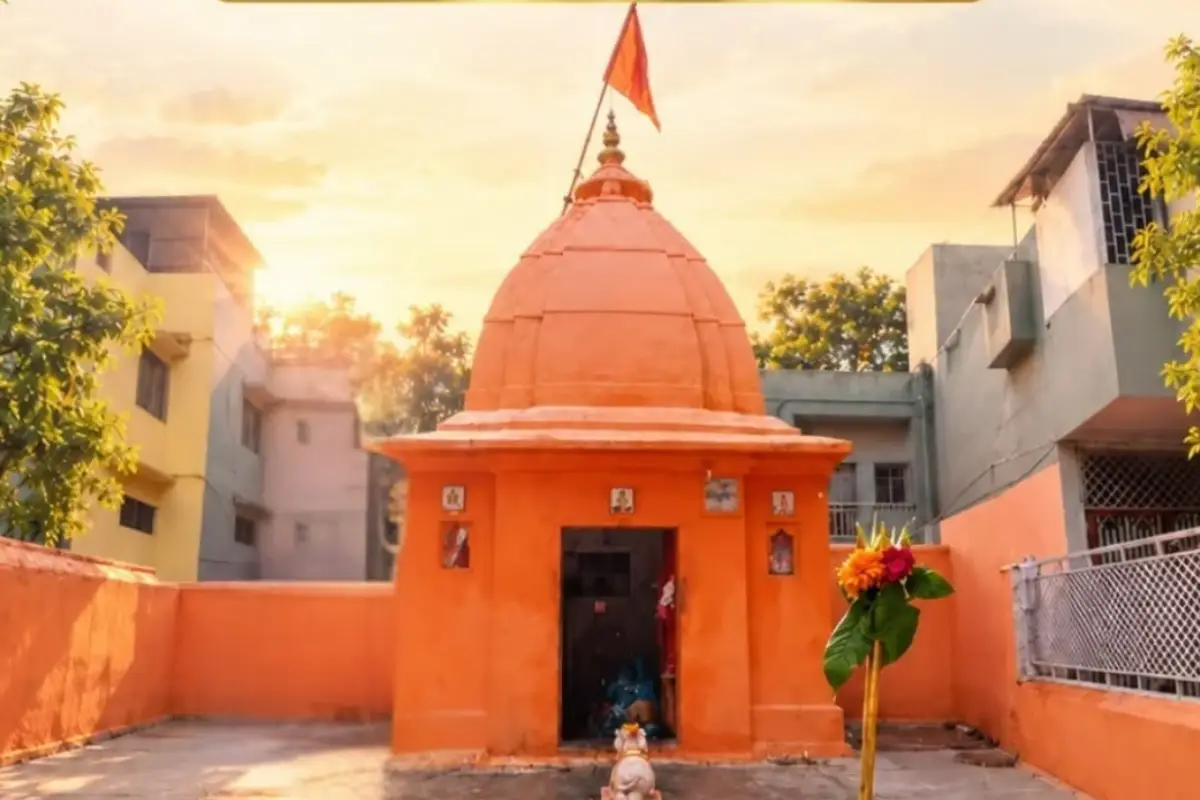
What is Mahalayeshwar Mahadev in Ujjain?
Mahalayeshwar Mahadev is the twenty-fourth of Ujjain's 84 Mahadev lingas, with its text in the Skanda Purana, Avantya Khanda, chapter 24 of the Chaturashiti Linga Mahatmya. The chapter says that at the end of pralaya the elements are held in one place in Mahakalavana, the Mahalaya, in a linga identical with the supreme Brahman.
Maha means great and laya means merging, so Mahalaya is the great place of merging. The name has no link to Mahalaya Amavasya of Pitru Paksha; this article uses Mahalayeshwar throughout.
Local tradition places the temple in Khatriwada, in the lanes behind the Gopal temple.
At a glance
- Parvati asks Shiva what the Mahalaya is, where the three worlds are held.
- Shiva says that at the end of pralaya the elements are held in one place in Mahakalavana.
- A linga identical with Brahman stands there, and everything is born from it and merges into it.
- The chapter has no king, sage or demon, and no day for worship.
Mahalayeshwar Mahadev: quick facts
| Topic | Detail |
|---|---|
| Meaning of the name | Lord (Shiva) of the great merging (mahalaya) |
| Deity | Shiva, in linga form |
| Source text | Skanda Purana, Avantya Khanda, Chaturashiti Linga Mahatmya, Chapter 24 (5.2.24), 25 verses in one Sanskrit edition |
| Position among the 84 Mahadevs | Twenty-fourth |
| Narrator and listener | Shiva speaking to Parvati |
| Place in the text | South of Muktishvara (the 25th) |
What does the Skanda Purana say about Mahalayeshwar Mahadev?
Tagare's note on the chapter gives the core: the linga is called Mahalayeshwar because everything in the universe merged into it at the time of pralaya. Shiva opens by naming it:
महालयं महाभागे चतुर्विंशतिकं शुभम् ।
Meaning: "O highly fortunate one, Mahalaya is the splendid twenty-fourth" (Skanda Purana 5.2.24.1).
Parvati's question
Parvati recalls the sages who keep silent vows and call Shiva the cause of the three worlds, the one who creates, protects and, in play, destroys. Then she asks what this Mahalaya is:
कोऽसौ महालयो रौद्रग्रहरूपी व्यवस्थितः ।
यस्मिन्धृतं त्वया सर्वं त्रैलोक्यं भूर्भुवादिकम् ॥
Meaning: "What is this Mahalaya, placed in a form belonging to Rudra, in which you hold all the three worlds, Bhuh, Bhuvah and the rest?" (5.2.24.7).
Where everything is held
Shiva answers that at the end of pralaya, the elements, beginning with earth, are held in one place, the Mahalaya in Mahakalavana.
पृथिव्यादीनि भूतानि महाकालवने प्रिये ।
धृतानि प्रलयस्यांते एकोद्देशे महालये ॥
Meaning: "The elements, earth and the rest, O beloved, were held in Mahakalavana at the end of pralaya, in one place, the Mahalaya" (5.2.24.9).
He calls the place higher than Brahmaloka.
The linga identical with Brahman
परं ब्रह्ममयं लिंगं तत्र तिष्ठति सर्वदा ।
तस्य लिंगस्य मध्ये तु धृतं कृत्स्नं चराचरम् ॥
Meaning: "A linga made of the supreme Brahman stands there always; in the middle of that linga the whole moving and unmoving world is held" (5.2.24.11).
Everything comes from it. Tagare's translation lists the great principle, ego, Vishnu and Shambhu, then understanding, steadiness, fame, memory, shame and Sarasvati, the five elements and the four kinds of beings, penance, action, merit, vows, charity, the three gunas, and the grandfather Brahma himself.
The name and the place
अतो महालयोनाम विख्यातो भुवनत्रये ।
मुक्तीश्वरस्य देवस्य दक्षिणे संव्यवस्थितः ॥
Meaning: "So it is famous in the three worlds by the name Mahalaya; it stands to the south of the god Muktishvara" (5.2.24.23).
What does the Skanda Purana promise for worshipping Mahalayeshwar Mahadev?
The chapter lists these results:
- A person who worships the linga as a form of Rudra becomes a conqueror of the three worlds.
- That person is always renowned.
- When the great Mahalayeshwar is worshipped with supreme devotion, all the gods are well worshipped too, because he is worshipped by them as well.
यः पूजयति तल्लिंगं रुद्रमूर्त्या महालयम् ।
त्रैलोक्यविजयी नित्यं कीर्त्तिमान्स नरो भवेत् ॥
Meaning: "One who worships that Mahalaya linga as a form of Rudra becomes a conqueror of the three worlds and is always renowned" (5.2.24.24).
महालयेश्वरे पुण्ये पूजिते परमेश्वरे ।
भक्त्या परमया चैव सर्वे देवाः सुपूजिताः ॥
भवंतीह महाभागे यतस्तैरपि पूज्यते ॥
Meaning: "When the meritorious Mahalayeshwar, the supreme Lord, is worshipped with supreme devotion, all the gods are well worshipped here, O fortunate one, for he is worshipped by them too" (5.2.24.25).
Which popular claims about Mahalayeshwar Mahadev don't match the text?
The name Mahalaya invites guesses. These are the claims that do not match the Skanda Purana.
| Popular claim | What the Skanda Purana says | Status |
|---|---|---|
| Mahalayeshwar is the 25th Mahadev | It is the 24th; the 25th is Muktishvara | Wrong number |
| It was set up for the peace of ancestors, or removes pitra dosha | No ancestors, shraddha or tarpana in the chapter | Not in the text |
| Mahalaya means the world of the ancestors | Mahalaya is the place where everything merges | Contradicts the text |
| Yudhishthira founded it | No founder or character appears | Not in the text |
| It stands near Harsiddhi | The text gives only "south of Muktishvara"; tradition places it in Khatriwada | Wrong place |
| It is "behind Siddheshwar", meaning the Siddheshwar of Bhairavgarh | The newspaper line means the 59th Siddheshwar behind the Gopal temple | Misread |
| It is part of the Mahakal temple complex | No source says so | No basis |
| The 84 Mahadevs alone stay unmoved at pralaya | The chapter speaks only of the one Mahalaya linga | Not in the text |
| The 84 lingas arose from drops of the demon Dushana's blood | The chapter has no such story; it was not found in the Tagare translation of this section | Not confirmed |
| Magha nakshatra with a gift of sesame is prescribed | An astrologer's view; the chapter names no nakshatra | Not in the text |
There is no king, sage, demon or Markandeya here. The chapter is a question from Parvati and a teaching from Shiva. That is why popular pages, finding no tale, supply one about ancestors or about a Pandava.
In Parvati's question the linga is "rudra-graha-rupi." Tagare translates it as a form of "a planet pertaining to Rudra." The Sanskrit word can also be read other ways, and the chapter does not explain it, so treat the phrase as unsettled.
In the English translation of the tirtha list (5.1.70), the 24th place, between Meghanadeshwar and Muktishvara, reads "the great Mahakaleshvara," not Mahalayeshwar. It looks like a variant reading or a slip, and it is not checked against the Sanskrit. It is not a reason to place this linga inside the Mahakal temple.
How is Mahalayeshwar different from similar names?
| Name | Context | Link to this chapter |
|---|---|---|
| Mahalayeshwar, 24th of Ujjain's 84 | Skanda Purana 5.2.24; the linga in which creation merges at pralaya | This chapter |
| Mahalaya Amavasya, Pitru Paksha | The last day of the fortnight of ancestors in the almanac | Only the name is alike |
| MahakaleshwarExplore the divine Mahakaleshwar Jyotirlinga in Ujjain. Jyotirlinga | Ujjain's main temple | A separate temple, though the tirtha list's variant reading can confuse |
What else do people ask about Mahalayeshwar Mahadev?
What does Mahalaya mean in this chapter?
Mahalaya means the great place of merging: the spot where, at the end of pralaya, earth and the other elements are held and where all that moves and does not move is contained. It does not mean the world of ancestors. The chapter says nothing about ancestors, shraddha or the fortnight of Pitru Paksha.
Is Mahalayeshwar linked to Pitru Paksha?
No. Only the word Mahalaya is shared with Mahalaya Amavasya. Chapter 24 has no ancestors, rite of tarpana or special day, and its results are being a conqueror of the three worlds, lasting fame and the worship of all the gods. Pages that tie it to pitra dosha have borrowed the idea from the name.
Is Mahalayeshwar inside the Mahakal temple complex?
No source places it there. Tradition puts the temple in Khatriwada, in the lanes behind the Gopal temple, and a 2004 walking list and a 2025 newspaper list both point to that area. It is a separate temple, listed as the 24th, and not part of the main Mahakal shrine.
Is today's temple south of Muktishvara, as the text says?
The text puts Mahalayeshwar south of Muktishvara, the 25th, and tradition places both in the same group of lanes in Khatriwada. No source gives a compass reading for them, so "exactly south" is not proven; "close to each other" is all we can say. No reliable source gives the temple's age, timings or priest.
Why is Mahalayeshwar the twenty-fourth in Ujjain's 84 Mahadev order?
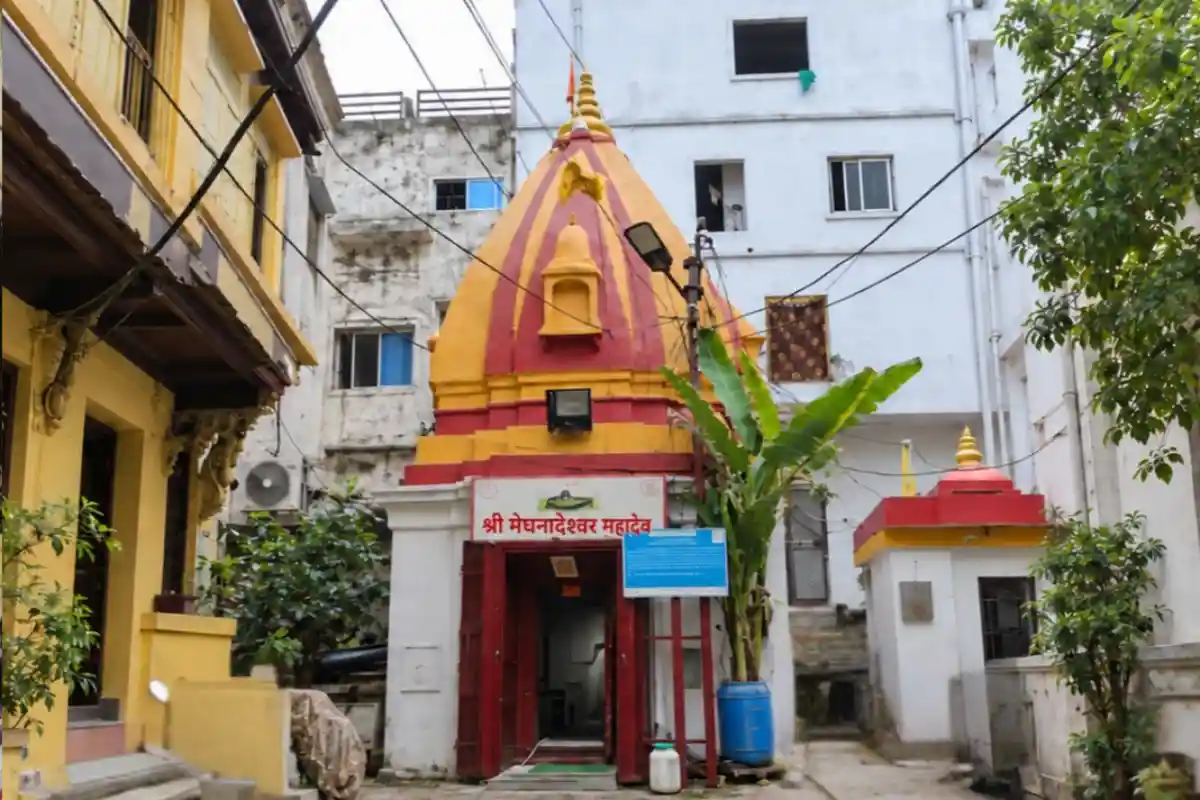
Chapter 23 of the Chaturashiti Linga Mahatmya is Meghanadeshwar, and chapter 24 is Mahalayeshwar. Chapter 25 is Muktishvara, which opens with "Know the twenty-fifth deity, Muktishvara."
For the full sequence, see the complete guide to Ujjain's 84 Mahadev temples.
Which linga comes after Mahalayeshwar in the 84 Mahadevs?
The next chapter, 25, is Muktishvara, the linga whose darshan is said to bring liberation, and the text places Mahalayeshwar to its south. Meghanadeshwar, the 23rd, comes just before.
Comments
No comments yet. Be the first to share your thoughts!
Leave a Comment