

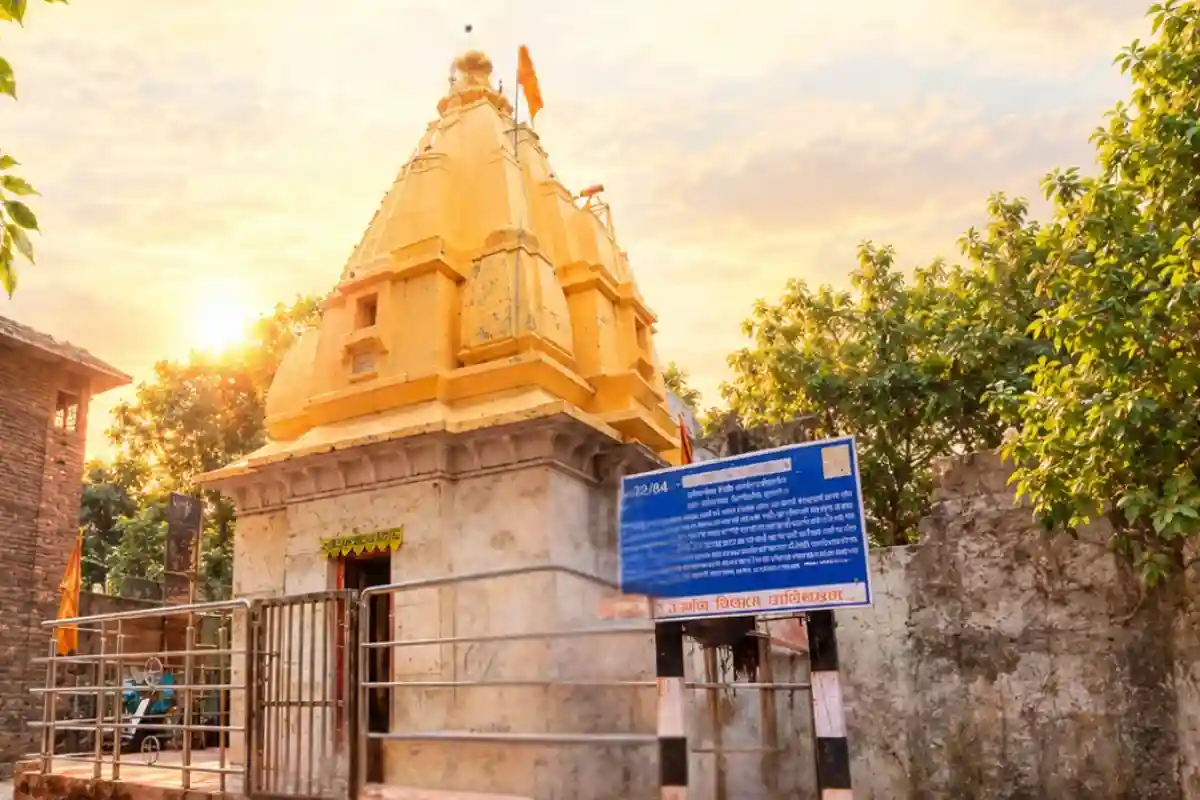
What is Karkateshwar Mahadev in Ujjain?
Karkateshwar Mahadev is the twenty-second of Ujjain's 84 Mahadev lingas, with its story in the Skanda Purana, Avantya Khanda, chapter 22 of the Chaturashiti Linga Mahatmya. A king's sinful past life ends when a crab, dropped by a crow near a Shiva temple, dies there. The gods name the linga after the crab.
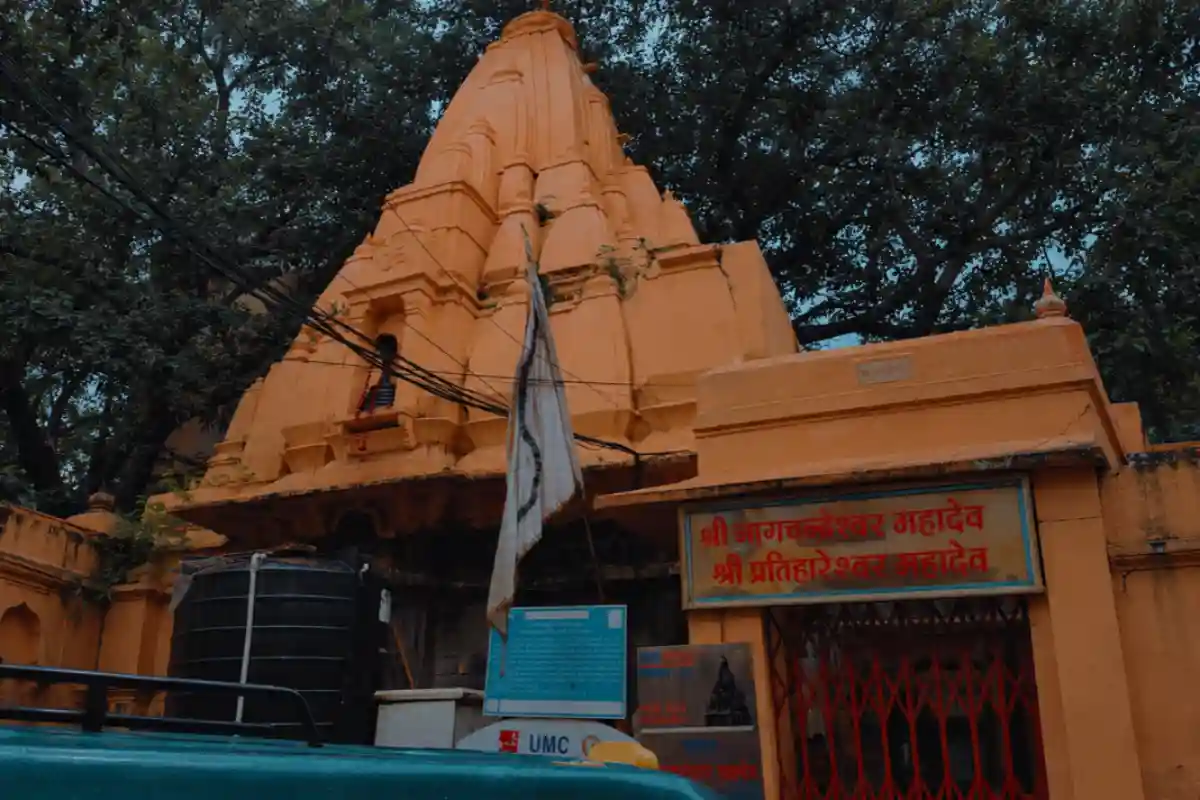
Karkata means crab, so the name means the Lord of the crab. Do not confuse it with Karkoteshwar, the 10th Mahadev, which is about the serpent Karkotaka; this article uses Karkateshwar throughout.
Local tradition places the temple near Dani Gate, in a lane by the Porwal Dharmshala off Dhaba Road.
At a glance
- A righteous king asks his priest Vasishtha why he is so fortunate.
- Vasishtha says he was once a sinful Shudra, who suffered in the hells and was sent back as a crab.
- A crow lifts the crab, the crab bites it, and the crow drops it near a Shiva temple.
- The crab dies, becomes a Vidyadhara, and the gods name the linga Karkateshwar.
Karkateshwar Mahadev: quick facts
| Topic | Detail |
|---|---|
| Meaning of the name | Lord (Shiva) of the crab (karkata) |
| Deity | Shiva, in linga form |
| Source text | Skanda Purana, Avantya Khanda, Chaturashiti Linga Mahatmya, Chapter 22 (5.2.22), 37 verses in one Sanskrit edition |
| Position among the 84 Mahadevs | Twenty-second |
| Narrator and listener | Shiva speaking to Parvati |
| Main characters | A righteous king, Queen Bhanumati, the priest Vasishtha, a crab, a crow |
What is the story of Karkateshwar Mahadev in the Skanda Purana?
The chapter opens with Shiva naming the linga:
द्वाविंशतितमं विद्धि कर्कटेश्वरसंज्ञकम् ।
यस्य दर्शनमात्रेण तिर्यग्योनिर्न दृश्यते ॥
Meaning: "Know the one called Karkateshwar as the twenty-second; by merely seeing it, a lower birth is not seen" (Skanda Purana 5.2.22.1).
The king and his question
In the Brihatkalpa there is a king who is the embodiment of righteousness. He is a friend of Indra and has killed thousands of demons. His chief queen is Bhanumati, the most beautiful woman in the three worlds.
One day, in private, he asks his priest Vasishtha what dharma gave him such fortune and splendour.
The past life
Vasishtha tells him he was once a Shudra: quick to anger, harsh in speech, a seizer of Brahmins' wealth, a reviler of the Vedas, a betrayer of trust. After death he spent fifteen years in the Tamrabhrashtra hell, then passed through Raurava, Kumbhipaka, Maharaurava and Asipatra.
To wear away what was left of his sin, Yama made him a crab and put him in a famous lake of Shiva in Mahakalavana, where charity, prayer and fire offerings bear endless fruit. He lived there five years.
विधाय कार्कटं रूपं यमेन त्वयि पार्थिव ।
शिवस्य सरो विख्यातं महाकालवनोत्तमे ॥
Meaning: "O king, Yama made you a crab and placed you in the famed lake of Shiva in the excellent Mahakalavana" (5.2.22.14).
The crow
A crow sees the crab at the water's edge and lifts it in its beak. The crab strikes back with its claws. The wounded crow lets go, and the crab falls in the precincts of a Shiva temple, in a holy place east of Svargadvara.
There the crab dies, and at once takes a divine body, adorned with divine ornaments. It becomes a leading Vidyadhara.
The gods name the linga
As he rises toward heaven in a celestial car, the gods ask who he is. A gana of Rudra tells them the whole story. They answer:
कार्कटीयोनि मुक्तस्य प्राप्तं स्वर्गसुखं यतः ।
कर्कटेश्वरनामायमतो लोके भविष्यति ॥
Meaning: "Since one freed from a crab's birth has reached heaven's happiness, this deity will be known in the world as Karkateshwar" (5.2.22.26).
What does the Skanda Purana promise for worshipping Karkateshwar Mahadev?
The chapter lists these results:
- Merely seeing the linga saves a person from a lower birth (verse 1).
- Those who worship it with daily devotion enjoy worldly pleasures for a long time on earth and reach the greatest goal.
- Those who see it by rule on ashtami or chaturdashi go after death, with twenty-one generations of their family, to Shiva's city in sun-bright cars.
- They enjoy divine pleasures there for hundreds of crores of kalpas, then as long in Vishnu's world, then in Brahma's world, and at last reach the greatest region.
- The pilgrimage to Karkateshwar gives the merit of ten horse sacrifices.
The chapter ends with the last two results and a pointer to the next linga:
नियमेन प्रपश्यंति ये देवं कर्कटेश्वरम् ।
अष्टम्यां वा चतुर्दश्यां तेषां पुण्यफलं शृणु ॥
Meaning: "Hear the merit of those who regularly see the god Karkateshwar, on ashtami or on chaturdashi" (5.2.22.32).
दशाश्वमेधैर्यत्पुण्यं तत्फलं तीर्थयात्रया ।
कर्कटेश्वरदेवस्य मेघनादेश्वरं शृणु ॥
Meaning: "The merit of ten horse sacrifices is the fruit of the pilgrimage to the god Karkateshwar. Now hear of Meghanadeshwar" (5.2.22.37).
Which popular claims about Karkateshwar Mahadev don't match the text?
The story of Karkateshwar Mahadev is often retold with errors. These are the claims that do not match the Skanda Purana.
| Popular claim | What the Skanda Purana says | Status |
|---|---|---|
| The 22nd is Karkoteshwar, near the Porwal Dharmshala | The 22nd is Karkateshwar, the crab; Karkoteshwar is the 10th | Name mixed up |
| The temple is in the Harsiddhi complex | That is the 10th, Karkoteshwar | Wrong temple |
| The crab fell directly on the Shivalinga | It fell in the precincts of a Shiva temple; the translator's note says "near this linga" | Contradicts the text |
| Shiva took the form of a crab, or the story is about the serpent Karkotaka | The crab is a sinner being freed; no snake appears | Contradicts the text |
| The lake is called Rudrasagar | The lake is "a famous lake of Shiva"; no name is given | Not in the text |
| The king's name is Dharmamurti | Tagare calls him "an embodiment of righteousness"; no name is confirmed | Not confirmed |
| It removes sexual defects or long illness | The result is that a lower birth is averted; no disease is named | Not in the text |
| Any day gives the same merit | The chapter names ashtami and chaturdashi | Incomplete |
| Magha nakshatra and a gift of sesame are prescribed | An astrologer's view; the chapter names no nakshatra | Not in the text |
| It is one of MahakalShree Mahakaleshwar Jyotirlinga, the heart of Ujjain.'s doorkeepers | The doorkeeper lingas of Mahakalavana are Pingaleshwar, Kayavarohaneshwar, Bilvakeshwar and Dardureshwar | No basis |
In most liberation stories the sinner worships. Here the crab only falls beside the linga and dies. Tagare's chapter note puts it plainly: because of the nearness of this linga, the crab is later born a great king. The chapter treats the place itself as the cause.
The one landmark in the chapter is "east of Svargadvara." No source ties that name to a present-day spot, so today's address near Dani Gate rests on tradition and not on the direction.
The sinner's animal birth, accidental death in a holy place, divine rebirth and later memory of past lives is a pattern Tagare notes elsewhere in this section. He warns that the author sometimes modifies an older Puranic legend or gives a new legend a Puranic look. He does not name a specific older story for this chapter.
How is Karkateshwar different from other Karkateshwars and Karkoteshwar?
| Temple | Story | Link to this chapter |
|---|---|---|
| Karkoteshwar, 10th of Ujjain's 84 | The serpent Karkotaka worships Shiva after a curse (Skanda Purana 5.2.10) | None; a different linga and story |
| Karkateshwar tirtha on the Narmada | A separate chapter, "The Greatness of Karkateshwar," in the Reva Khanda (chapter 137) | None; do not mix them |
| Karkadeswarar temple near Kumbakonam, Tamil Nadu | A Gandharva, turned into a crab by a sage's curse, is freed by worshipping Shiva | Only the crab freed by Shiva is shared |
What else do people ask about Karkateshwar Mahadev?
Why does the crab get liberated?
The text gives no act of worship. The crab dies in the precincts of a Shiva temple after the crow drops it, and the nearness of the linga is the cause. Tagare's chapter note says the same. The gods then name the linga because a creature freed from a crab's birth reached heaven there.
What happens to the king after the crab's heaven?
After enjoying heaven, he is born again on earth and rules without trouble. Vasishtha tells him to worship the same linga again. He then remembers his past lives, worships it, and merges into the linga along with his own body. Tagare's translation closes the chapter there.
Is Karkateshwar the same as Karkoteshwar?
No. Karkateshwar is the 22nd, named for the crab, and Karkoteshwar is the 10th, named for the serpent Karkotaka. Newspaper lists and travel pages often print one for the other. The two have different chapters, stories and addresses, so check the number before you trust a page.
Is today's temple the spot the Purana describes?
Chapter 22 gives one landmark, east of Svargadvara, which no source places today. The shrine near Dani Gate is identified by tradition. No reliable source gives its age, builder, rebuilding, timings or priest, so those details are left out here.
Why is Karkateshwar the twenty-second in Ujjain's 84 Mahadev order?
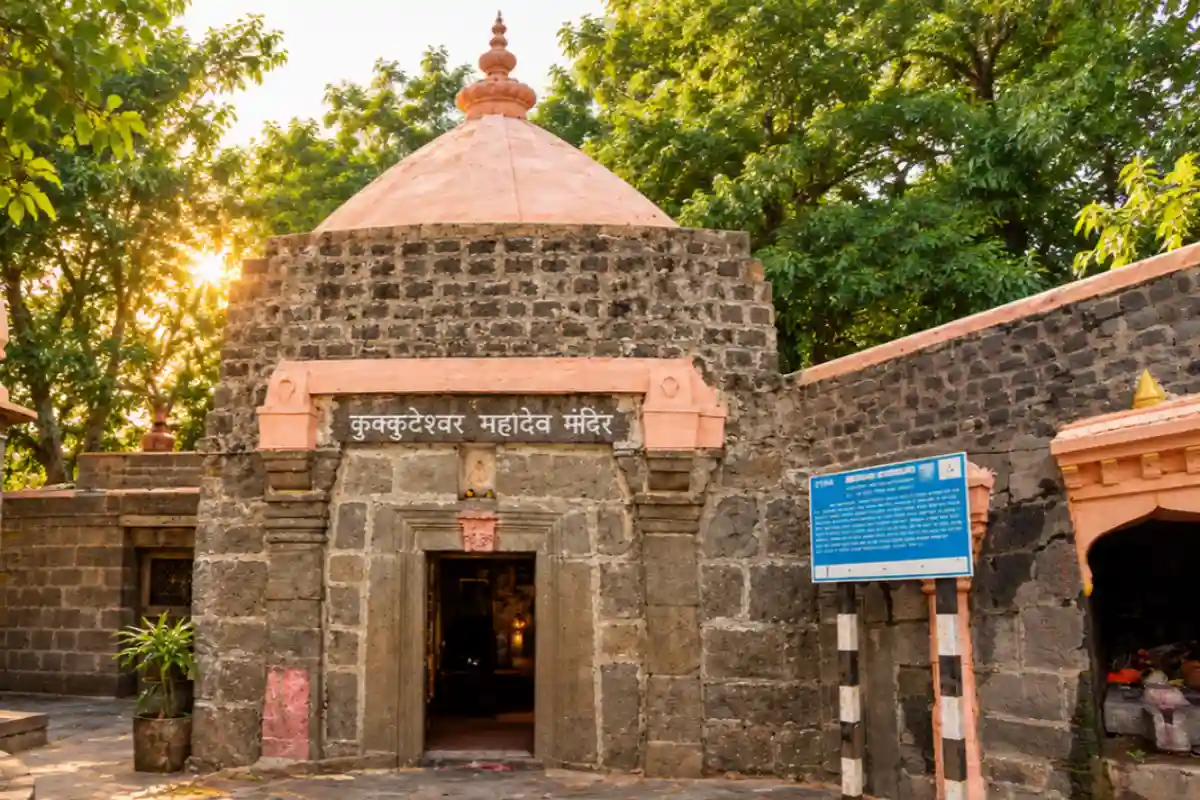
Chapter 21 of the Chaturashiti Linga Mahatmya is Kukkuteshwar, and chapter 22 is Karkateshwar. Chapter 23 is Meghanadeshwar. The tirtha list (5.1.70) does not show Karkateshwar here, so the order of the chapters is the basis for the number.
For the full sequence, see the complete guide to Ujjain's 84 Mahadev temples.
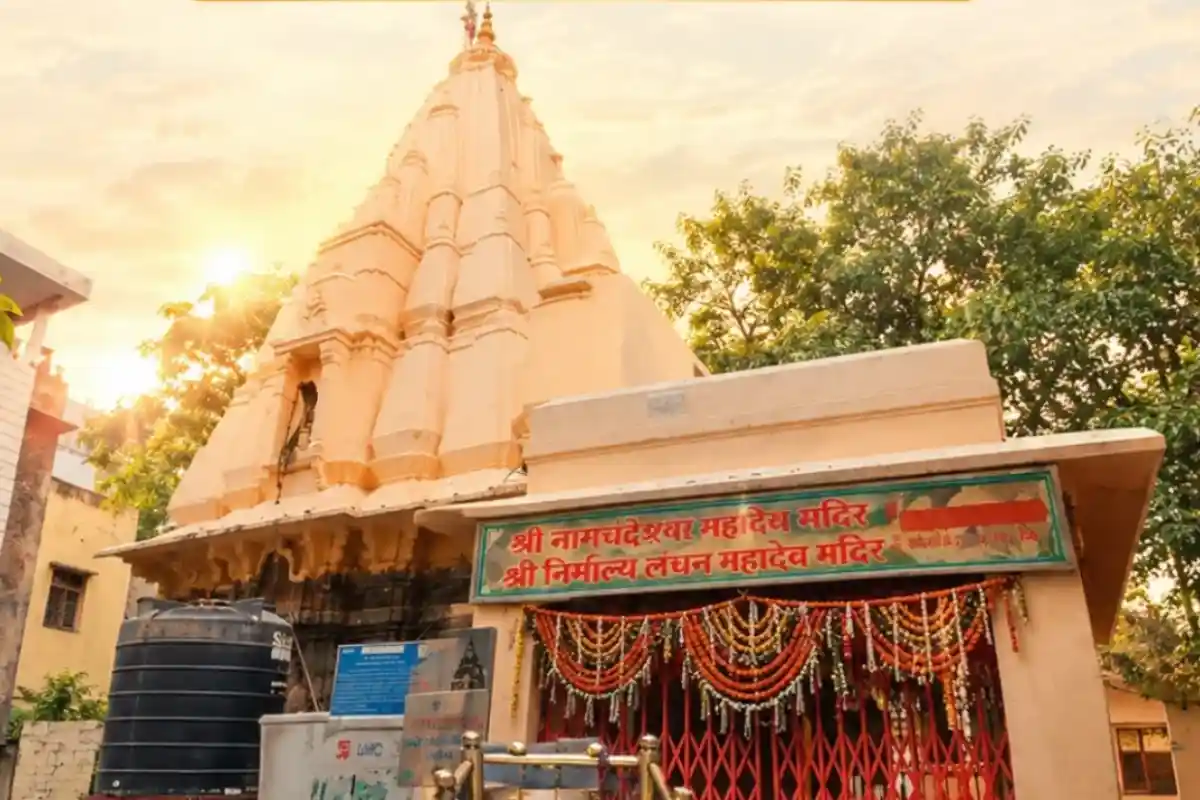
Which linga comes after Karkateshwar in the 84 Mahadevs?
The chapter's last verse points straight to the next one: "Now hear of Meghanadeshwar." Kukkuteshwar, the 21st, comes just before.
Comments
No comments yet. Be the first to share your thoughts!
Leave a Comment