Ancient to modern history
Shri Digambar Ani Akhara's history can't be separated from the wider story of how Vaishnava monastic institutions armed themselves in 18th-century North India. Until the early 18th century, Ayodhya was largely controlled by Shaiva Dashnami Sanyasis. The Ramanandi Vaishnavas had devotional roots going back to Swami Ramananda's lifetime (circa 1300–1475 CE), but no military organization to defend their sacred sites.
The break came when Dashnami Sanyasis seized Ayodhya during Ram's birthday celebrations, driving the Ramanandis out. In response, a historic assembly was called near Galata, Jaipur. Under Swami Balanand, the Vaishnava communities reorganized into 3 armed monastic orders modeled on Shaiva Naga structures. Digambar Akhara was assigned the role of Raja (king), the senior-most among the 3.
The Akhara is believed to have been founded over 500 years ago, though the exact date is uncertain across all sources.
A separate but related tradition places the formal organization of all 3 Ramanandi Akharas at Vrindavan in 1475, when 4 Vaishnava Sampradayas and 18 sub-groups came together. Within this framework, Digambar Akhara had 2 Anis: Shri Ramji Digambar and Shri Shyamji Digambar.
Two competing founding timelines exist: 1475 CE (Vrindavan assembly) and the early 18th century (Galata conference, Jaipur). The Akhara's own website and mainstream academic sources don't resolve this. Confirm against Akhil Bharatiya Akhara Parishad official records before publishing a specific founding date.
By the late 18th century, the Ramanandis had displaced Dashnami Sanyasis from Ayodhya. Digambar Akhara, as Raja, sat at the head of the Vaishnava Bairagi order during this transition. Its original seat in Ayodhya remained active for generations. At some point, the administrative headquarters shifted to Sabarkantha, Gujarat, a move that no independently verified source dates precisely.
The Akhara has participated in all 4 Kumbh Mela sites since its formal organization. The Akhil Bharatiya Akhara Parishad recognizes it as one of 13 official Kumbh Mela Akharas.
Founding and tradition
Shri Digambar Ani Akhara belongs to the Ramanandi Sampradaya, the tradition of devotion to Lord Ram, founded by Jagadguru Swami Ramananda. Within the 3 Vaishnava Akharas, it carries the designation "Raja" (king), which gives it precedence in formal Akhara councils and certain ceremonial contexts.
Key highlights
- Tradition: Ramanandi Sampradaya (Vaishnava Bairagi). One of 3 Vaishnava Akharas in the Akhil Bharatiya Akhara Parishad.
- Role: Raja (king) among the 3 Vaishnava Akharas.
- Founded: Originally in Ayodhya. Believed to be over 500 years old, exact date disputed.
- Current headquarters: Kathiya Khak Chowk Mandir, Sabarkantha, Gujarat.
- Size: Over 2 lakh Vaishnava saints; 450+ temples and monasteries across India.
- Symbol: 5-color flag bearing an image of Lord Hanuman.
Founder and lineage
Shri Digambar Ani Akhara traces its spiritual lineage to Jagadguru Swami Ramananda, the 14th–15th century Vaishnava saint from Prayagraj who founded the Ramanandi Sampradaya. Ramananda studied under Raghavananda, drew from the Vishishtadvaita philosophy of Ramanuja, and built a distinct path of direct devotion to Lord Ram, open to all castes. His disciples included Kabir, Ravidas, and Pipa.
The institutional akhara structure bearing his legacy was organized in the early 18th century under Swami Balanand at the Galata conference near Jaipur, where Digambar Akhara was assigned the Raja role.
A historically significant figure within the Akhara's modern lineage is Mahant Ramchandra Das Paramhans (1913–2003), who served as Sri Mahant of Digambar Akhara and as President of the Ram Janmabhoomi Nyas in Ayodhya. Born Chandreshwar Tiwari in Bihar, he moved to Ayodhya in 1934, was initiated into the Digambar Akhara, and spent over seven decades leading the movement to build the Ram Mandir. Prime Minister Atal Bihari Vajpayee attended his last rites on the banks of the Sarayu on August 1, 2003.
The website digambarakhara.com describes a Shaiva Dashanami order ("Adi Shankaracharya...Advaita Vedanta"). That is a different institution from Shri Digambar Ani Akhara, which is Vaishnava. Do not cite digambarakhara.com as a source for this Akhara's profile.
Guru-shishya (teacher-disciple) tradition
The guru-shishya lineage in Shri Digambar Ani Akhara runs through the Ramanandi chain from Ramananda himself. Each generation of mahants transmits initiation, the Guru-mantra, and monastic discipline to successive disciples.
Initiation into the Akhara follows the Panch Samskar, the 5 rituals of formal entry into Vaishnavism. Initiates take vows of celibacy, renunciation, and unconditional obedience to the guru. A bow-and-arrow tattoo is burned onto the arm with a heated metal piece. This mark was originally created for identification during the 18th-century sectarian conflicts between Shaiva and Vaishnava armed monks.
The Shree Panch, a 5-member governing council representing Brahma, Vishnu, Shiva, Shakti, and Ganesha, manages the Akhara's administrative body. Unlike other Vaishnava Akharas where the Shree Panch is elected every 4 years at Kumbh Mela, Digambar Ani Akhara's Shrimahant is elected every 12 years at the Maha Kumbh. Only Mahamandaleshwars can transmit the Guru-mantra.
Religious and spiritual significance
Shri Digambar Ani Akhara practices Bhakti Yoga as its primary spiritual path. Daily practices include Ram-nam sankirtan (chanting), communal kirtan, and study of the Ramcharitmanas (Tulsidas, 16th century), the Bhagavad Gita, the Bhaktamal (Nabhadas, 1660 CE), and the Valmiki Ramayana.
The Akhara's sadhus wear white clothes and have matted hair. Their foreheads carry the Urdhvapundra tilak, the vertical mark that identifies Vaishnava affiliation. They carry a kamandal (water vessel) and a Tulsi bead necklace. This is distinct from the ash-smeared, naked appearance of Shaiva Naga SadhusLearn about the mysterious Naga Sadhus of Kumbh Mela..
The Akhara is home to many highly educated members, including people with professional degrees.
Dashanami sect affiliation
Shri Digambar Ani Akhara is not Dashanami. The Dashanami system, 10 monastic orders created by Adi Shankaracharya in the 8th century, belongs to the Shaiva tradition. This Akhara follows an entirely separate lineage: the Ramanandi Sampradaya, rooted in Vishishtadvaita philosophy and transmitted through Ramananda.
There is a separate Shaiva institution also called "Digambar Akhara" (see digambarakhara.com) that traces itself to Adi Shankaracharya. These are two different organizations. Shri Digambar Ani Akhara is Vaishnava Bairagi; the Shaiva Digambar Akhara is Dashanami. Pilgrims and researchers must confirm which institution any source is describing before using it.
Ishta-devata (presiding deity)
Shri Digambar Ani Akhara is dedicated to Lord Vishnu and his Ram avatar. Within the Vaishnava Bairagi tradition, the Akhara's flag bears the image of Lord Hanuman. Daily worship centers on Ram, Sita, and Hanuman, the devotional triad of the Ramanandi Sampradaya.
Hanuman worship has a specific institutional importance: Mahant Ramchandra Das Paramhans, the Akhara's most prominent 20th-century head, is photographed alongside a portrait of Swami Ramananda in the Digambar Akhara premises in Ayodhya, a detail that signals the Akhara's self-understanding as a direct custodian of the Ramanandi lineage.
Naga Sadhu tradition
Shri Digambar Ani Akhara has a warrior-monk tradition, but its form differs from the Shaiva Naga model. Shaiva Nagas are naked and ash-smeared. Digambar Ani Akhara sadhus wear white unstitched clothes, the Urdhvapundra tilak, and a Tulsi bead necklace. Their initiation mark is a bow-and-arrow tattoo burned onto the arm.
The name "Digambar" means "sky-clad" or "clothed in the sky," a term that, in a Shaiva context, specifically means naked. For the Vaishnava Digambar Ani Akhara, the name carries a different meaning: total renunciation of material attachment. The Akhara's sadhus are not naked in practice.
The word "Digambar" causes persistent confusion between this Vaishnava Akhara and the Shaiva Digambar Akhara whose sadhus are naked. Shri Digambar Ani Akhara sadhus wear white clothes. Confirm attire details with the Akhara before publishing descriptions that use the word "naked" in connection with this institution.
Organizational structure
Shri Digambar Ani Akhara is governed by a Shrimahant, elected every 12 years during the Maha Kumbh, a democratic cycle unusual in the monastic world. Below the Shrimahant are Mahamandaleshwars, Mandaleshwars, and Shri Mahants. Every marhi (sub-unit) within the Akhara is led by a Mahant who conducts daily ritual activity.
Internally, the Akhara has 2 Anis (sub-divisions): Shri Ramji Digambar and Shri Shyamji Digambar. Historical records note Mahant Keshavdas and Mahant Ramkishoredas as prominent figures within these divisions.
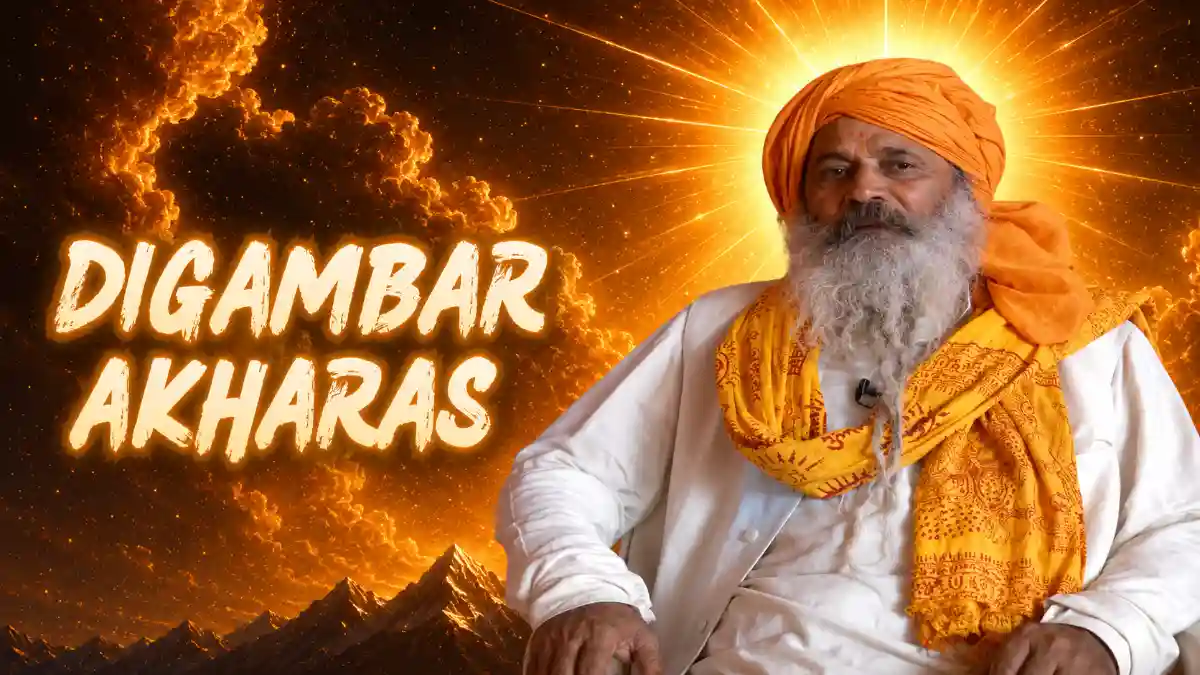
The current head is Shri Krishnadas Maharaj. Former spokesperson of the Akhil Bharatiya Akhara Parishad from this Akhara was Mahant Baba Hatyogi.
Role in Kumbh Mela (historical)
Shri Digambar Ani Akhara has participated in Kumbh Melas at all 4 sites since the 18th century. Its participation has not always been peaceful. At the 1789 Kumbh near Nashik (at Trimbak), a clash between Shaivite Sanyasis and Vaishnava Bairagis over bathing-sequence rights killed approximately 12,000 ascetics, as recorded in a copper plate inscription of the Maratha Peshwa. This event reshaped how colonial and later Indian administrations managed Kumbh Mela bathing sequences.
At the 2021 Haridwar Kumbh, Mahant Baba Hatyogi of Digambar Ani Bairagi Akhara publicly criticized the decision to end the Kumbh early during the COVID-19 second wave, after Prime Minister Modi called the chief of Juna Akhara rather than the chiefs of the Bairagi Akharas directly. Hatyogi was then the former national spokesperson of ABAP. The incident pointed to a persistent tension between the Vaishnava Bairagi Akharas and the Shaiva Akharas over institutional recognition.
Role in Simhastha 2028 specifically
Shri Digambar Ani Akhara will participate in Shahi Snan at Simhastha 2028 on April 9, April 23, and May 8, on the banks of the Shipra River in Ujjain. Camp zones will be allocated by the MP government and Ujjain district administration, following the framework used in 2016.
The full Simhastha 2028 event window is March 27 to May 27, 2028. Parva Snan dates (March 27, April 4, April 14, April 19, May 1, May 5, and May 15) offer additional auspicious bathing days for pilgrims beyond the 3 Shahi Snan dates.
A minority of older sources give the Simhastha 2028 window as April 9 to May 9, 2028. The current planning consensus is March 27 to May 27, 2028. Confirm against the official MP government Simhastha portal (simhasthujjain.in) before publishing.
At every Simhastha, Shri Digambar Ani Akhara holds a Sansad (council assembly) that brings together Naga sadhus, Mahamandaleshwars, and dharma gurus to reaffirm Akhara unity and discuss issues affecting pilgrimage traditions. This internal theological forum is distinct from the public Peshwai and Shahi Snan events. Serious pilgrims who want to understand the Akhara's institutional functioning should seek access to the Sansad, not just the procession.
Shahi Snan order and sequence
At Simhastha Kumbh Mela, Shaiva Akharas bathe first, led by Juna Akhara. Vaishnava Akharas follow. Udasin and Nirmal Akharas come last.
Within the 3 Vaishnava Akharas, the precise internal bathing sequence for Simhastha 2028 Ujjain has not been officially published as of the research date. Digambar Akhara's "Raja" designation does not automatically mean it bathes first among the 3 Vaishnava Akharas; the internal sequence is governed by separate traditional protocols.
The internal bathing sequence of the 3 Vaishnava Akharas at Simhastha 2028 Ujjain had not been officially announced as of the research date. Do not publish a sequence without confirmation from the Akhil Bharatiya Akhara Parishad or the MP government Simhastha 2028 portal.
All 3 Vaishnava Akharas enter the Shipra in Peshwai (ceremonial procession) form on each Shahi Snan date: decorated elephants, horses, chariots, traditional music, and flags. The Digambar Ani Akhara's 5-color flag with Hanuman's image leads its procession.
Connection and relationship with Ujjain
Ujjain's Simhastha occurs every 12 years and Shri Digambar Ani Akhara has attended since its formal 18th-century organization. Ujjain's sacred geography is primarily Shaiva. The MahakaleshwarExplore the divine Mahakaleshwar Jyotirlinga in Ujjain. Jyotirlinga is one of Shiva's 12 principal abodes. For the Vaishnava Akharas including Digambar, the Shipra River's astrological sanctity during the Simhastha alignment is what draws them here. The occasion transcends sectarian geography.
At the 1921 Ujjain Kumbh, a formal theological debate between the Ramanuja and Ramanandi traditions ended in favor of the Ramanandi position, with Bhagvaddas of the Ramanandi tradition declared the winner. Digambar Ani Akhara, as part of the Ramanandi cluster, is an institutional heir to that outcome.
Ashrams in Ujjain (with addresses where verifiable)
At Simhastha 2016, Digambar Ani Akhara's Peshwai route ran from Begampura to Khakchowk, Ujjain. This is the only independently verified location reference for the Akhara's Ujjain presence from the 2016 event.
The 2028 camp allocation had not been formally announced as of the research date. Pilgrims should check simhasthujjain.in for 2028 camp zone details once they are published by the Ujjain district administration.
Major ashrams and maths elsewhere in India
- Principal headquarters: Kathiya Khak Chowk Mandir, Sabarkantha, Gujarat. This is the administrative seat of Shri Digambar Ani Akhara as recognized by the Akhil Bharatiya Akhara Parishad.
- Haridwar office: Tour My India (Dec 2020) lists the Akhara's headquarters as Haridwar, with Mahant Krishna Das and Mahant Ram Kishor Das as administrative heads. This conflicts with HandWiki and NewSX, both of which give Sabarkantha as the seat.
- Ayodhya presence: The Akhara's historical seat was in Ayodhya. Its most prominent 20th-century head, Mahant Ramchandra Das Paramhans, was based at Digambar Akhara in Ayodhya for his entire career. After his death in 2003, Mahant Dharam Das succeeded him as legal heir.
- Temples and monasteries: Over 450 across India. Specific addresses not independently verified beyond this count.
Prominent Mahants and Mahamandaleshwars
- Shri Krishnadas Maharaj (current Shrimahant): Identified as the current head of Shri Digambar Ani Akhara as of December 2024.
- Mahant Ramchandra Das Paramhans (1913–2003): Sri Mahant of Digambar Akhara and President of Ram Janmabhoomi Nyas, Ayodhya. Spent over 70 years leading the campaign for the Ram Mandir. Filed a lawsuit in 1950 seeking Hindu worship rights at the disputed Babri Masjid site. Prime Minister Vajpayee attended his last rites on August 1, 2003, on the banks of the Sarayu.
- Mahant Baba Hatyogi (former ABAP spokesperson): Former national spokesperson of the Akhil Bharatiya Akhara Parishad from Digambar Ani Bairagi Akhara. Publicly criticized the PM's handling of the 2021 Haridwar Kumbh early-closure decision.
- Mahant Keshavdas and Mahant Ramkishoredas: Historical prominent figures within the Akhara's two Anis.
Shrimahant tenures in this Akhara run 12 years. Krishnadas Maharaj is the most recently named head (December 2024). Verify current leadership with the Akhara or ABAP before publishing.
Architecture of key ashrams or temples
Information not verified across independent sources. Detailed architectural descriptions of Shri Digambar Ani Akhara's temples and ashrams could not be confirmed from 2 or more named sources for this profile.
The Akhara's Ayodhya premises contain portraits of Swami Ramananda and Mahant Ramchandra Das Paramhans, as visible in photographs published by Swarajya Mag. No architectural description of the building itself appears in independently verifiable sources.
Religious rituals and practices
Daily life in Shri Digambar Ani Akhara follows a fixed schedule: pre-dawn bathing (snan), Ram-nam sankirtan, scripture study, havan (fire ritual), and bhajan. Evening closes with Aarti.
At Kumbh Mela, the Akhara organizes kirtans, pravachans (spiritual discourses), and public satsangs at its camp pandal. Pilgrims can attend without a formal invitation. The Akhara also holds a Sansad, a formal council of dharma discussions, during the Simhastha period at Ujjain.
The Peshwai procession is the Akhara's public-facing event at Simhastha. Saints arrive on elephants, horses, and decorated chariots carrying the 5-color Hanuman flag. Digambar Ani Akhara sadhus in white clothes with Urdhvapundra tilak are the visual identity of the procession.
Weapons are worshipped as part of the Akhara's tradition, reflecting its origins as a martial monastic order.
Rare and lesser-known facts
- The PM phone call incident, 2021: When Prime Minister Modi called Juna Akhara chief Swami Avdheshanand Giri to request symbolic Haridwar Kumbh participation during COVID-19's second wave, Mahant Baba Hatyogi of Digambar Ani Bairagi Akhara publicly objected. He noted that the 3 Bairagi Akharas, not the Shaiva Akharas, had the fourth and final Shahi Snan scheduled for April 27, making them the stakeholders directly affected. Giri was "not a representative of all Akharas, especially the Bairagi Akharas," Hatyogi said. The episode exposed the institutional gap between Shaiva and Vaishnava akhara representation at the national level.
- Mahant Ramchandra Das Paramhans and the Ram Mandir: This Akhara's most prominent 20th-century head spent over 70 years at the center of the Ram Janmabhoomi movement. He filed the 1950 lawsuit that first sought Hindu worship rights at the disputed site. He died in 2003, 17 years before the Ram Mandir foundation stone was laid by Prime Minister Modi. Vajpayee attended his funeral in heavy rain.
- The name confusion: Two distinct institutions share the "Digambar Akhara" label. The Vaishnava Shri Digambar Ani Akhara (Sabarkantha) is recognized by ABAP as a Bairagi Akhara. The Shaiva Digambar Akhara (digambarakhara.com) traces itself to Adi Shankaracharya and Advaita Vedanta. They are unrelated institutions with different theologies, different lineages, and different Kumbh Mela roles.
- 12-year Shrimahant election: Digambar Ani Akhara's democratic Shrimahant election every 12 years at Maha Kumbh is unique among Vaishnava Akharas, where 4-year Shree Panch elections are the norm. This makes the Maha Kumbh both a spiritual and institutional landmark for this Akhara.
- The Vaishnava Bairagis at the 4th Shahi Snan: At Haridwar Kumbh Mela, the 3 Bairagi Akharas traditionally hold the 4th and final Shahi Snan, not the Shaiva Akharas. By tradition, the last major ritual of Kumbh belongs to the Vaishnava Bairagi orders, not to Juna Akhara or the other Shaiva groups.
Timeline of key events
| Period / Year | Event | Source |
|---|---|---|
| 14th–15th century CE | Jagadguru Swami Ramananda active in Varanasi; founds Ramanandi Sampradaya, the tradition in which Digambar Ani Akhara is rooted | Britannica, "Ramananda," Encyclopaedia Britannica |
| 1475 CE (disputed) | An assembly at Vrindavan unites 4 Vaishnava Sampradayas into 3 Akharas and 18 Anis; Digambar Akhara has 2 Anis (Ramji Digambar and Shyamji Digambar) | Needs verification, official records not confirmed |
| Early 17th century | Dashnami Sanyasis seize Ayodhya during Ram's birthday; Ramanandis driven out; prompts Vaishnava military reorganization | Pinch, Peasants and Monks in British India, 1996; The Print, Feb 2025 |
| Early 18th century (c. 1720) | Galata conference near Jaipur under Swami Balanand; Digambar Akhara formally assigned role of Raja among 3 Vaishnava Akharas | Swarajya Mag, Dec 2023; Meenakshi Jain, Rama and Ayodhya |
| 1789 | Clash between Shaivite Sanyasis and Vaishnava Bairagis at Trimbak (Nashik Kumbh) over bathing precedence; Maratha Peshwa copper plate records approximately 12,000 ascetics killed | Tribune India, Shahira Naim, "Branding Spirituality" |
| 1921 | Theological debate at Ujjain Kumbh between Ramanuja and Ramanandi traditions; Bhagvaddas of Ramanandi tradition declared the winner (the Ramanandi cluster includes Digambar Ani Akhara) | Needs verification, official records not confirmed |
| 1934 | Chandreshwar Tiwari (later Mahant Ramchandra Das Paramhans) moves to Ayodhya and is initiated into Digambar Akhara | Organiser, Jan 2024 |
| 1950 | Mahant Ramchandra Das Paramhans files lawsuit seeking Hindu worship rights at the disputed Babri Masjid site, the first such legal action after the appearance of Ram idols in 1949 | Organiser, Jan 2024 |
| 2003 (August 1) | Mahant Ramchandra Das Paramhans dies on the banks of the Sarayu; last rites attended by Prime Minister Atal Bihari Vajpayee; Mahant Dharam Das succeeds him | Organiser, Jan 2024 |
| 2016 | Shri Digambar Ani Akhara participates in Simhastha Kumbh Mela, Ujjain; Peshwai route from Begampura to Khakchowk | Needs verification, official records not confirmed |
| 2021 (April) | Mahant Baba Hatyogi of Digambar Ani Bairagi Akhara publicly criticizes PM Modi's handling of Haridwar Kumbh COVID-19 early closure, citing non-consultation of Bairagi Akhara chiefs | Hindustan Times via PressReader, Apr 2021 |
| 9 April 2028 | First Amrit Snan, Simhastha 2028. Shaiva Akharas lead procession to Shipra River, Ujjain. Shri Digambar Ani Akhara participates in Vaishnava sequence. | MP Government official Simhastha 2028 date announcement |
| 23 April 2028 | Second Amrit Snan, Simhastha 2028. | MP Government official Simhastha 2028 date announcement |
| 8 May 2028 | Third Amrit Snan, Simhastha 2028. | MP Government official Simhastha 2028 date announcement |
Sources: Meenakshi Jain, Rama and Ayodhya, Aryan Books, 2013; William R. Pinch, Peasants and Monks in British India, University of California Press, 1996; Organiser, Jan 2024; NewSX, Dec 2024; Swarajya Mag, Dec 2023; Hindustan Times via PressReader, Apr 2021; Tribune India, Shahira Naim, "Branding Spirituality"; Britannica, "Ramananda." Cross-verified August 2026. Confirm against official records before publishing.
Comments
No comments yet. Be the first to share your thoughts!
Leave a Comment