
Ancient to modern history
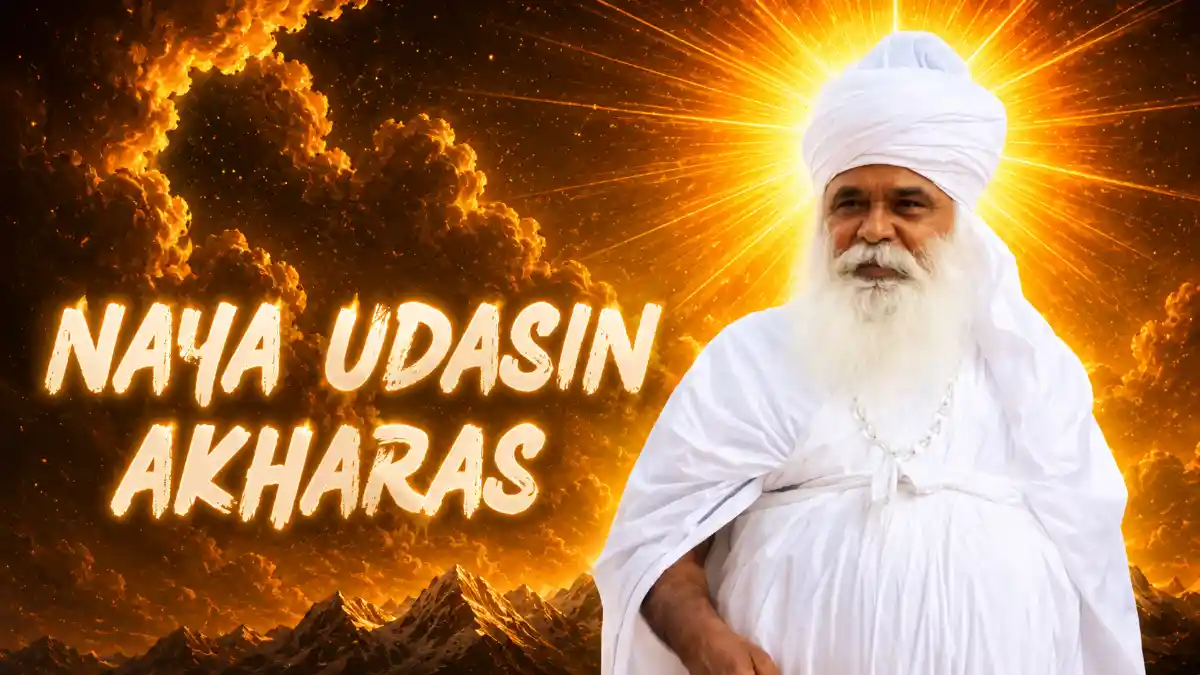
The Naya Udasin Akhara's institutional history begins in 1846. Mahant Sudhir Das broke from the Shri Panchayati Bada Udasin Akhara following an internal dispute and established what came to be known as the Panchayati Naya Udasin Akhara. "Naya" means new.
The split didn't break the spiritual continuity. Both Akharas trace the same lineage: to Sri Chand (8 September 1494 to approximately 1629), the elder son of Guru Nanak Dev, who founded the Udasi Sampradaya in the 16th century.
Before 1846, the broader Udasin institutional tradition had roots going back to 1779, when a panchayati akhara was first organized at Prayag (Allahabad) as the central organ of the Udasis, with branches at Kashi and Kankhal. The Shri Panchayati Bada Udasin Akhara was formally constituted on Basant Panchami 1825 at Har Ki Pauri, Haridwar, by Yogiraj Shree Nirvandev Maharaj. The Naya Akhara followed 21 years later.
One source (Tour My India) gives a 1710 founding date for the Naya Udasin Akhara, attributing it to "sadhus of the Bada Udasin Akhara." This conflicts with the 1846 year confirmed by Wikipedia, Handwiki, and the Akhara's ABAP registration.
The Akhara's ABAP registration and Wikipedia's sourced article both confirm 1846 as the founding year. The 1710 date from Tour My India lacks a named primary source. Do not use 1710 in any date-critical publishing without independent verification.
Today the Naya Udasin Akhara is headquartered at Daksha Mandir Road, Mohalla Miaria, Mayapur, Haridwar, Uttarakhand 249408, and is an active member of the Akhil Bharatiya Akhara Parishad (ABAP), constituted in 1954.
Founding and tradition
The Akhara follows the Udasi Sampradaya, a monastic tradition built on radical detachment (udasinata), selfless service (seva), and spiritual discipline (sadhana).
Sri Chand drew a clear line from his father Guru Nanak's householder tradition. Guru Nanak emphasized active participation in family and social life. Sri Chand called his followers to full renunciation: celibacy, silent meditation, withdrawal from the world. Those who followed him came to be called Udasins, from the Sanskrit udasina, meaning "one who is indifferent to worldly attachments."
The Akhara's official description of its founding tradition names 4 pillars: udasinata (detachment), seva (selfless service), sadhana (spiritual discipline), and jnana (divine knowledge). It describes itself as "rooted in the divine teachings of Sri Sri 1008 Sri Chand Ji Maharaj."
The Akhara's official website describes itself as part of "Sanatan Sikh" tradition, placing it at the crossroads of Sikh lineage and Hindu monastic practice. Udasins recite Guru Granth Sahib, wear saffron robes, maintain dhuni fires, and participate in pan-Hindu Kumbh Mela institutions.
Founder and lineage
The Akhara's institutional founder is Mahant Sudhir Das, who established it in 1846 after the split from the Bada Udasin Akhara. Its deeper spiritual lineage runs to Sri Chand.
Sri Chand (8 September 1494 to approximately 1629) was born in Sultanpur Lodhi to Guru Nanak Dev and Mata Sulakhni. He established the Udasi sect's base at Barath, 8 kilometres southwest of Pathankot, underwent the yajnopavita ceremony, studied at a gurukul, and became a figure of intense ascetic practice from a young age.
The Naya Udasin Akhara calls Sri Chand "Guru Chandracharya," a title that distinguishes it from the Bada Udasin Akhara, which uses "Guru Chandradev." Both Akharas venerate him as the 165th master in a chain stretching back, by internal tradition, to the Four Kumaras (Sanaka, Sanandana, Sanatkumara, Sanatsujata).
The Udasi tradition holds that Sri Chand received an Advaita Vedantic lineage, making Udasins philosophically monistic even though they're not formally Dashanami.
Guru-shishya (teacher-disciple) tradition
Governance runs through a Shree Panch council, not a single supreme head. At every Kumbh Mela, this 5-member body is elected for a 4-year term and holds collective authority over the Akhara's spiritual, administrative, and community decisions.
At the apex of the council sit Mahamandaleshwars, chosen for tapasya, scriptural mastery, and moral integrity, not lineage or social background. Below them, Mandaleshwars and Mahants manage regional ashrams, temples, gaushalas, and educational centers.
The current Head Mahant is Mahant Jagtar Muni. Press coverage of the 2025 Maha Kumbh identifies him simultaneously as "secretary" and as head, which reflects the panchayati structure: the most senior active leader often takes both administrative and representative roles.
The guru-shishya bond in Udasin tradition runs through tapa and seva rather than hereditary succession. A disciple enters through initiation (diksha), adopts the physical markers of the Udasi sadhu, and carries the lineage of Sri Chand forward. The Akhara's official description says disciples are guided toward "liberation (moksha) while building a harmonious world rooted in peace, dharma, and the unity of all faiths."
Religious and spiritual significance
The spiritual core is Advaita Vedanta filtered through Sri Chand's tradition of renunciation. Brahman is the sole reality; liberation comes through knowledge (jnana) and detachment.
Gurbani from Guru Granth Sahib is recited alongside Vedic mantras, and Sri Chand is venerated as Guru Chandracharya. This dual inheritance, Sikh lineage and Vedantic monastic practice together, is the Naya Udasin's defining spiritual identity.
The Akhara's public mission includes spreading Vedantic knowledge through ashrams and gaushalas, hosting community meals (langars), running medical camps, and organizing spiritual discourses. At the 2025 Maha Kumbh, Mahant Jagtar Muni confirmed daily langars for thousands of people and medical camps throughout the mela, with seva treated as inseparable from sadhana.
Dashanami sect affiliation
The Naya Udasin Akhara has no affiliation with the Dashanami Sampradaya of Adi Shankaracharya. The Dashanami titles (Saraswati, Bharati, Giri, Parvata, Sagara, Tirtha, Aranya, Vana, Ashrama, Charitra) apply only to the Shaiva Akharas.
The Udasin Akharas hold a formally recognised but categorically distinct position in the ABAP structure. Their doctrinal source is Sri Chand, whose Udasi tradition draws on Advaita Vedanta while maintaining Sikh scriptural practice. Udasins are sometimes called "Sanatan Sikhs" to describe this dual identity.
This distinction has direct consequences at Simhastha 2028. Because the Udasin Akharas sit outside the Shankaracharya lineage hierarchy, ABAP protocol places them after Shaiva and Vaishnava Akharas in the Shahi Snan bathing sequence.
Ishta-devata (presiding deity)
The Naya Udasin Akhara's 2025 Maha Kumbh Peshwai was led by the palanquin of Shri Chandradev Bhagwan, Sri Chand venerated in his divine form as the Akhara's presiding spiritual figure.
Alongside Sri Chandracharya, Udasin sadhus practice panchayatana worship: simultaneous reverence for 5 deities, Shiva, Vishnu, the Sun (Surya), Durga, and Ganesha.
Udasi sadhus apply ash (vibhuti), grow matted hair (jata), maintain a sacred fire (dhuni), and wear red or black cloth. Two markers distinguish them from Shaiva sannyasis: a woollen knitted cap and a small silver crescent ring in the right ear.
Naga Sadhu tradition
The Naya Udasin Akhara has no Naga Sadhu order of the kind found in the Shaiva Akharas. Naga SadhusLearn about the mysterious Naga Sadhus of Kumbh Mela., who live without clothing and carry arms in Shahi Snan processions, are the defining identity of the Shaiva Akharas, especially Juna Akhara.
Udasin sadhus wear clothing (red or black) and don't carry arms in their Peshwai. At the 2025 Maha Kumbh, the Naya Udasin procession brought over 7,000 saints and mahants to the Prayagraj grounds, but no weapons were carried.
A 2025 Bhaskar English report cited by Wikipedia notes that Udasin Akhara sadhus are "clothed" in contrast to Naga Sadhus, and that army soldiers provide security at the Akhara camp.
Organizational structure
The Shree Panch council governs the Akhara. The 5-member body represents Brahma, Vishnu, Shiva, Shakti, and Ganesha symbolically, and is elected at every Kumbh Mela for a 4-year term.
The hierarchy runs from Mahamandaleshwars (apex spiritual leaders) to Mandaleshwars, then Mahants (regional heads and ashram caretakers), then initiated disciples.
As of May 27, 2025, the Akhara is also a founding member of the Udasin Nirmal Parishad, a new sub-body formed by all 3 Udasin-Nirmal Akharas in response to the ABAP leadership dispute that followed the death of Mahant Narendra Giri on September 20, 2021.
Mahant Jagtar Muni (Naya Udasin) was elected president of the Udasin Nirmal Parishad at its founding. Mahant Durga Das of the Bada Udasin Akhara became secretary; Devendra Singh Shastri of the Nirmal Akhara became treasurer.
The Akhara's charitable work covers religion, hunger relief, accommodation, health, and education. Gau Seva (cow protection) is a stated central institutional mission, with gaushalas maintained across India.
Role in Kumbh Mela (historical)
Udasin saints attended Kumbh Melas well before the Naya Akhara's 1846 formal establishment. The Udasi order spread across Punjab and into the rest of India through the 17th century, its itinerant preaching circuits passing through major tirthas including Haridwar, Prayagraj, and Nashik.
The 1819 Haridwar Kumbh is specifically documented as a flashpoint for Udasin participation. Bairagi Akharas protested and attacked the Udasis because their procession carried Guru Granth Sahib. The Udasi saint Pritam Das complained to Sikh chiefs, who reprimanded the Bairagis. This incident reflects long-running tensions over precedence in Kumbh processions.
At the 2025 Maha Kumbh in Prayagraj, the Akhara's Peshwai drew more than 7,000 saints. It ran daily langars and medical camps throughout the mela period.
Role in Simhastha 2028 specifically
The Naya Udasin Akhara will participate in Simhastha Kumbh Mela 2028 at Ujjain as one of 13 recognized Akharas. It will set up camp in the Simhastha Nagar across the Shipra riverbank, conduct its Peshwai into Ujjain before the Shahi Snan dates, and proceed to the Shipra on April 9, April 23, and May 8, 2028.
Exact camp sector, Peshwai date, and Shahi Snan sub-sequence for the Naya Udasin Akhara at Simhastha 2028 are not yet published as of mid-2026. Confirm at simhasthujjain.in or the official MP Government Simhastha portal before publishing or advising pilgrims.
The Udasin Nirmal Parishad, of which Mahant Jagtar Muni (Naya Udasin) is president, is preparing for Simhastha 2028 alongside the Ardh Kumbh at Haridwar (2027) and the Nashik Kumbh (2027). An initial council meeting in Prayagraj to expand Parishad membership was announced at the time of founding.
At the 2025 Maha Kumbh, Mahant Jagtar Muni confirmed daily community meals for thousands of people, with no distinction of caste or social hierarchy. The Akhara explicitly rejects caste-based discrimination. At Simhastha 2028, pilgrims who locate the Naya Udasin camp can expect open access to langars and medical camps alongside the Akhara's daily rituals.
Shahi Snan order and sequence
At all Kumbh Melas, the 13 Akharas bathe in a sequence set by ABAP. Shaiva Akharas go first (led typically by Juna and Mahanirvani), Vaishnava Akharas second, and the 3 Udasin-Nirmal Akharas last.
The exact bathing sub-sequence among the 3 Udasin-Nirmal Akharas at Simhastha 2028 is not confirmed in publicly available sources. Verify against official ABAP or MP Government announcements closer to the event.
For pilgrims: the Udasin Akharas arrive at the Shipra ghat in the afternoon on Shahi Snan dates, after the Shaiva Naga Sadhu processions that dominate the morning. The Naya Udasin Akhara's procession carries the deity palanquin of Shri Chandradev Bhagwan with no arms displayed. Specific timings are confirmed by the administration a few days before each Shahi Snan.
Connection and relationship with Ujjain
Ujjain is one of Hinduism's 7 sacred cities (Sapta Puri) and home to the MahakaleshwarExplore the divine Mahakaleshwar Jyotirlinga in Ujjain. Jyotirlinga, one of the 12 Jyotirlingas. For the Udasin tradition, which practices panchayatana worship including Shiva, the city's Shaiva identity gives the pilgrimage particular weight.
Sri Chand's tradition records extensive itinerant travel across the subcontinent's major tirthas. The Udasi preachers who spread the Sampradaya out of Punjab through the 17th century would have included Ujjain in their circuit.
The Naya Udasin Akhara participated in Simhastha 2016, though specific 2016 camp details aren't independently documented in publicly available sources. MP government land allocation for Simhastha 2028 covers all 3 Udasin-Nirmal Akharas as ABAP-recognized participants.
Ashrams in Ujjain (with addresses where verifiable)
No permanent ashram address for the Naya Udasin Akhara within Ujjain city is confirmed in publicly available sources. During the mela, the Akhara camps in the Simhastha Nagar, the purpose-built tent city allocated by the Ujjain administration along the Shipra riverbank.
Pilgrims wishing to visit during Simhastha 2028 should look for the Akhara's Dharmadhwaja flag at the Simhastha Nagar entrance. Specific camp sector numbers will be published at simhasthujjain.in closer to the event.
Major ashrams and maths elsewhere in India
The Akhara's primary headquarters is at Daksha Mandir Road, Mohalla Miaria, Mayapur, Haridwar, Uttarakhand 249408.
Gaushalas, ashrams, temples, and educational centers operate across India, though a consolidated list of specific locations and addresses isn't publicly documented in any centralized source. The official website describes gaushalas as present "across India" without listing addresses.
The Kankhal area of Haridwar is a historical hub for both Udasin Akharas. The Bada Udasin's Prayagraj headquarters and the Naya Udasin's Haridwar headquarters together cover the main Ganga pilgrimage corridor.
Prominent Mahants and Mahamandaleshwars
- Mahant Jagtar Muni (Head Mahant, Udasin Nirmal Parishad president): Current Head Mahant. Led the 2025 Maha Kumbh Prayagraj Peshwai, where more than 7,000 saints participated. On May 27, 2025, he was elected inaugural president of the Udasin Nirmal Parishad by all 3 Udasin-Nirmal Akharas. Press coverage from the 2025 Maha Kumbh identifies him both as "secretary" and as head, which is consistent with the panchayati structure where the most senior active leader often holds both the administrative and representative roles.
- Mahamandaleshwar Shri Mahant Ram Sharan Das Ji Maharaj: Listed as the Akhara's Acharya and spiritual head responsible for doctrinal continuity and monastic governance as of 2025.
- Mahant Sudhir Das (historical founder): Founded the Akhara in 1846 following the split from the Bada Udasin Akhara. No further biographical detail is independently confirmed beyond the founding act.
Architecture of key ashrams or temples
Architectural descriptions of the Akhara's ashrams and temples are not verified across independent sources reviewed for this profile.
At Kumbh Melas, the camp is organized around a central Dharmadhwaja flag-pole and a dhuni (sacred fire), with open halls for langars, medical camps, and pravachans. The Peshwai features the palanquin of Shri Chandradev Bhagwan as its devotional centerpiece, accompanied by chanting of Guru Nanak's Gurbani.
Religious rituals and practices
The dhuni (sacred fire) is the daily anchor of Udasin sadhu practice. Guru Granth Sahib passages are recited alongside Vedic mantras each day. Ash (vibhuti), matted hair (jata), a woollen cap, and a silver crescent ear-ring in the right ear are the consistent outward markers.
The panchayatana puja addresses all 5 deities daily alongside the veneration of Guru Chandracharya (Sri Chand). At Kumbh Melas, the Akhara runs public pravachans on renunciation, the nature of the self, and Vedantic teachings.
Gau Seva is treated as a daily spiritual vow in ashram life. Gaushalas are described as "places of worship, seva, and education," with devotees feeding and caring for cows during festivals, tithis, and daily rituals. The Akhara also runs awareness programs for cow-based organic farming.
Caste and social hierarchy have no place in the Akhara's stated doctrine. Its langar tradition at Kumbh Melas is open to all. Guru Purnima is observed as a central annual festival.
Rare and lesser-known facts
- The only Akhara among 13 with a weapon-free, acharya-free Peshwai: The procession carries no acharya on a throne, no palanquin for a human head, and no spears or arms. The palanquin of Shri Chandradev Bhagwan leads instead. Wikipedia calls this a "unique quirk." Tour My India's Kumbh coverage confirms it.
- Also called "Udasian da Chhota Akhara": The Akhara's popular Punjabi name means "the Small Akhara of the Udasins," positioning it as the second and younger of the 2 Udasin Akharas. Its formal name is "Sri Gur Naya Akhara Udasin."
- Jagtar Muni heads the first independent Udasin-Nirmal institutional body in ABAP history: The Udasin Nirmal Parishad, formed May 27, 2025, is the first time all 3 Udasin-Nirmal Akharas have had a formal body separate from ABAP. Mahant Jagtar Muni of the Naya Udasin Akhara is its inaugural president.
- 7,000-plus saints at the 2025 Maha Kumbh Peshwai: The January 2025 Prayagraj Peshwai included more than 7,000 saints, Mahants, Shri Mahants, and Mahamandaleshwars. The procession started from Munshi Ram Baghia in Muthiganj and moved through multiple city routes.
- The 1846 founding dispute with the Bada Akhara is mentioned but never explained: Wikipedia and Handwiki both record that Mahant Sudhir Das broke away after an internal dispute, but neither source explains what the disagreement was about. No named source reviewed for this profile records the dispute's substance.
Timeline of key events
| Year | Event | Source |
|---|---|---|
| 1494 | Sri Chand born in Sultanpur Lodhi to Guru Nanak Dev and Mata Sulakhni | Needs verification, official records not confirmed |
| c. 1500s–1600s | Udasi Sampradaya active; Sri Chand establishes principal base at Barath near Pathankot | Needs verification, official records not confirmed |
| c. 1629 | Death of Sri Chand (some sources give 1643; date disputed) | Needs verification, official records not confirmed |
| 1779 | First Udasin panchayati akhara organized at Prayag (Allahabad), with branches at Kashi and Kankhal | Needs verification, official records not confirmed |
| 1819 | Udasi saint Pritam Das complains to Sikh chiefs after Bairagi Akharas attack the Udasin procession at Haridwar Kumbh for carrying Guru Granth Sahib | Needs verification, official records not confirmed |
| Basant Panchami 1825 | Shri Panchayati Bada Udasin Akhara formally established at Har Ki Pauri, Haridwar, by Yogiraj Shree Nirvandev Maharaj | Needs verification, official records not confirmed |
| 1846 | Mahant Sudhir Das separates from Bada Udasin Akhara following internal dispute and founds Panchayati Naya Udasin Akhara in Haridwar | Needs verification, official records not confirmed |
| 1954 | Akhil Bharatiya Akhara Parishad constituted; Naya Udasin Akhara becomes a founding member | Needs verification, official records not confirmed |
| 2016 | Naya Udasin Akhara participates in Simhastha Kumbh Mela, Ujjain; specific camp details not independently documented | Needs verification, official records not confirmed |
| 20 Sep 2021 | ABAP president Mahant Narendra Giri dies; leadership dispute begins within ABAP | Organiser, September 2021 |
| Jan 2025 | Naya Udasin Akhara Peshwai at Maha Kumbh 2025, Prayagraj draws 7,000+ saints; procession led by palanquin of Shri Chandradev Bhagwan; Mahant Jagtar Muni leads | Organiser, 11 January 2025 |
| 27 May 2025 | Udasin Nirmal Parishad formed by all 3 Udasin-Nirmal Akharas; Mahant Jagtar Muni (Naya Udasin) elected inaugural president | Needs verification, official records not confirmed |
| 9 April 2028 | First Amrit Snan, Simhastha 2028. Naya Udasin Akhara proceeds to Shipra River, Ujjain, in the Udasin-Nirmal group after Shaiva and Vaishnava Akharas | MP Government official Simhastha 2028 date announcement |
| 23 April 2028 | Second Amrit Snan, Simhastha 2028 | MP Government official Simhastha 2028 date announcement |
| 8 May 2028 | Third Amrit Snan, Simhastha 2028 | MP Government official Simhastha 2028 date announcement |
Sources: Organiser (January 2025), MP Government official Simhastha 2028 date announcement. Compiled August 2026. Confirm all historical dates against official institutional records before publishing.
Comments
No comments yet. Be the first to share your thoughts!
Leave a Comment