
Ancient to modern history
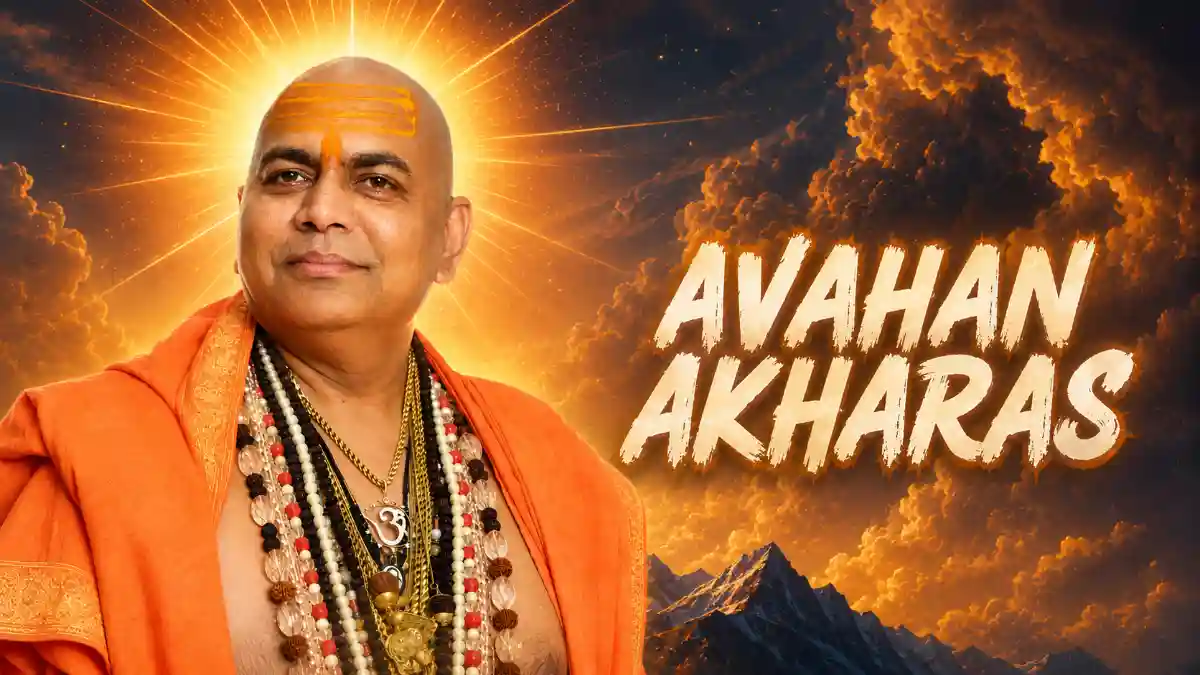
A 19th-century manuscript cited by historian Jadunath Sarkar places Avahan Akhara's founding at 547 CE, which predates every other Akhara by at least a century. Sarkar obtained this manuscript from the Nirvani Akhara of the Dashanami Sampradaya; it records the genealogy and founding dates of 6 military Akharas.
The Akhara's own tradition says Adi Shankaracharya established it after founding his 4 mathas near the 4 Dhams (Badrinath, Puri, Dwarka and Rameshwaram) as a protective force for those mathas. At the time of establishment, 52,000 saint-soldiers were said to be part of the Akhara.
Its original name was Akhanda Akhara, meaning "unbroken" or "indivisible," before it became known as Avahan Akhara. The word "avahan" means a call or summons. The tradition holds that its saints are ready to answer any call to defend dharma.
One Grokipedia source describes Avahan Akhara and Juna Akhara as historically related, noting that Shankaracharya "instituted 7 principal Shaiva akharas such as Juna (also Avahana)." This parenthetical conflation suggests the two orders share deep historical roots, though by the modern period they function as distinct entities with a formal affiliation: Avahan as a minor Akhara affiliated with Juna as the major one.
By the 19th century, the Akhara's fighting tradition had extended into political conflicts. Yatradham records that 40,000 saints of Avahan Akhara died fighting on the side of Rani Lakshmibai against British forces.
Today Avahan Akhara operates under the Akhil Bharatiya Akhara Parishad (ABAP), established in 1954, which coordinates the Shahi Snan sequence, camp allocations, and inter-Akhara disputes across all 4 Kumbh cities.
Key highlights
- Full name: Shri Panch Dashnam Avahan Akhara. Also referred to as Shri Shambhu Panchdashnam Ahvan Akhara in some sources.
- Founded: 547 CE by traditional reckoning (Jadunath Sarkar manuscript). Oldest of the 7 Shaiva Akharas by this account.
- Presiding deities: Dattatreya and Ganesha (also referred to as Gajanan).
- Headquarters: Dashashwamedh Ghat, Kashi, Varanasi, Uttar Pradesh.
- Affiliation: Minor Akhara affiliated with Juna Akhara (major). Both belong to the Dashanami Sampradaya.
- Amrit Snan 2028: Processes to the Kshipra RiverThe sacred river where millions take the holy dip during Simhastha. as part of the Juna group on April 9, April 23, and May 8, 2028.
- Dhuni: The Akhara's sacred fire is reported to have burned continuously for 1,500 years.
Founding and tradition
The traditional account places Avahan Akhara's founding at 547 CE by Adi Shankaracharya, after he had established his 4 mathas near the 4 Dhams. His stated purpose was to create a protective monastic army for those centers. The Akhara's name shifted from Akhanda (unbroken) to Avahan (the call) at some point in this early period.
One secondary source records a claim that Avahan Akhara was "the first to heed Adi Shankaracharya's call for the formation of such arenas for strengthening Hindu dharma."
The Akhara belongs to the Shaiva sampradaya. Its saints follow the Dashanami system, the 10-suffix renunciate tradition organized under Shankaracharya, and observe the prohibitions standard across Dashanami akharas: no meat-eating, no narcotics.
The 547 CE founding date comes from a single 19th-century manuscript cited by Jadunath Sarkar and provided by the Nirvani Akhara. No independent primary source has been located to confirm this date. Treat it as traditional record, not settled historical fact.
Founder and lineage
The institutional founder attributed in tradition is Adi Shankaracharya (c. 788–820 CE). The Akhara's own website describes him as "the fountainhead of the Dashnam Sampradaya and the re-establisher of Sanatan Dharma" who "formalized the ten Dashnam orders and initiated warrior asceticism among sannyasis to protect dharma."
The Akhara's guru parampara (lineage of teachers) also names Govindapada, described as the guru of Adi Shankaracharya, as "deeply associated with the early Advaita Vedanta lineage and revered in all Dashnam traditions."
Avahan Akhara's spiritual lineage runs to Dattatreya, its principal presiding deity. Dattatreya is a syncretic figure combining Brahma, Vishnu, and Shiva, and is also the presiding deity of Juna Akhara. That shared lineage explains why the two orders are formally affiliated.
Guru-shishya (teacher-disciple) tradition
Avahan Akhara follows the guru-shishya chain common to all Dashanami akharas. Initiation comes through the Sannyas Diksha, administered by a senior sadhu of the order. From that moment, the initiate belongs to the Akhara's lineage, not merely its administrative membership.
The current Acharya Mahamandaleshwar, the Akhara's highest spiritual authority, is Swami Arun Giri. He led the Akhara's Peshwai (formal entry procession) at Mahakumbh 2025 in Prayagraj, where the procession traveled 11 km from the local ashram in Madouka across the Triveni pontoon bridge to the designated camp in Sector 20.
The Akhara also has Mahamandaleshwars, Shri Mahants, and Naga Sannyasis in its formal hierarchy. At Mahakumbh 2025, more than a dozen Mahamandaleshwars rode on chariots and 51 Shri Mahants participated in the camp-entry journey, alongside a "large number" of Naga Sannyasis.
For Naga Sadhu initiation specifically, the culminating ceremony takes place during Kumbh Mela, not at ordinary events. Aspirants undergo years of service and scriptural study inside the Akhara before the formal initiation, which includes performing their own pind daan (ancestral funeral rites), symbolizing the death of their prior identity.
Religious and spiritual significance
Avahan Akhara follows the Shaiva path within Advaita Vedanta, Shankaracharya's non-dualist philosophy. Shiva is the ultimate reality, the ground of all being rather than a distinct deity set apart from creation. Dattatreya, the Akhara's principal deity, is a syncretic figure whose teachings span the Nath, Shaiva, and Vaishnava traditions.
The Akhara's stated mission is "to preserve, protect, and propagate Sanatan Dharma through strict ascetic practices, spiritual discipline, and service." It aims to uphold Vedic and Yogic knowledge while defending the faith: historically through martial training and spiritually through philosophical instruction.
Avahan Akhara's alignment with the Niranjani Sampradaya is noted in one source, which describes it as "dedicated to Lord Shiva and aligned with the Niranjani Sampradaya, one of the main streams of Advaita Vedanta."
Sources conflict on Avahan Akhara's formal sampradaya affiliation. The Akhara's own website associates it with the Niranjani Sampradaya. Multiple other sources (Wikipedia/Akhara, Grokipedia/ABAP, Bharatpedia/Akhara) classify it as a minor Akhara affiliated with Juna Akhara. The Wikipedia/Kumbh Mela article lists all 7 Shaiva Akharas (including Avahan) without specifying major-minor affiliations. Verify against current ABAP records before publishing either claim.
Dashanami sect affiliation
Avahan Akhara belongs to the Dashanami Sampradaya, the "Tradition of Ten Names" organized by Adi Shankaracharya. Renunciates of the Dashanami tradition take one of 10 name-suffixes upon initiation: Giri, Puri, Bharati, Vana, Aranya, Sagara, Saraswati, Tirtha, Ashrama, and Chaitanya. The suffix indicates which of the 4 mathas (Sringeri, Dwarka, Puri, Joshimath) the initiate's lineage runs through.
Within the Dashanami order, the Shaiva Akharas are the Astradhari (weapon-bearing) wing: the Naga sadhus. The Dashanami prohibitions observed at Avahan Akhara include abstinence from meat and narcotics, practices standard across all the Dashanami military Akharas.
Ishta-devata (presiding deity)
Avahan Akhara's 2 presiding deities are Dattatreya and Ganesha (also called Gajanan in some sources).
Dattatreya is a syncretic deity combining the 3 principal Hindu deities: Brahma (the creator), Vishnu (the preserver), and Shiva (the destroyer). He is also the presiding deity of Juna Akhara, which explains the theological overlap between the 2 orders. Dattatreya's teachings are preserved in the Avadhut Gita, one of the principal texts of the Nath tradition.
Ganesha's presence alongside Dattatreya distinguishes Avahan Akhara from other Dattatreya-affiliated orders. Ganesha is worshipped as the remover of obstacles and the deity of beginnings, fitting for an Akhara whose name means "the summons" or "the call."
Naga Sadhu tradition
Avahan Akhara is a Naga Sadhu order. Its Naga Sadhus undergo full renunciation (sannyas), weapons training, and the years-long preparation that ends in formal Naga Diksha during Kumbh Mela. The Akhara also provides formal education in weapons at its Varanasi headquarters.
The Akhara's Dhwaja (flag) is 52 hath (roughly 78 feet) long, the standard length across all 13 Akharas. Its color differs from other Akharas. The specific color of Avahan Akhara's flag is not independently confirmed in the sources reviewed.
The Akhara's dhuni (sacred fire) is reported to have burned continuously for 1,500 years. Yatradham describes the dhuni as "a symbol of activeness and continuity that they believe cannot be ended." Whether this specific dhuni at Dashashwamedh Ghat has burned uninterrupted for that duration has not been independently verified.
The dhuni at Dashashwamedh Ghat, Varanasi, is the ritual and symbolic center of Avahan Akhara's daily life. Ash from this fire has ritual significance for Naga Sadhus, who apply it to their bodies as a representation of Shiva. Pilgrims attending the Akhara's camp at Simhastha 2028 in Ujjain will find a temporary dhuni maintained at the same ritual standard. The Akhara's camp is open to pilgrims for darshan and discourse; the dhuni itself and the pre-dawn pujas are restricted to initiated members.
Organizational structure
At the top of Avahan Akhara sits the Acharya Mahamandaleshwar. As of Mahakumbh 2025 (Prayagraj), this position is held by Swami Arun Giri.
Below the Acharya Mahamandaleshwar are the Mahamandaleshwars (senior spiritual leaders) and the Shri Mahants (heads of individual centers). At Mahakumbh 2025, Avahan Akhara had more than a dozen Mahamandaleshwars and 51 Shri Mahants participating in the Peshwai procession.
The Akhara is formally affiliated with Juna Akhara, the largest of the 7 Shaiva Akharas. In the ABAP's organizational framework, Avahan is a minor Akhara to Juna's major. Both process together in the Shahi Snan sequence at Kumbh Melas.
Above all individual Akharas sits the Akhil Bharatiya Akhara Parishad (ABAP), established in 1954. It has 2 representatives from each of the 13 Akharas and governs Shahi Snan schedules, camp allocations, and membership disputes.
Role in Kumbh Mela (historical)
Avahan Akhara has participated in every Kumbh Mela across the 4 sites (Prayagraj, Haridwar, Nashik, Ujjain) since its formal organization. The Akhara's own claim, reported by its Acharya Mahamandaleshwar at Mahakumbh 2025, is that it has conducted 122 Mahakumbhs and 123 Kumbhs at Prayagraj alone. This figure implies a continuity of participation going back to the earliest recorded Kumbh Melas.
Avahan Akhara's martial past is central to its historical identity. Weapons training at Dashashwamedh Ghat continues today, though now as ritual practice rather than military preparation. If the 40,000-saint claim from 1857 is accurate, this Akhara is among the very few Hindu monastic orders with documented involvement in anti-colonial armed resistance.
Role in Simhastha 2028 specifically
Simhastha 2028 runs from March 27 to May 27, 2028 in Ujjain. The 3 Amrit Snan dates are April 9, April 23, and May 8, 2028. On each of these dates, Avahan Akhara processes to the Kshipra River as part of the Juna group in the ABAP's fixed sequence.
Like all Akharas, Avahan Akhara will maintain a Chawani (permanent camp) within the Simhastha grounds for the full 62 days. These camps are open to pilgrims for darshan and spiritual discourses. Internal pre-dawn pujas to Dattatreya and Ganesha are restricted to initiated members.
Before each Shahi Snan date, the Akhara conducts a Peshwai, its ceremonial entry procession through Ujjain's streets. At Mahakumbh 2025, Avahan Akhara's Peshwai included Mahamandaleshwars on chariots and Naga Sannyasis on horses and camels, covering 11 km into the mela grounds. The Simhastha 2028 Peshwai will follow the same ceremonial structure.
Avahan Akhara's exact camp sector allocation for Simhastha 2028 will be assigned by the Ujjain Simhastha Mela Authority closer to the event. Confirm the location against official MP government announcements before publishing navigational details for pilgrims.
Shahi Snan order and sequence
Avahan Akhara processes to the Kshipra River as part of the Juna group in the ABAP's Shahi Snan sequence. The Grokipedia/ABAP source describes the full order: "Mahanirvani (with Atal) leads first, followed by Niranjani (with Anand), Juna (with Avahana and Agni), Nirvani, Digambara, and Nirmohi."
This places Avahan Akhara third in the broad Shaiva sequence, after the Mahanirvani and Niranjani groups, as part of the Juna contingent. Its Naga Sadhus enter the river before Vaishnava and Udasin orders.
The exact internal positioning of Avahan Akhara within the Juna group on each Shahi Snan day at Simhastha 2028 has not been officially published as of August 2026. The broad order above is drawn from previous Kumbh Mela records.
The Shahi Snan sequence above reflects the ABAP's general protocol at previous Kumbh Melas. The official sequence for Simhastha 2028 must be confirmed against Madhya Pradesh government or Ujjain Simhastha Mela Authority announcements before publishing.
Connection and relationship with Ujjain
Ujjain is the only 1 of the 4 Kumbh cities that also houses a Jyotirlinga: MahakaleshwarExplore the divine Mahakaleshwar Jyotirlinga in Ujjain.. Its Shaivite identity runs deeper than any other Kumbh site. For Avahan Akhara, a Shaiva order whose principal deity Dattatreya carries resonance across Ujjain's religious landscape, Simhastha is a return to one of Hinduism's most Shiva-centered cities, not an external event the Akhara visits.
The Dattatreya Akhara in Ujjain (formally Shri Dattatreya Akhara) sits at Dattatreya Akhara Ghat, Kshipra Tat, opposite Ram Ghat, Ujjain 456006. It's a member institution of the ABAP. This monastery is located on what tradition holds to be the very place where Dattatreya taught his disciples during the Treta Yuga.
Avahan Akhara's affiliation with Juna and its shared Dattatreya lineage means its presence in Ujjain during Simhastha connects to this permanent Dattatreya site. Whether Avahan Akhara holds a direct institutional relationship with Shri Dattatreya Akhara Ujjain has not been independently verified.
Ashrams in Ujjain (with addresses where verifiable)
A permanent ashram of Avahan Akhara in Ujjain, separate from the Simhastha Chawani, has not been independently verified in the sources reviewed for this profile.
The Dattatreya Akhara at Ujjain, associated with the Dattatreya lineage that Avahan Akhara shares with Juna Akhara, is at Dattatreya Akhara Ghat, Kshipra Tat, opposite Ram Ghat, Ujjain 456006, Madhya Pradesh. It is a member of ABAP.
Verify whether Avahan Akhara maintains a year-round ashram in Ujjain, distinct from its Simhastha 2028 camp, directly with the Akhara or the Ujjain administration before publishing this as a pilgrim destination.
Major ashrams and maths elsewhere in India
- Headquarters: Dashashwamedh Ghat, Kashi, Varanasi, Uttar Pradesh. This is the Akhara's primary center and the site of its 1,500-year-old dhuni.
- Haridwar: At least one secondary source (thekumbhyatra.com) cites Haridwar as the Akhara's headquarters, which conflicts with the primary identification of Dashashwamedh Ghat, Varanasi. The Haridwar reference may refer to a secondary camp maintained during the Haridwar Kumbh.
- Prayagraj camp (Mahakumbh 2025): Sector 20, Mahakumbh grounds, Prayagraj. This was the designated camp during the January-February 2025 Mahakumbh, accessed via the Triveni pontoon bridge.
Prominent Mahants and Mahamandaleshwars
- Swami Arun Giri: Current Acharya Mahamandaleshwar of Avahan Akhara. Led the Peshwai at Mahakumbh 2025 in Prayagraj. Emphasized environmental conservation at the 2025 Mahakumbh, distributing 51,000 fruit plants as prasad and organizing events on tree planting and universe protection within the Akhara camp.
- Mahant Gopal Giri: Named in December 2024 news coverage as a Mahant of the Akhara who confirmed participation details for Mahakumbh 2025, including the count of Mahamandaleshwars and Shri Mahants in the Peshwai.
Mahant and Mahamandaleshwar positions change through succession within the Akhara. Verify current leadership names against ABAP records or direct Akhara sources before publishing. The positions confirmed above reflect Mahakumbh 2025 reporting; confirm they remain current ahead of Simhastha 2028.
Architecture of key ashrams or temples
Avahan Akhara's headquarters at Dashashwamedh Ghat sits at one of Kashi's most frequented ghat sites. Dashashwamedh Ghat derives its name from a mythological account: Brahma performed 10 Ashwamedha yagnas (horse sacrifices) here at the request of King Devodasa, creating the pond that became the ghat. The ghat is located through Vishwanath Gali in Godowlia, directly adjacent to the Kashi Vishwanath Jyotirlinga temple corridor.
Akhara architecture across all orders follows a consistent pattern: a central akharana (practice courtyard), a shrine to the presiding deity, the dhuni, a Mahant's residence, and accommodation for resident sadhus. At Avahan Akhara's Varanasi headquarters, the dhuni is the structural and ritual heart of the complex, reportedly burning for 1,500 years.
During Simhastha, the Akhara's Chawani replicates this pattern on a larger scale: central dhuni, tent shrine to Dattatreya and Ganesha, and a perimeter that distinguishes the initiated community from the public. The Chawani is functionally a temporary monastery for the 62-day event.
Religious rituals and practices
Daily life at Avahan Akhara follows the standard Dashanami schedule: pre-dawn puja to the presiding deities, weapons training and physical discipline, scriptural study, and evening discourses. Education in weapons (swords and archery) is provided at the Varanasi headquarters.
Ash from the dhuni is applied to the body by Naga Sadhus as a representation of Shiva's presence. The fire is kept burning regardless of other activities in the Akhara.
At Simhastha, the Akhara holds internal pre-dawn pujas to Dattatreya and Ganesha on Shahi Snan days before the public procession begins. These are not open to pilgrims. Pilgrims may attend public discourses and darshan sessions at the Chawani during designated hours.
Rare and lesser-known facts
- Oldest Akhara by traditional reckoning: The Jadunath Sarkar manuscript places Avahan Akhara's founding at 547 CE, 99 years before Atal Akhara (646 CE) and 201 years before Mahanirvani (749 CE). If the manuscript is accurate, Avahan Akhara is the oldest standing Akhara in India.
- Name shift from Akhanda to Avahan: The Akhara was originally called Akhanda Akhara, meaning "indivisible" or "unbroken", the same root that gives the word "akhara" itself its meaning. Its rename to Avahan ("the summons") shifted its identity from structural unity to active calling.
- 2 presiding deities: Most Akharas center on 1 deity. Avahan Akhara's 2 presiding deities (Dattatreya and Ganesha) make it unusual. The pairing of a syncretic Trimurti figure (Dattatreya) with a remover-of-obstacles deity (Ganesha) is not found in any other Akhara profile reviewed.
- 1857 participation: The claim that 40,000 Avahan Akhara saints fought with Rani Lakshmibai against British forces in 1857 is recorded by Yatradham. If accurate, it places this Akhara among the few Hindu monastic orders with documented involvement in the first major anti-colonial uprising.
- 122 Mahakumbhs at Prayagraj: Acharya Mahamandaleshwar Swami Arun Giri stated at Mahakumbh 2025 that Avahan Akhara has participated in 122 Mahakumbhs and 123 Kumbhs at Prayagraj. This claim implies unbroken attendance since at least the 9th century CE.
- Environmental initiative at Mahakumbh 2025: Swami Arun Giri personally distributed 51,000 fruit plants as prasad during Mahakumbh 2025 as part of the Akhara's "Plant Trees, Save the Universe" initiative. This is an unusual use of Kumbh prasad (typically food or sacred materials) for environmental purposes.
Timeline of key events
| Year / Period | Event | Source |
|---|---|---|
| 547 CE | Avahan Akhara founded, attributed to Adi Shankaracharya. Originally named Akhanda Akhara. 52,000 saint-soldiers said to be part of the founding. Jadunath Sarkar manuscript places this as the earliest of the 6 Dashanami military Akharas. | Jadunath Sarkar manuscript (19th century), cited in Nirvani Akhara institutional records |
| c. 788–820 CE | Adi Shankaracharya's broader reorganization of the Dashanami Sampradaya. Institutional context for Avahan Akhara's founding, though the 547 CE date predates Shankaracharya's own dates, a contradiction not resolved in available sources. | Needs verification, official records not confirmed |
| 1857 | Claimed: 40,000 Avahan Akhara saints died fighting on the side of Rani Lakshmibai against British forces. Independent verification not found. | Needs verification, official records not confirmed |
| 1954 | Akhil Bharatiya Akhara Parishad (ABAP) established. Avahan Akhara integrated into the formal governance structure of the 13 Akharas. | Needs verification, official records not confirmed |
| December 2024 | Avahan Akhara's Peshwai (camp entry) at Mahakumbh 2025, Prayagraj. Led by Acharya Mahamandaleshwar Swami Arun Giri. Procession of 11 km. Camp in Sector 20, Prayagraj. | Organiser, December 2024 |
| January–February 2025 | Mahakumbh 2025, Prayagraj. Avahan Akhara participates in Shahi Snan as part of the Juna group. Swami Arun Giri states the Akhara has attended 122 Mahakumbhs and 123 Kumbhs at Prayagraj. | Organiser, December 2024 |
| April 9, 2028 | First Amrit Snan, Simhastha 2028. Avahan Akhara processes to Kshipra River, Ujjain, as part of the Juna group. | MP Government official Simhastha 2028 date announcement |
| April 23, 2028 | Second Amrit Snan, Simhastha 2028. | MP Government official Simhastha 2028 date announcement |
| May 8, 2028 | Third Amrit Snan, Simhastha 2028. | MP Government official Simhastha 2028 date announcement |
Sources: Jadunath Sarkar manuscript (19th century); Organiser, December 2024; MP Government official Simhastha 2028 date announcement. August 2026. The 547 CE founding date predates Adi Shankaracharya (c. 788–820 CE), the attributed founder; this contradiction is unresolved. Confirm against Akhara's own records before publishing.

Comments
No comments yet. Be the first to share your thoughts!
Leave a Comment