
Ancient to modern history
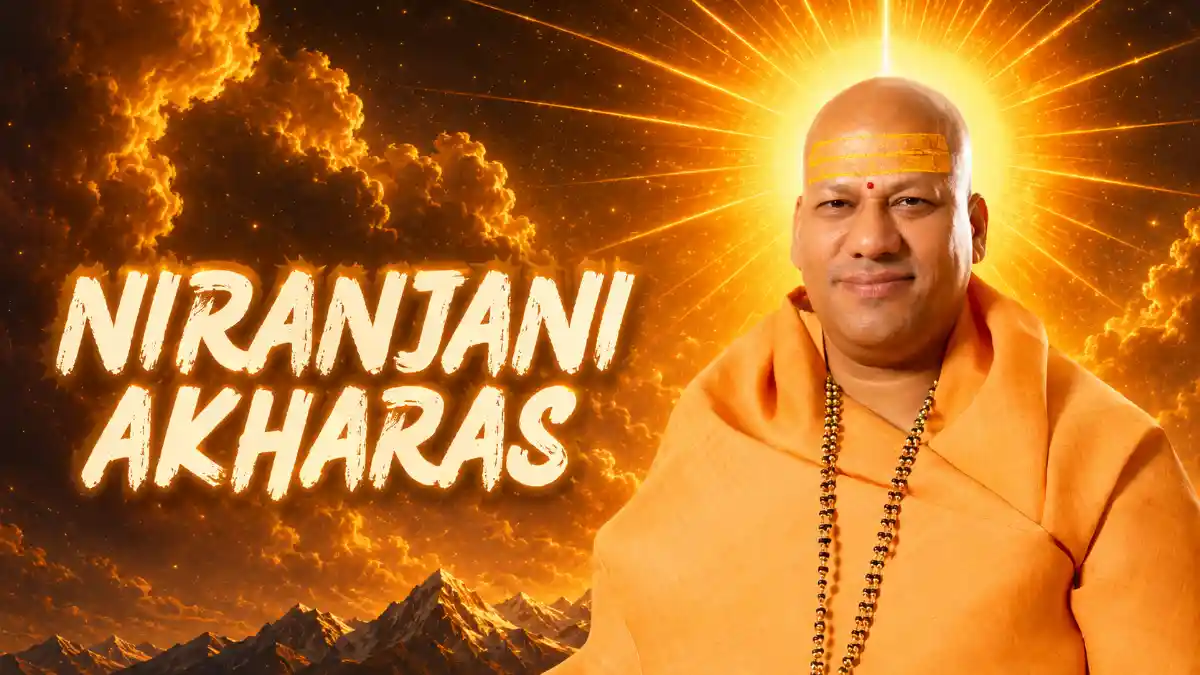
Niranjani Akhara traces its revival to 903–904 CE at Kachcha Mandavi in what is now Gujarat's Kutch district. The founding group was a collective of sadhus, not a single founder-saint. They gathered to revive an ascetic order in the Shaivite tradition and placed it under the protective mythology of Kartikeya.
The Mahanirvani Peetham's account of the founding year is 903 CE. Most other secondary sources, including HandWiki's ABAP entry and the Tour My India blog citing Kumbh Mela historical records, give 904 CE. Both dates refer to the same revival event; the 1-year difference is a transcription variation across sources.
Like all 7 Shaiva Akharas, Niranjani's organizational structure goes back to Adi Shankaracharya's 8th-century reorganization of the Dashanami order. But the institutional date of 904 CE refers specifically to its revival as a distinct Akhara with its own administration, deity, and territory.
By the medieval period, Niranjani Akhara had established its primary base at Prayagraj, where it still operates today. Its Daraganj ashram at Mori Gate in Daraganj is the administrative center from which it manages its Kumbh Mela operations and institutional affairs.
In 2021, Niranjani Akhara gained national attention when its head, Mahant Narendra Giri, president of the Akhil Bharatiya Akhara Parishad, died in circumstances that triggered a succession dispute within the ABAP. The fallout divided the 13 Akharas into rival factions for the 2025 Mahakumbh cycle. Mahant Ravindra Puri, secretary of Niranjani Akhara, was elected ABAP president in October 2021.
Key highlights
- Founded: 903–904 CE at Kachcha Mandavi, Gujarat. One of the oldest Akharas in the Shaiva tradition.
- Size: Second-largest Akhara in India after Juna, with over 10,000 sadhus and approximately 50 Mahamandaleshwars.
- Deity: Kartikeya (also known as Subramanya or Murugan), son of Lord Shiva. The only major Shaiva Akhara with Kartikeya as primary deity.
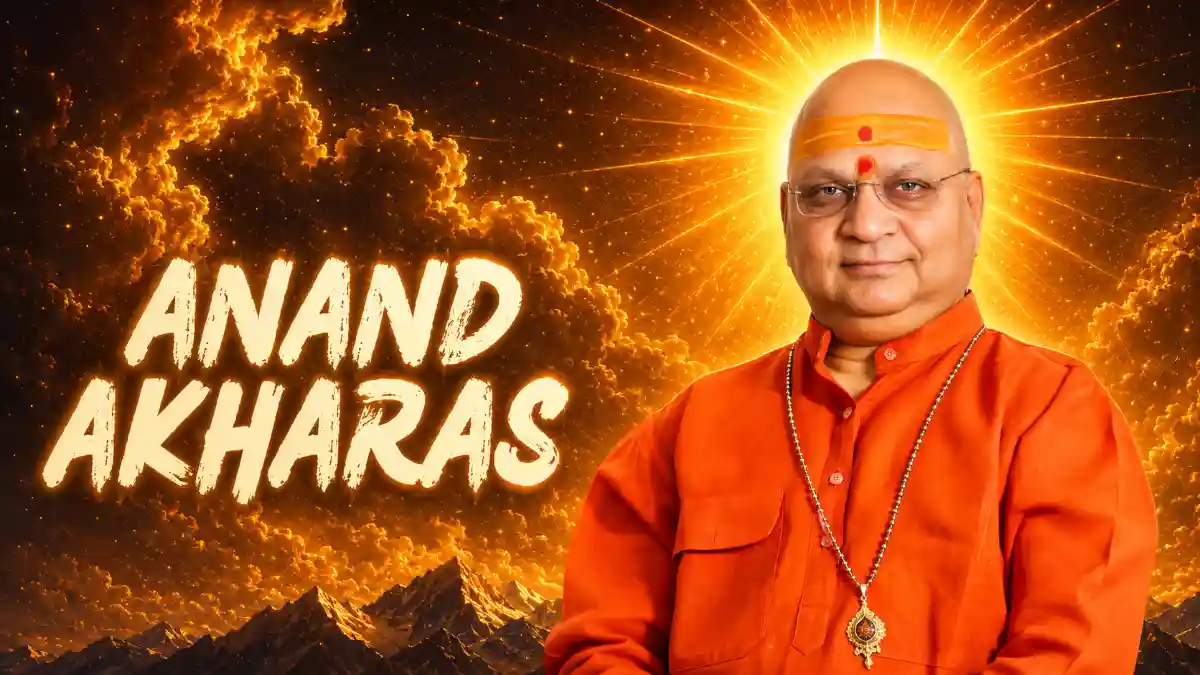
- Affiliated minor Akhara: Anand Akhara (presiding deity Surya Deva) is formally affiliated with Niranjani.
- Head office: Shri Panchayati Akhara Niranjani, Dara Ganj, Prayagraj, Uttar Pradesh.
- Branches: Ujjain and Udaipur.
- Simhastha 2028: Shahi Snan on April 9, April 23, and May 8, 2028.
Founding and tradition
The Mahanirvani Peetham records describe Niranjani Akhara as having originated from the protective army of Kartikeya, which "turned into the Niranjani Akhara of Sadhus." This framing is traditional rather than historical: it explains the Akhara's self-understanding as a spiritual fighting force, now devoted to Kartikeya rather than to combat.
The name "Niranjani" means pure or unstained: "Nir" (without) and "anjan" (stain or collyrium). The Atman, in this view, is naturally pure. Maya is the stain, not the self. That position sits squarely in Advaita Vedanta, the non-dualist school Shankaracharya built the Dashanami order around.
Niranjani's membership is distinctively educated. Kumbhcamp.org describes it as having "many highly educated members, including individuals with doctoral and post-graduate degrees," a characterization that holds across independent sources from 2020 to 2023, making it one of the few consistent qualitative distinctions between this Akhara and its Shaiva peers.
The founding year appears as 903 CE in Mahanirvani Peetham records and 904 CE in HandWiki, kumbhcamp.org, Tour My India, and the IJFMR academic paper. Both refer to the same revival event. Use 904 CE as the conventional date, note the 903 CE variant in any academically oriented copy, and source the claim explicitly.
Founder and lineage
Niranjani Akhara has no single named founding saint. Its revival in 904 CE was the work of "a group of sadhus coming together" at Kachcha Mandavi, Gujarat.
The broader institutional lineage runs through Adi Shankaracharya (c. 788–820 CE), who organized the Dashanami Sampradaya and gave the 7 Shaiva Akharas their formal framework. Niranjani is one of those 7.
Philosophically, the Akhara's lineage connects to the Advaita Vedanta school, specifically to the non-dualist proposition that Shiva (or the absolute, Brahman) is the only reality. The martial mythology of Kartikeya provides the Akhara's founding narrative, but the philosophical ground is the same as all Shaiva Akharas: Shankaracharya's Advaita.
Within Niranjani's lineage, the most prominent recent figure is Mahant Narendra Giri, who served as both head of Niranjani Akhara and ABAP president until his death in September 2021. His tenure saw Niranjani Akhara hold the ABAP presidency, giving it a central role in national Akhara affairs during that period.
Guru-shishya (teacher-disciple) tradition
Entry into Niranjani Akhara follows the Dashanami pattern: a guru receives an aspirant through Sannyas Diksha (renunciation initiation), and from that point the initiate belongs to the Akhara's lineage. The Acharya Mahamandaleshwar holds authority over initiations.
Mahanirvani Peetham records note that "only advanced aspirants are initiated into these Akharas" (referring to Nirvani and Niranjani specifically) "who have already received preliminary instructions from the Guru." This distinguishes Niranjani from some other Akharas where aspirants begin training from scratch on admission.
For Naga Sadhu initiation, the process involves years of austerity, celibacy, and scriptural study before the final Naga Diksha at Kumbh Mela. The 5-stage initiation includes head shaving, the wearing of saffron robes, acceptance of prayer beads, ash application, and the final surrender of clothing. The candidate then performs pind daan, the ancestral funeral ritual, and takes a new name.
The Mahanirvani Peetham records single out Niranjani and Nirvani as "the leading akhadas from the point of view of the number of members and movable property." Eleven centuries of guru-shishya transmission built that.
Religious and spiritual significance
Niranjani Akhara's spiritual significance comes from 2 sources: its antiquity within the Dashanami tradition, and its singular deity choice. It's the only Shaiva Akhara among the 7 whose primary worship is directed to Kartikeya rather than Shiva directly, Dattatreya, or Kapila Mahamuni.
The Akhara's emphasis on education adds a dimension few other Akharas claim. Multiple sources across different periods describe its membership as distinctively learned, with doctorate and post-graduate holders among its sadhus. This makes Niranjani's discourses and teachings more academically engaged than typical Akhara events.
At each Kumbh, Niranjani Akhara organizes yajnas (fire rituals), discourses, and spiritual assemblies at the ghat alongside its Shahi Snan participation. For pilgrims, the Akhara's camp is not just a procession to watch but a site of active religious programming.
Dashanami sect affiliation
Niranjani Akhara belongs to the Dashanami Sampradaya, the "Tradition of Ten Names" organized by Adi Shankaracharya. The 10 suffixes (Giri, Puri, Bharati, Vana, Aranya, Sagara, Saraswati, Tirtha, Ashrama, Chaitanya) determine which of the 4 cardinal mathas a renunciate's lineage runs through.
Within the Dashanami order, Niranjani Akhara contains both Astradhari (weapon-bearing, Naga) and Shastradhari (scripture-bearing) sadhus. The IJFMR academic paper on the Akhara system (2023) explicitly notes that Niranjani "comprises of Ashtradhari as well as Shastrdhari seers with a rich tradition of Naga SadhusLearn about the mysterious Naga Sadhus of Kumbh Mela.."
The Anand Akhara, which worships Surya Deva (the Sun God) and is based at Trimbakeshwar, Nashik, is formally affiliated with Niranjani. This affiliation means Anand Akhara operates under Niranjani's institutional umbrella at Kumbh Melas.
Ishta-devata (presiding deity)
Kartikeya (also known as Subramanya, Murugan, or Skanda) is the presiding deity of Niranjani Akhara. He is Lord Shiva's son, born specifically to defeat the demon Tarakasura, who could only be killed by Shiva's child. The Akhara's founding narrative describes itself as the earthly continuation of Kartikeya's divine army.
Kartikeya's weapon is a vel (spear), given to him by his mother Parvati. He killed Tarakasura on the 7th day after his birth. His iconography emphasizes youth, bravery, and an eternal readiness for battle, fitting for a monastic order with martial origins.
In North India, Kartikeya is far less prominently worshipped than in South India (where he is Tamil Nadu's principal deity under the name Murugan). Niranjani Akhara is one of the few major North Indian religious institutions that maintains Kartikeya as its primary focus, giving it a devotional distinctiveness within the Kumbh context.
At every Kumbh, Niranjani Akhara plants a 52-foot high holy flag in its camp. The height is not incidental: it symbolizes the 52 houses (marhis) of the Akhara's saints. Each marhi is a sub-unit led by a Mahant, and the flag's 52-foot height asserts all 52 as equals under one Akhara identity. It's a rare example of architectural symbolism directly encoding institutional structure. The kind of detail that distinguishes a serious pilgrim's understanding of an Akhara camp from a casual visitor's.
Naga Sadhu tradition
Niranjani Akhara has a full Naga Sadhu tradition. Its Naga sadhus participate in Shahi Snan processions at Kumbh, entering the river before the general public. The IJFMR academic paper confirms Niranjani "comprises of Ashtradhari as well as Shastrdhari seers with a rich tradition of Naga Sadhus."
The Naga initiation process at Niranjani follows the standard Dashanami pattern. Aspirants spend years under a guru, then undergo a 5-stage public initiation at Kumbh: head shaving, saffron robes, prayer beads, ash application, and the surrender of clothing. They then perform pind daan, the funeral ritual for their own past identity, and receive a new name.
Niranjani's Naga sadhus carry tridents, swords, and spears in the Shahi Snan procession, consistent with all Shaiva Akhara Naga traditions. The weapons are ceremonial, not functional, but they preserve the martial lineage the Akharas have maintained since the Mughal period.
One source (en.advayta.org on the Juna Akhara) notes that Atal, Juna, and Niranjani may be "2,000 to 2,500 years old" as institutions, predating the Shankaracharya organization. This claim is a single source and isn't corroborated independently, but it reflects a broader scholarly discussion about whether Akharas have pre-Shankaracharya roots.
Organizational structure
Niranjani Akhara's governing body is the Shree Panch, a council of 5 members representing Brahma, Vishnu, Shiva, Shakti, and Ganesha. The council is elected at each Kumbh Mela and holds office for 4 years.
The Acharya Mahamandaleshwar sits above the Shree Panch as the highest spiritual authority, with Mahamandaleshwars and Mandaleshwars below, and Shree Mahants at the center level. Niranjani has approximately 50 Mahamandaleshwars, per Tour My India.
Each Akhara divides into 8 davas (divisions) and 52 marhis (centers), each led by a Mahant. The 52-foot flag at Kumbh camps directly references these 52 marhis. This structure applies to Niranjani as to all 7 Shaiva Akharas.
The Anand Akhara (presiding deity Surya Deva, based at Trimbakeshwar) is Niranjani's affiliated minor Akhara. The 2 travel together at Kumbh Melas under the broader Niranjani institutional umbrella.
Role in Kumbh Mela (historical)
Niranjani Akhara has participated in all 4 Kumbh sites (Prayagraj, Haridwar, Ujjain, and Nashik) across its history. At Prayagraj, its base location, Niranjani has the strongest organizational presence. Its Daraganj ashram doubles as the operational base for each Prayagraj Kumbh.
Shahi Snan order has historically caused friction between Akharas. The ABAP was created partly to settle the sequence before it disrupted the ritual. Niranjani, as the second-largest Akhara, carries weight in those negotiations.
Niranjani's Peshwai (ceremonial entry procession) at each Kumbh includes chariots, elephants, and camels, per kumbhcamp.org. The procession scale reflects the Akhara's size relative to its peers.
The 2021 ABAP leadership crisis put Niranjani at the center of inter-Akhara politics heading into Mahakumbh 2025. With Mahant Narendra Giri (former Niranjani head) dead and succession disputed, Niranjani's institutional role in coordinating Kumbh preparation came under scrutiny from rival Akhara factions.
Role in Simhastha 2028 specifically
Simhastha 2028 runs from March 27 to May 27, 2028. The 3 Shahi Snan dates are April 9, April 23, and May 8, 2028. On each date, Niranjani Akhara's Naga Sadhus participate in the procession to the Shipra River, entering the water with the other Shaiva Akharas before the Vaishnava and Udasin orders.
Before each Shahi Snan, Niranjani conducts its Peshwai through Ujjain's streets. Elephants, chariots, and Mahamandaleshwars in palanquins mark the procession. For pilgrims who arrive early, the Peshwai is often more accessible than the Shahi Snan itself, which draws the largest crowds.
Niranjani's Chawani (camp) within the Simhastha grounds will be open to pilgrims for 62 days for darshan, discourses, and yajnas. The Akhara's reputation for educated Mahamandaleshwars means its discourse programs tend toward philosophical depth rather than popular religious entertainment.
Niranjani Akhara's specific Simhastha 2028 Chawani location, Peshwai dates, and exact Shahi Snan position in the sequence have not been officially published as of August 2026. Confirm against Madhya Pradesh government/Ujjain Simhastha Mela Authority announcements before publishing these details.
Shahi Snan order and sequence
On each Shahi Snan date, the 13 Akharas proceed to the Shipra in a fixed sequence set by the ABAP. Shaiva Akharas go first. Niranjani, as the second-largest Shaiva Akhara, typically occupies one of the leading positions in the Shaiva procession order, though the exact position within the Shaiva group varies by event.
Juna Akhara, the largest, traditionally leads. Niranjani follows in the leading group. But the ABAP confirms precise sequence only closer to the event, and the 2021 factional dispute has introduced uncertainty into whether pre-2021 sequence patterns hold for 2028.
The exact position of Niranjani Akhara in the 2028 Shahi Snan sequence has not been officially published as of August 2026. Verify against ABAP or Ujjain Simhastha Mela Authority announcements before publishing this as a confirmed fact.
Connection and relationship with Ujjain
Niranjani Akhara maintains a permanent branch in Ujjain, one of its 2 branch locations outside Prayagraj (the other being Udaipur). Ujjain is both a Simhastha host city and one of the 7 sacred cities (Sapta Puri) of Hinduism, with MahakaleshwarExplore the divine Mahakaleshwar Jyotirlinga in Ujjain. temple at its center.
Juna Akhara has a named ghat in Ujjain (Dattatreya Akhara Ghat, opposite Ram Ghat). Niranjani does not. Available sources confirm the branch exists but give no street address or ghat name for it.
Ujjain's Shaivite character (it hosts the Mahakaleshwar Jyotirlinga) makes it a natural home for a Kartikeya-devoted Akhara: Kartikeya is Shiva's son, and the city's primary sacred identity is Shaivite. Niranjani's presence here is therefore theologically coherent, not just historically inherited.
Ashrams in Ujjain (with addresses where verifiable)
- Ujjain branch ashram: Niranjani Akhara maintains a branch in Ujjain. The precise street address is not independently verified across available sources. Cross-check against ABAP records or Ujjain Nagar Nigam directories before publishing an address.
Simhastha 2028 Chawani (camp) sector allocations will be assigned by the Ujjain Simhastha Mela Authority closer to the event. Do not publish camp locations for pilgrim navigation until official sector maps are released.
Major ashrams and maths elsewhere in India
- Head office (Prayagraj): Shri Panchayati Akhara Niranjani, Dara Ganj (Mori Gate, Daraganj), Prayagraj, Uttar Pradesh. This is the administrative and spiritual headquarters.
- Haridwar: Niranjani has a presence at Haridwar, where it operates during Ardh Kumbh. The specific ashram address is not independently documented in available sources.
- Trimbakeshwar, Nashik: The affiliated Anand Akhara is headquartered here. Niranjani's own Nashik presence is less documented.
- Udaipur: A branch of Niranjani Akhara exists in Udaipur. Address not independently verified.
Prominent Mahants and Mahamandaleshwars
Niranjani Akhara has approximately 50 Mahamandaleshwars. Leadership at the Acharya Mahamandaleshwar level changes through succession.
- Mahant Narendra Giri: Former head of Niranjani Akhara and ABAP president. Died September 20, 2021, in Prayagraj under disputed circumstances. His death triggered a succession crisis within the ABAP.
- Mahant Ravindra Puri: Secretary of Niranjani Akhara, elected ABAP president in October 2021 at a meeting held within the Niranjani Akhara premises in Daraganj. His mid-term election was contested by a faction of 7 other Akharas. As of available reporting up to 2024, he remained the ABAP president in the Niranjani-aligned faction.
ABAP leadership remains disputed following the 2021 schism. Verify current Acharya Mahamandaleshwar and ABAP president names against official sources before publishing, as factional claims are in flux and may have changed since August 2026.
Architecture of key ashrams or temples
The Daraganj ashram in Prayagraj, at Mori Gate, is the nerve center of Niranjani Akhara. It's a working institutional space, not a heritage monument: ABAP meetings have been held here, Kumbh operational planning takes place here, and it was the site of Mahant Ravindra Puri's election as ABAP president in October 2021.
At Kumbh Melas, the Niranjani camp's most visible architectural feature is its 52-foot holy flag. The height corresponds to the Akhara's 52 marhis. The flag is planted at the entrance of the Chawani and remains the most recognizable marker of the Niranjani camp within the vast Mela grounds.
Standard Akhara camp architecture includes a central akharana (practice courtyard), an inner sanctum with the Kartikeya image, a dhuni (sacred fire kept burning continuously), and accommodation for resident sadhus during the Mela. The Chawani perimeter marks the boundary between initiated space and public access.
Religious rituals and practices
Daily life at Niranjani Akhara follows the standard Dashanami pattern: pre-dawn puja to Kartikeya, yoga and physical training, scriptural study, midday rest, and evening discourses. At Simhastha, the schedule expands to accommodate the larger pilgrim volume and the Shahi Snan ritual calendar.
The Akhara conducts special yajnas, discourses, and assemblies at the Shipra ghat during Simhastha. KhetiVyapar's account of Mahakumbh 2025 specifies that "at the sacred banks of the Sangam, Niranjani Akhara organizes special yajnas, rituals, and discourses."
The Anand Mela is held annually in Prayagraj, where Niranjani participates alongside its affiliated Anand Akhara. KhetiVyapar notes the Akhara "participates annually in the Magh Mela held in Prayagraj," which is the annual rehearsal for the full Kumbh cycle.
The Akhara's discourse programs run deeper than most, which is consistent with a membership that includes doctoral and post-graduate degree holders. KhetiVyapar describes Niranjani's Swamis and Mahamandaleshwars as teachers who "inspire millions of devotees through their teachings based on dharma, truth, and yoga."
Rare and lesser-known facts
- The only Kartikeya-primary Akhara: Among the 7 Shaiva Akharas, Niranjani is the sole one that places Kartikeya above Shiva in daily worship. Juna worships Dattatreya; Mahanirvani worships Kapila Mahamuni; Atal worships Ganesha; Anand worships Surya; Avahan worships Dattatreya. Niranjani stands apart.
- Doctorate-holding sadhus: Sources from 2020 to 2023 consistently describe Niranjani as having a notably high proportion of academically qualified members, including sadhus with doctoral degrees. This is unusual enough that it appears as a distinguishing fact in multiple independent sources over more than a decade.
- Founded by a collective, not a saint: Most Akharas are associated with a single founding figure (Juna with Dattatreya; Mahanirvani with Kapila Mahamuni). Niranjani's 904 CE revival was by "a group of sadhus coming together" with no named individual. This is consistent across all independent sources consulted.
- The Kartikeya-Tarakasura origin story: The Akhara's self-description as the "protective army of Kartikeya" is grounded in Kartikeya's mythological role: born to kill the demon Tarakasura, he did so on the 7th day of his life. The Akhara sees its own purpose in similar terms: protection of dharma as a born mandate, not a chosen role.
- ABAP center of gravity: From 2021, the Niranjani Akhara complex at Mori Gate, Daraganj became the de facto headquarters of the Ravindra Puri faction of ABAP, hosting the election meeting that installed him as ABAP president. This gives Niranjani an unusual institutional double-role: major Akhara within ABAP, and physical host of ABAP's contested governing body.
- Possible pre-Shankaracharya antiquity: One source (en.advayta.org) places Niranjani among the Akharas that "are 2,000 to 2,500 years old," predating Shankaracharya's 8th-century organization. This is a single-source claim not corroborated by academic historians, but it reflects a real internal debate about whether Akhara origins predate their formal organization.
Timeline of key events
| Year / Period | Event | Source |
|---|---|---|
| c. 788–820 CE | Adi Shankaracharya organizes the Dashanami Sampradaya, giving all 7 Shaiva Akharas including Niranjani their formal institutional structure | Mahanirvani Peetham institutional records |
| 903–904 CE | Niranjani Akhara revived at Kachcha Mandavi, Gujarat, by a collective of sadhus. Kartikeya established as tutelary deity. Head office eventually placed at Prayagraj | Mahanirvani Peetham institutional records |
| Medieval period | Niranjani Akhara participates in Kumbh Melas at all 4 sites (Prayagraj, Haridwar, Ujjain, Nashik). Daraganj, Prayagraj becomes primary base | Needs verification, official records not confirmed |
| 20 September 2021 | Mahant Narendra Giri, head of Niranjani Akhara and ABAP president, dies in Prayagraj. Succession dispute divides ABAP into rival factions | Deccan Herald, PTI, September 2021 |
| 25 October 2021 | Mahant Ravindra Puri, secretary of Niranjani Akhara, elected ABAP president at meeting held in Niranjani Akhara premises, Daraganj. Election contested by a rival Akhara faction | Deccan Herald, PTI, October 2021; Hindustan Times, October 2021 |
| 2025 | Niranjani Akhara participates in Mahakumbh Prayagraj 2025. Ravindra Puri continues as ABAP president per Niranjani-aligned faction | Needs verification, official records not confirmed |
| 9 April 2028 | First Amrit Snan, Simhastha 2028. Niranjani Akhara joins procession to Shipra River, Ujjain | MP Government official Simhastha 2028 date announcement |
| 23 April 2028 | Second Amrit Snan, Simhastha 2028 | MP Government official Simhastha 2028 date announcement |
| 8 May 2028 | Third Amrit Snan, Simhastha 2028 | MP Government official Simhastha 2028 date announcement |
Sources: Mahanirvani Peetham institutional records; Deccan Herald, PTI, October 2021; Hindustan Times, October 2021; MP Government official Simhastha 2028 date announcement. Confirm against official records before publishing.
Comments
No comments yet. Be the first to share your thoughts!
Leave a Comment