

Ujjain — Where Faith Meets Eternity — Standing serenely on the banks of the Shipra River, Ujjain is one of India’s oldest and holiest cities — a sacred heartbeat of devotion, science, and art. Known as the City of Temples, Ujjain is where myth merges with history and spirituality blends with daily life. Its location on the Tropic of Cancer gives it both geographical and cosmic significance, symbolizing balance between heaven and earth. From the echoing bells of Mahakaleshwar Jyotirlinga to the vibrant ghats where lamps dance at dusk, Ujjain continues to inspire pilgrims, poets, and seekers alike.
Historical Roots of Ujjain
In ancient India, Ujjain was the capital of the Avanti Kingdom, one of the sixteen great Mahajanapadas. Under the legendary King Vikramaditya, the city flourished as a centre of wisdom and power, marking the beginning of the Vikram Samvat Era — a calendar that India still honours.
Renowned scholar Kalidasa described Ujjain as “the city bathed in eternal light,” while astronomer Varahamihira built his observatory, the Vedh Shala, here to study planetary movements. This union of faith and science made Ujjain the astronomical capital of ancient India, where cosmic alignments were measured with spiritual precision. Even today, standing at the observatory reminds visitors that Ujjain has always looked not only to the heavens but also within.
Mahakaleshwar Jyotirlinga — The Heart of Divine Power
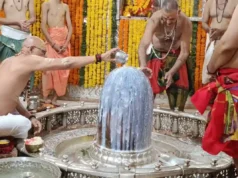
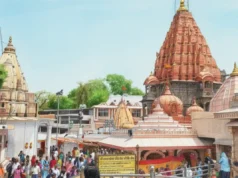
At the centre of Ujjain’s sanctity lies the Mahakaleshwar Temple, one of the twelve Jyotirlingas of Lord Shiva. What sets it apart is its self-manifested (Swayambhu) form, believed to emanate energy directly from the earth.
The temple’s most mystical ritual is the Bhasma Aarti, performed before dawn when sacred ash (bhasma) — symbolizing the impermanence of life — is offered to the deity. Witnessing this aarti is considered a once-in-a-lifetime experience, where spirituality meets the essence of existence.
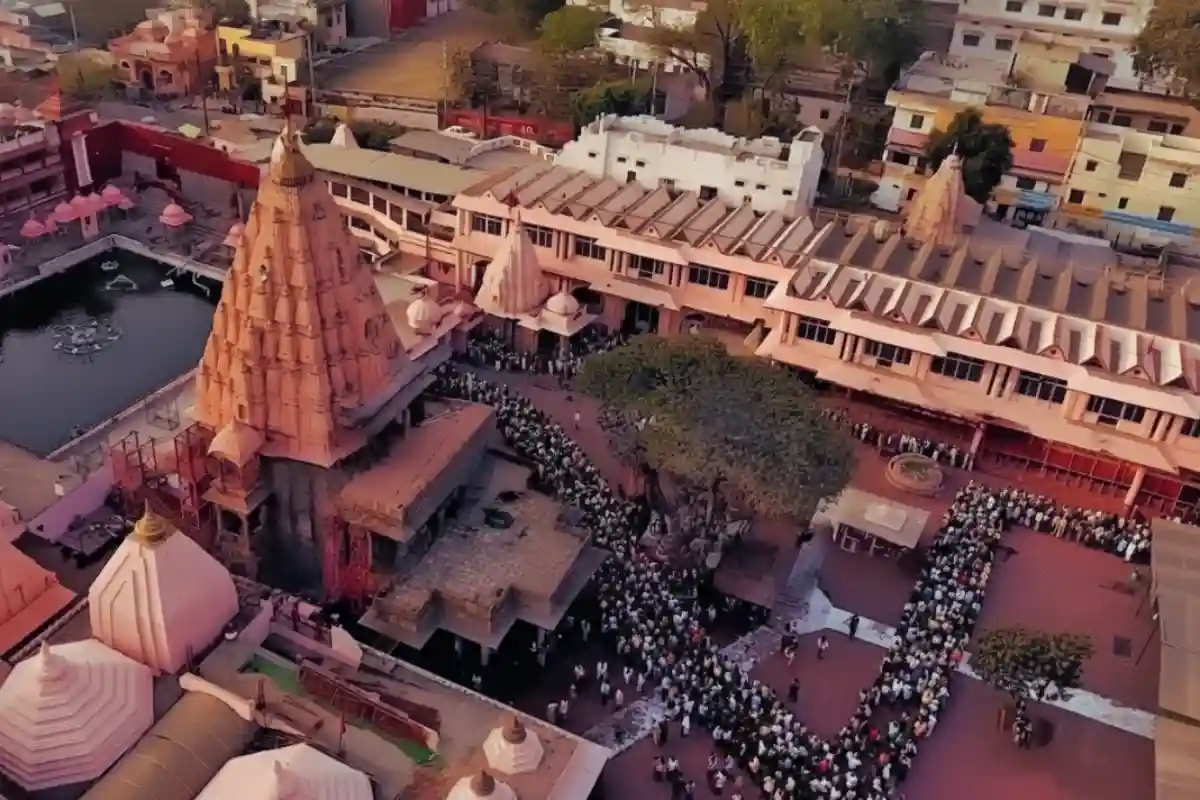
Devotees from across India queue up from midnight; the chants, the drumbeats, and the fragrance of incense turn the atmosphere electric. The temple’s spire rises above Ujjain’s skyline as a constant reminder that Mahakal — the Lord of Time — rules over life and death alike.
Mythology and Sacred Legends
According to legend, the demon Dushan once threatened the city, and Lord Shiva appeared as Mahakaleshwar to protect his devotee. Thus, Ujjain became Mahakal ki Nagri, a city guarded by Shiva himself.
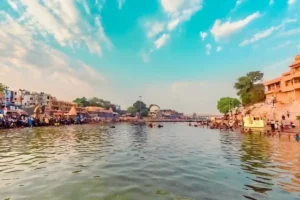
The Shipra River is said to have sprung from Lord Vishnu’s toe during the Samudra Manthan, and its waters are believed to wash away sins. It is also one of the four locations where drops of the amrit (elixir of immortality) fell, marking Ujjain as a Kumbh Mela site. Every myth, every temple, every ghat breathes this divine story of protection, rebirth, and eternity.
Temples and Spiritual Sites of Ujjain
The soul of Ujjain lies in its temples — each radiating a unique spiritual frequency:
- Harsiddhi Temple – Dedicated to Goddess Annapurna, it glows with thousands of lamps during Navratri.
- Kal Bhairav Temple – A fierce aspect of Shiva is worshipped here; devotees offer liquor as prasad, a ritual as mysterious as the deity himself.
- Mangalnath Temple – Birthplace of planet Mars, this temple is revered by astrologers; it offers a panoramic view of the Shipra.
- Chintaman Ganesh Temple – Ancient and powerful, Lord Ganesha here is believed to remove every chinta (worry).
- Sandipani Ashram – Where Lord Krishna and Sudama once studied under Guru Sandipani.
Each temple forms part of Ujjain’s spiritual circuit, inviting pilgrims into a journey from external worship to inner awakening.
Festivals and the Simhastha Kumbh Mela
Every 12 years, when Jupiter enters Leo (Simha Rashi), Ujjain hosts the Simhastha Kumbh Mela, one of the largest gatherings of humanity. Millions bathe in the Shipra to attain liberation (moksha).

The city transforms into a vibrant sea of saffron as Naga sadhus march in processions, performing rituals that echo ancient Vedic chants. Apart from Kumbh, festivals like Mahashivratri, Diwali, and Navratri turn Ujjain into a cosmic carnival of devotion.
Travel Guide to Ujjain
- How to Reach: The nearest airport is Indore (55 km). Regular trains and buses connect Ujjain to major Indian cities.
- Best Time to Visit: October to March offers pleasant weather. Avoid summer months for comfortable temple visits.
- Stay Options: Pilgrim lodges and budget guesthouses near Mahakaleshwar; premium stays like Hotel Anjushree or Shipra Residency for comfort.
- Local Transport: Auto-rickshaws and e-bikes are easily available; the city is compact and walkable around the temple zone.
Culture, Food and Local Life

Ujjain’s culture is rooted in the Malwa region — a melody of faith, flavour, and simplicity. Markets around Freeganj and Tower Chowk overflow with rudraksha malas, brass idols, and hand-crafted souvenirs.
No visit is complete without a taste of Malwa cuisine: poha-jalebi for breakfast, dal bafla with ghee for lunch, and mawa bati as dessert. As the sun sets, the Shipra ghats come alive with evening aarti — bells ringing, chants rising, and lamps floating on the river. It’s spiritual poetry in motion.
Wellness and Meditation Spaces

Beyond ritual and worship, Ujjain is also a sanctuary for inner peace. Retreats such as Parmarth Niketan Ashram, Siddhavat Retreat, and Mahakal Wellness Centre offer Ayurveda, yoga, and guided meditation beside the Shipra. Here, modern seekers find balance through ancient science and explore traditional Indian wellness practices rooted in Ayurveda and meditation that have guided spiritual healing for centuries.
FAQs — Plan Your Pilgrimage
1. Why is Ujjain called the City of Temples?
Because it houses hundreds of ancient temples dedicated to various deities, especially Lord Shiva, making it one of India’s most sacred pilgrimage destinations.
2. What is special about the Mahakaleshwar Temple?
It is one of the 12 Jyotirlingas and the only one facing south, symbolizing Lord Shiva’s dominion over time and death. The temple’s deep roots in ancient Indian temple architecture reflect centuries of devotion and craftsmanship that continue to define Ujjain’s sacred identity.
3. When is the next Kumbh Mela in Ujjain?
The next Simhastha Kumbh Mela is scheduled for 2028, depending on planetary positions.
4. How can I attend the Bhasma Aarti at Mahakaleshwar?
Devotees can register online or at the temple office a day prior; arriving by 3 AM ensures good seating.
5. Is Ujjain suitable for solo travelers?
Yes, Ujjain is safe and welcoming for solo travelers, with good transport, affordable accommodations, and helpful locals.
Explore the Sacred Ujjain
Ujjain is not just a city — it is a living stream of divine consciousness.
From the sacred presence of Mahakal to the holy waters of Shipra, this ancient city guides devotees toward faith, devotion, and inner transformation.
- Mahakal’s City — Step inside the spiritual heart of Ujjain.
- The Sacred Ujjain — Travel through time, myth, and cosmic order.
- Kumbh at Shipra — Witness faith flowing through the holy river.
- Ujjain — City of Divinity — Experience the divine festivals and living devotion of Mahakal’s city.
Together, these form the Ujjain Simhastha Kumbh Mela Series, a sacred collection guiding readers toward the spiritual, cultural, and divine essence of Mahakal’s eternal city.