

Nestled on the banks of the holy Shipra River, Ancient Ujjain stands as one of India’s oldest living cities — a meeting point of spirituality, science, and history. Known in antiquity as Avanti, it became a center of learning, astrology, astronomy, and Shaivite devotion. The city’s sacred identity, often called “The Greenwich of Ancient India,” comes from its position as the ancient meridian of time and knowledge.
From the Mahakaleshwar Jyotirlinga to the Vedh Shala Observatory, and from Puranic legends to heritage tourism, the story of Ujjain transcends eras — blending myth, philosophy, and historical brilliance into one sacred narrative.
Origin & the Avanti Kingdom
Long before Ujjain became synonymous with Lord Mahakal, it was the flourishing capital of the Avanti Mahajanapada, one of the sixteen great republics mentioned in Buddhist and Jain texts. Its strategic location on trade routes between the Gangetic plains and the Deccan made it a thriving hub of commerce and culture as early as the 6th century BCE.
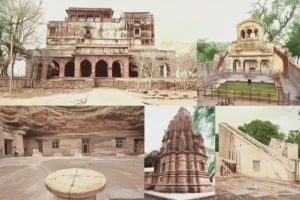
The Puranas describe Ujjain as Avantika Puri — a city sanctified by Lord Shiva’s presence. Archaeological findings near Garh Kalinjar, Bhartrihari Caves, and the ancient settlement mounds confirm a continuous civilization since pre-Mauryan times. During the Mauryan Empire, Ujjain became a provincial capital. Historical accounts suggest that Prince Ashoka, before becoming emperor, served as
governor here — an early chapter in the making of one of India’s greatest rulers.
Under the Mauryas and later dynasties, Ujjain evolved into a city of temples, trade, and timekeeping. Ancient scriptures such as the Mahabharata and Ramayana call Ujjain a sacred space where sages performed yagnas and seekers attained enlightenment.
Its foundations were built not merely in stone but in faith, intellect, and cosmic order, marking it as one of the oldest sacred cities of India.
Golden Era under King Vikramaditya and the Navaratnas
The Golden Age of Ujjain began under the legendary King Vikramaditya, a ruler immortalized for his justice, valor, and patronage of the arts. His court represented the zenith of India’s intellectual and spiritual awakening, home to the Navaratnas (Nine Gems) of literature, astronomy, and philosophy.
Among these luminaries were:
- Kalidasa, the poet-philosopher whose works Meghaduta and Abhijnana Shakuntalam immortalized Ujjain’s beauty.
- Varāhamihira, the astronomer and author of Brihat Samhita, whose celestial calculations influenced later Arabic and European astronomy.
- Amarasimha, the lexicographer who compiled the Amarakosha, the earliest Sanskrit thesaurus.
The Vikram Samvat calendar, still used today, originated in Ujjain — reflecting the city’s pivotal role in shaping Indian chronology. Under Vikramaditya’s reign, Ujjain became the spiritual-scientific capital of ancient India, where temples resonated with hymns while observatories mapped the heavens.
Folklore immortalized the tales of Vikram and Betaal, blending moral wisdom with mystique, ensuring the king’s name lived eternally within India’s collective consciousness.
Ancient Ujjain as the Meridian & Scientific Centre
Centuries before Greenwich, Ujjain was considered the Zero Longitude of ancient India — the point from which time and planetary positions were measured. Astronomers believed that the Tropic of Cancer passed directly through this city, giving it cosmic importance in Vedic cosmology.
The Vedh Shala Observatory, originally conceptualized during the Paramara period and later rebuilt by Maharaja Jai Singh II, still stands as a living monument to India’s scientific genius. Instruments such as the Samrat Yantra and Sundial Yantra were used to observe planetary movements with astonishing precision.
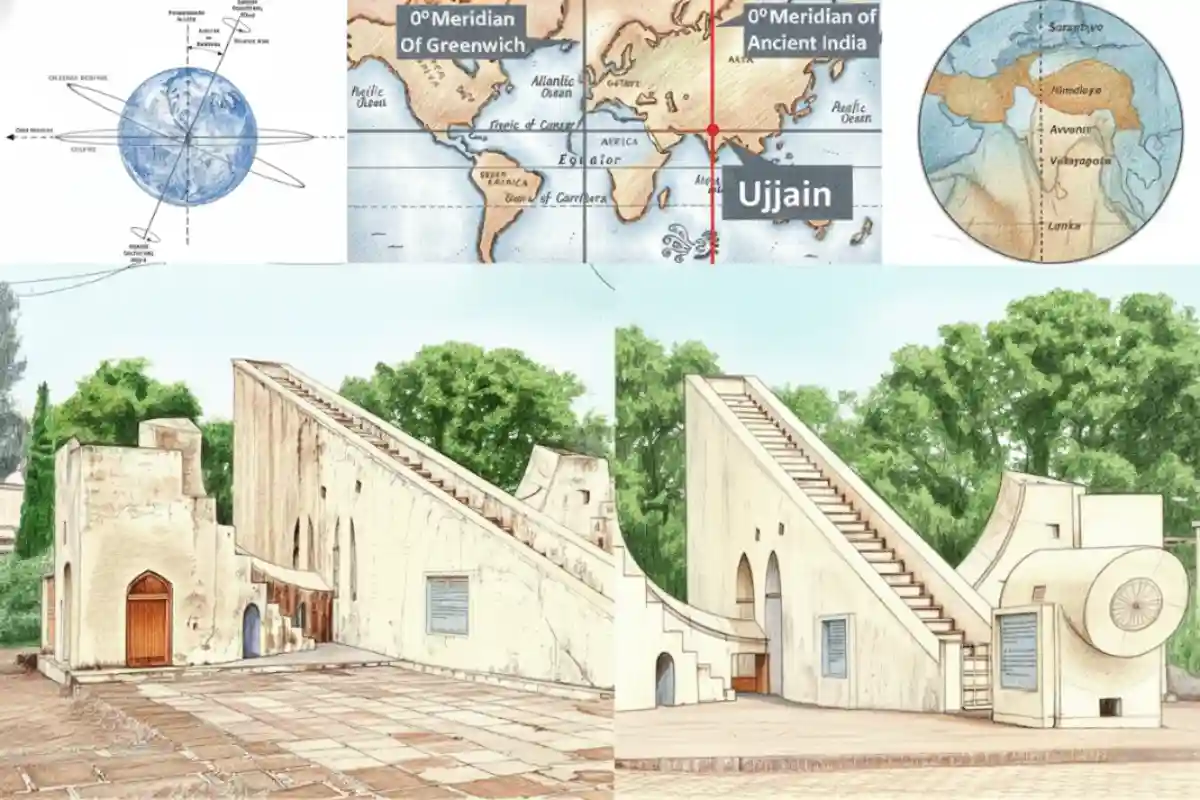
It was in Ujjain that Varāhamihira and Brahmagupta formulated astronomical and mathematical principles that traveled westward through translations, shaping early global science. Even today, India’s Standard Time (82.5° E) aligns closely with Ujjain’s longitude — a lasting tribute to its legacy as the ancient City of Time.
Mythology & Puranic Significance
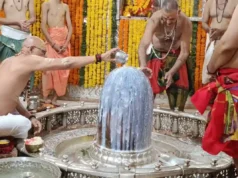
The sanctity of Ujjain is deeply rooted in Hindu mythology and the Puranas. According to the Shiva Purana, Lord Shiva appeared here as Mahakaleshwar Jyotirlinga to protect his devotees from the demon Dushana. This self-manifested (Swayambhu) south-facing lingam is believed to symbolize victory over death and liberation from rebirth.
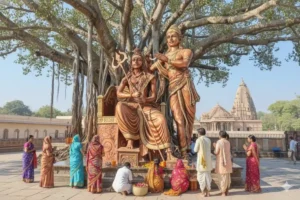
The Skanda Purana hails Ujjain as Swarga Dwara, the “Gateway to Heaven.” The Shipra River, descending from the celestial realms, is said to cleanse one’s sins upon bathing. Legends also recount Lord Krishna’s student years in Ujjain, where he, Balarama, and Sudama studied under Guru Sandipani. The Sandipani Ashram, still preserved, embodies this lineage of spiritual education.
Another sacred myth connects Ujjain to the Kumbh Mela. During the churning of the ocean (Samudra Manthan), drops of Amrita (nectar of immortality) fell on four locations — Haridwar, Prayagraj, Nashik, and Ujjain. Every 12 years, Simhastha Kumbh Mela transforms Ujjain into a sea of saffron as millions gather for a purifying dip in the Shipra.
Thus, mythology transforms Ujjain from a geographical place into a living cosmic legend, where faith and eternity meet.
Temples and Sacred Sites of Ujjain
Ujjain’s landscape is a constellation of temples — each an embodiment of divine power and architectural heritage.
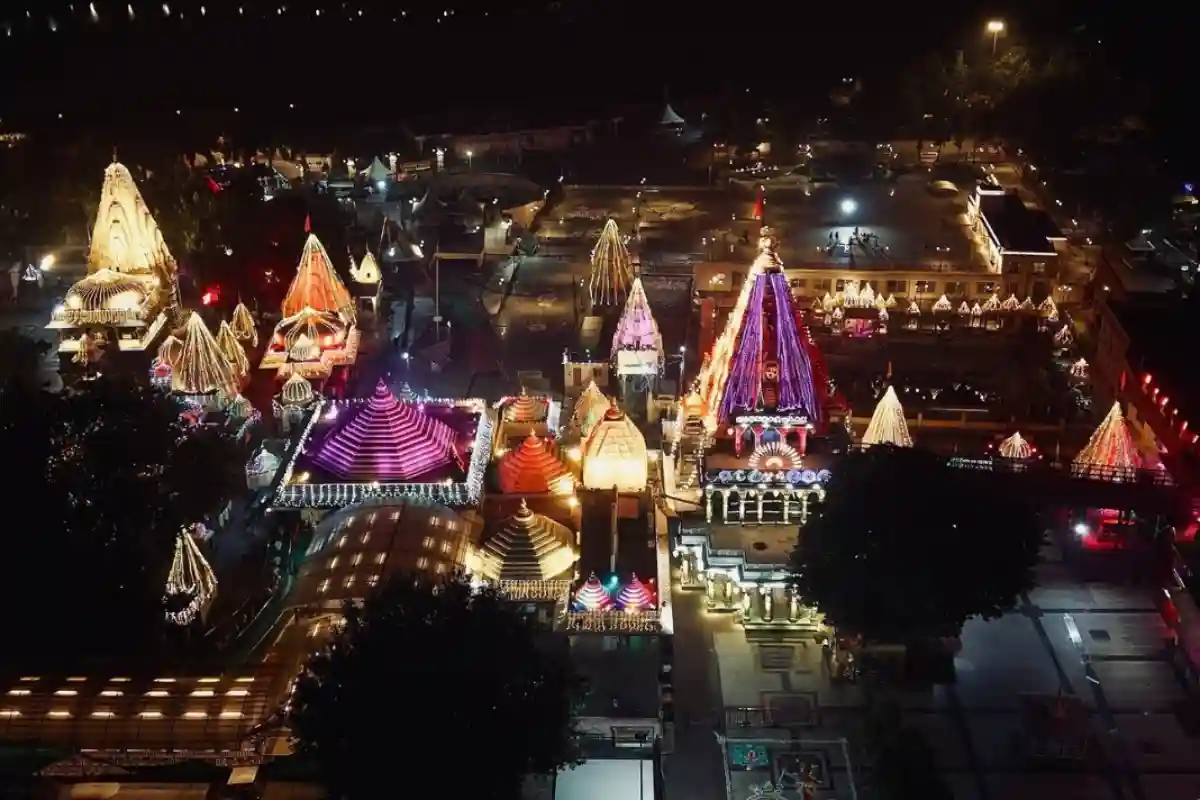
At its heart stands the Mahakaleshwar Temple, one of the twelve Jyotirlingas. The pre-dawn Bhasma Aarti, performed with sacred ash, represents the transient nature of life. Nearby lies the Harsiddhi Temple, glowing with 51 oil lamps during Navratri.
The Kal Bhairav Temple, devoted to Shiva’s fierce manifestation, accepts offerings of liquor — symbolizing the surrender of ego. Other notable shrines include:
- Mangalnath Temple, revered as the birthplace of Mars (Mangal Grah).
- Chintaman Ganesh Temple, believed to fulfill devotees’ wishes.
- Ram Ghat, the ritual center of the Kumbh Mela.
- Gadkalika and Siddhavat Temples, where sages are said to meditate eternally.
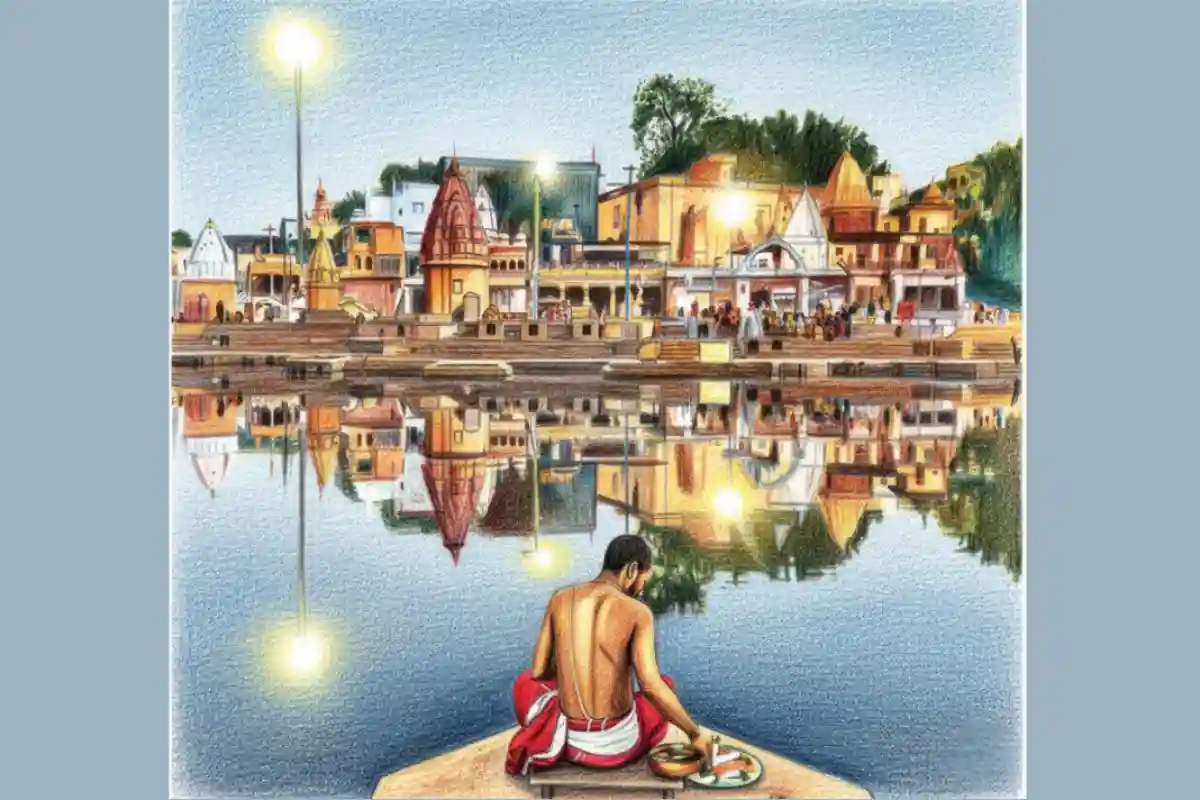
Together, these temples form a spiritual constellation, making Ujjain a living temple complex rather than a single shrine.
Cultural & Intellectual Heritage
Beyond devotion, Ujjain was a nucleus of art, literature, and intellectual growth. Kalidasa’s poetic references portray Ujjain as a paradise of learning and nature. The city also nurtured scientists like Aryabhata II and Bhaskara II, who extended its mathematical legacy.
The ancient Gurukuls and modern institutions like the Scindia School of Astrology continue its scholarly tradition. Few cities combine devotion with knowledge so seamlessly — Ujjain remains both a university of the soul and a laboratory of thought.
Visiting Ujjain Today – Heritage Travel Tips
Modern travelers can still trace centuries of wisdom in Ujjain’s sacred alleys.
Best Time to Visit: October to March offers ideal weather. Festivals like Mahashivratri (Feb–Mar) fill the city with devotion, while Simhastha 2028 will witness record-breaking pilgrim participation.
How to Reach: Ujjain is connected by rail and highway networks, with Indore Airport just 55 km away. Local heritage walks and cycle tours allow immersive exploration of Mahakaleshwar, Ram Ghat, Harsiddhi Temple, and Vedh Shala.
Travel Tips:
- Attend the Bhasma Aarti by registering online in advance.
- Take a guided tour of Vedh Shala to understand India’s ancient astronomy.
- Visit Sandipani Ashram and Bhartrihari Caves for mythological depth.
- Savor Malwa cuisine — poha-jalebi breakfasts, dal-baati dinners, and temple prasad laddus.
- Book heritage stays or dharamshalas early during festival seasons.
Ujjain today is not merely a destination but a living museum — where travelers walk through corridors of faith, science, and time.
From the Avanti Kingdom to Mahakal’s abode, Ujjain’s journey mirrors India’s evolution — a harmonious confluence of devotion, intellect, and cosmic order. Its soil has nurtured saints, scholars, kings, and seekers who collectively shaped its eternal identity.To understand this city’s cultural depth and architectural legacy, explore documented heritage records on India’s sacred cities that trace how faith and time intertwined through millennia.
FAQs
1. Why is Ujjain considered sacred?
Because it hosts the Mahakaleshwar Jyotirlinga, lies on the banks of the Shipra River, and is one of the four Kumbh Mela sites where drops of Amrit fell during cosmic creation.
2. What was the Avanti Kingdom?
Avanti was an ancient republic with Ujjain as its capital, flourishing through trade and learning and forming the foundation of India’s central dynasties.
3. What is the significance of the Vedh Shala Observatory?
It is among India’s oldest observatories, marking Ujjain’s status as the zero-longitude point of ancient India and a center of astronomical research.The site represents the legacy of ancient Indian astronomy and mathematical innovation, connecting scientific inquiry with spiritual observation.
4. Which temples should visitors not miss?
Mahakaleshwar, Harsiddhi, Kal Bhairav, Mangalnath, and Chintaman Ganesh Temples are essential stops in the spiritual circuit.
5. When is the next Kumbh Mela in Ujjain?
The next Simhastha Kumbh Mela will be held in 2028, expecting over 30 crore devotees.
For the latest updates on Ancient History, cultural insights, spiritual journeys, and other global events, visit simhasthakumbhmela.com first.
What are your thoughts on the meaning of “Kumbh” and its connection to the Kumbh Mela? Share your views in the comments below and don’t forget to share this article with others!