
Ancient to modern history
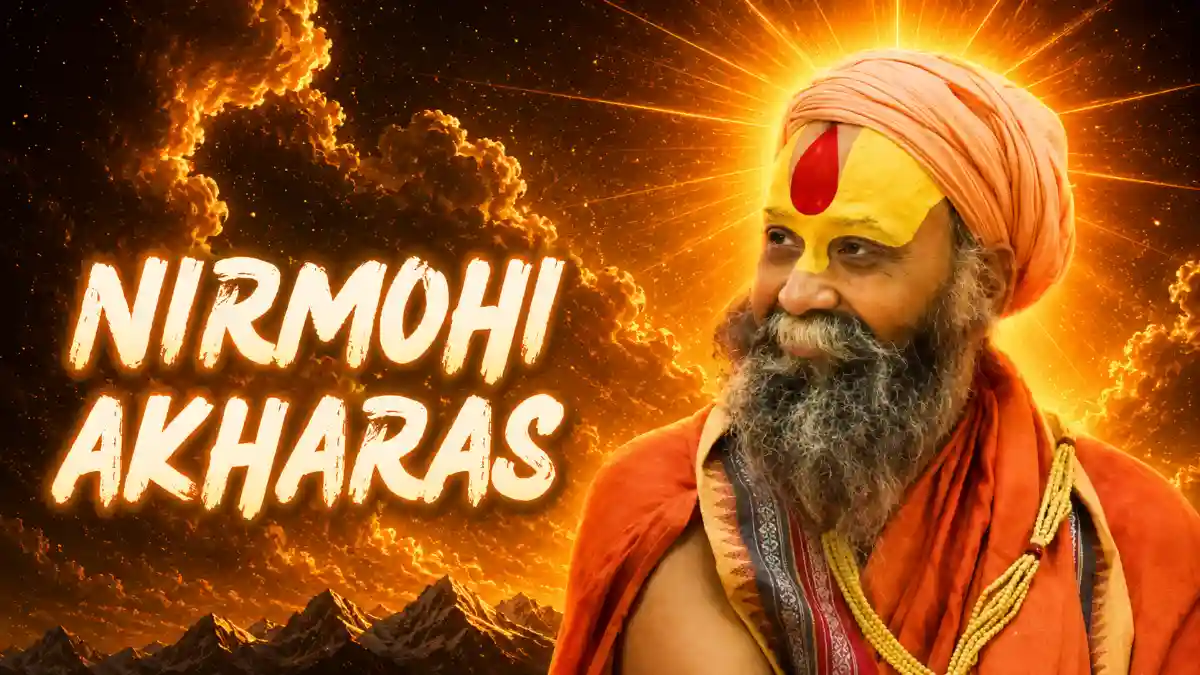
Nirmohi Ani Akhara did not spring from a single founding act. It grew from the same 18th-century crisis that produced all 3 Vaishnava Akharas: the Dashnami Sanyasis' seizure of Ayodhya from the Ramanandis during Ram's birthday celebrations in the early 1700s.
In response, the Ramanandi community called a conference near Galata, Jaipur. Swami Balanand led the meeting. The outcome was 3 armed monastic orders, each with a distinct institutional role. Nirmohi Akhara received the role of Mantri (commander) among the 3.
Historian Meenakshi Jain dates the formal founding to 1734, citing court filings. Historian Sir Jadunath Sarkar, drawing on a Ramanandi manuscript, puts it at 1749.
Two credible historians give different founding years: 1734 (Jain, court filings) and 1749 (Sarkar, Ramanandi manuscript). A third source places an earlier 1475 CE Vrindavan assembly, but this is not corroborated by mainstream academic sources. Confirm the institutional founding year against Akhil Bharatiya Akhara Parishad records before publishing a specific date.
Govindadas of the Nirmohi Akhara established the first Ramanandi akhara presence in Ayodhya, around 1720 CE. This gave the Akhara a foundational claim to Ayodhya that it would assert through courts for the next 300 years.
By the 19th century, the Akhara moved beyond temple management into formal litigation. The first Ayodhya-related suit came in 1885 through Mahant Raghubar Das. In 1959, it filed again, claiming custodial (shebait) rights over the disputed inner courtyard at Ram Janmabhoomi. The 2010 Allahabad High Court verdict gave it a one-third share. The Supreme Court reversed this in November 2019, dismissing the shebait claim and awarding the entire land to the Ram Lalla deity trust.
Today, Nirmohi Akhara manages numerous Ram temples and mathas across UP, Uttarakhand, Madhya Pradesh, Rajasthan, Gujarat, and Bihar.
Founding and tradition
Shri Panch Nirmohi Ani Akhara is part of the Nirmohi Ani, one of the 3 divisions (Ani groups) of the Ramanandi Bairagi tradition. "Ani" means army. "Nirmohi Ani" translates as "the army devoid of moha and maya" (attachment and illusion).
Key highlights
- Full name: Shri Panch Nirmohi Ani Akhara
- Headquarters: Dhir Samir Mandir, Bansivat, Vrindavan, Mathura, Uttar Pradesh
- Tradition: Ramanandi Sampradaya, Vaishnava Bairagi
- Role among the 3 Vaishnava Akharas: Mantri (commander)
- Formation: Formed in Vrindavan by uniting 18 Vaishnava groups
- Presiding deity: Lord Hanuman; supreme devotion to Lord Ram
- Symbol: 52-foot white flag
Founder and lineage
Nirmohi Ani Akhara traces its spiritual lineage to Jagadguru Swami Ramananda, the 14th-15th century Vaishnava saint from Prayagraj. Ramananda studied under Raghavananda and drew from Ramanuja's Vishishtadvaita philosophy. He built something distinct from both: a path of direct devotion to Lord Ram, open to all castes, with no ritual intermediaries.
His disciples included Kabir, Ravidas, and Pipa. The institutional Akhara bearing his tradition's name came centuries after him. The figure credited with putting Nirmohi Akhara on the ground in Ayodhya is Govindadas, who established its first akhara presence there around 1720 CE.
The Akhara describes Ramanandacharya as the Adi Guru (original teacher) and Lord Ram as the Ishta Dev (chosen deity).
Guru-shishya (teacher-disciple) tradition
Initiation into Nirmohi Ani Akhara is called Diksha. Novices receive the Panch Samskar (5 rituals marking formal entry into Vaishnavism) and take vows of celibacy, renunciation, and obedience to the guru. The Ramanandi initiation includes the Guru-mantra, which only Mahamandaleshwars are authorized to transmit.
The Akhara is led by a Mahant at its apex, supported by Acharyas and regional heads who oversee affiliated temples and mathas. New recruits are mainly in their teens and can come from any Indian caste.
The Shree Panch, a 5-member governing council representing Brahma, Vishnu, Shiva, Shakti, and Ganesha, administers the Akhara and is elected every 4 years at Kumbh Mela.
Religious and spiritual significance
Nirmohi Ani Akhara follows Bhakti Yoga as its primary spiritual discipline. The core practice is devotion to Lord Ram: daily chanting of Ram's name (Ram-nam sankirtan), communal kirtan, and study of the Ramcharitmanas (Tulsidas, 16th century), Bhagavad Gita, and Valmiki Ramayana.
Members are expected to renounce the material world, lead lives of celibacy, and accept Ram as the supreme deity. The name itself defines the philosophy: "Nirmohi" (without moha, or attachment) is a position, not just a label.
Dashanami sect affiliation
Nirmohi Ani Akhara is not Dashanami. The Dashanami system, created by Adi Shankaracharya in the 8th century, belongs to the Shaiva tradition. Nirmohi Akhara belongs to the Ramanandi Sampradaya, a Vaishnava lineage that traces to Ramananda and through him to Ramanuja's Vishishtadvaita school.
The official nirmohiakhara.com About page describes the Akhara as "part of the larger Dashanami Sampradaya, under the Vaishnava sect." This is factually incorrect. Dashanami is Shankaracharya's Shaiva creation. Multiple independent academic and encyclopaedic sources contradict this claim. Do not use the Dashanami description in publication.
Ishta-devata (presiding deity)
Nirmohi Ani Akhara worships Lord Hanuman as its presiding deity, with Lord Ram as the supreme object of devotion. The Akhara's website places Lord Ram as both Ishta Dev and Adi Guru simultaneously.
Hanuman's qualities (celibacy, fearlessness, total service to Ram) map directly onto the Bairagi monastic ideal. The choice of Hanuman as presiding deity is not incidental; it is a model for the monk's daily life.
Naga Sadhu tradition
Nirmohi Ani Akhara belongs to the Vaishnava Bairagi tradition, which has warrior-monk ascetics but differs from the Shaiva Naga model. Shaiva Nagas go naked and smear themselves with ash. Bairagi ascetics wear saffron or white unstitched clothes, carry a kamandal (water vessel), and wear a Tulsi bead necklace with the Urdhvapundra tilak.
Unlike Shaiva akharas, the Vaishnava akharas focus on unarmed sannyasis. They enter Kumbh Mela processions with conch shells, prayer beads, and saffron flags bearing Vaishnava emblems, not tridents or ash.
"Naga Sadhu" in popular usage refers to Shaiva Nagas. Nirmohi Ani Akhara's warrior-monks are Bairagi ascetics, a distinct tradition. Verify directly with the Akhara before describing its members as "Naga SadhusLearn about the mysterious Naga Sadhus of Kumbh Mela." in any publication.
Organizational structure
The Akhara is governed by a Mahant at its apex, supported by Acharyas and regional heads. The Shree Panch council (5 members representing the 5 divine principles) manages administration and is elected every 4 years at Kumbh Mela.
Mahants of affiliated mathas and temples function as shebaits: they conduct daily ritual service (seva), maintain temple infrastructure, and administer endowments. Mahamandaleshwars hold spiritual authority above the mahants.
Principal administrative headquarters: Shri Panch Nirmohi Ani Akhara, Dhir Samir Mandir, Bansivat, Vrindavan, Mathura, Uttar Pradesh.
Role in Kumbh Mela (historical)
Nirmohi Ani Akhara has participated in all 4 Kumbh Mela sites since the 18th-century organization of the 3 Vaishnava Akharas. Its participation places it in the Vaishnava bathing sequence, which follows the Shaiva Akharas.
The 1789 Nashik Kumbh Mela is the most documented flashpoint in this history. A Maratha Peshwa copper plate records approximately 12,000 ascetics killed in a Shaiva-Vaishnava clash over bathing precedence. This event directly shaped British colonial policy on Kumbh Mela crowd management and produced the codified sequence still in use today.
In more recent Kumbh participation, Mahant Rajendra Das of Nirmohi Ani Akhara was elected General Secretary of the Akhil Bharatiya Akhara Parishad at the October 2021 Haridwar ABAP meeting.
Role in Simhastha 2028 specifically
Nirmohi Ani Akhara will participate in Simhastha 2028 in Ujjain on all 3 Amrit Snan dates: April 9, April 23, and May 8, 2028. The Akhara will enter the Shipra in Peshwai (ceremonial procession) form, following the Shaiva Akharas.
The overall Simhastha 2028 event window runs from March 27 to May 27, 2028. Parva Snan dates when all pilgrims can take the auspicious bath are: March 27, April 4, April 14, April 19, May 1, May 5, and May 15.
A minority of sources give the Simhastha 2028 window as April 9 to May 9, with a second Amrit Snan date of April 27 rather than April 23. The current government planning consensus is March 27 to May 27, 2028, with Amrit Snan on April 9, April 23, and May 8. Confirm against the official MP Simhastha portal (simhasthujjain.in) before publishing.
Bairagi Vaishnava camps at Simhastha have historically permitted pilgrims to enter for kirtan and blessings during regular hours. On Amrit Snan days, the Vaishnava Peshwai starts after the Shaiva Akharas complete their bath, typically late morning. Camp locations for Simhastha 2028 will be published on simhasthujjain.in once officially allocated by the MP government.
Amrit Snan order and sequence
At Simhastha, the bathing sequence is centuries-old. Shaiva Akharas lead, with Juna Akhara first. Vaishnava Akharas follow. Udasin and Nirmal Akharas come after.
The internal bathing sequence among the 3 Vaishnava Akharas for Simhastha 2028 Ujjain has not been officially announced. Confirm with the Akhil Bharatiya Akhara Parishad or the MP government portal before publishing a sequence.
What is confirmed: the Peshwai procession includes decorated elephants, horses, chariots, flags, and traditional music. Saffron-clad Bairagi saints of Nirmohi Ani Akhara will carry the Urdhvapundra tilak and Tulsi bead necklaces into the Shipra.
Connection and relationship with Ujjain
Ujjain is one of 4 Kumbh Mela sites. For Nirmohi Ani Akhara, Ujjain is a pilgrimage obligation rather than home territory. Its institutional base is in Vrindavan; its foundational history is in Ayodhya. But the Shipra River's sanctity during the Simhastha astrological alignment places Ujjain at the same sacred level as Prayagraj, Haridwar, and Nashik.
The 1921 Ujjain Kumbh has a specific place in Ramanandi institutional memory: a theological debate between the Ramanuja and Ramanandi traditions was held here, and Bhagvaddas of the Ramanandi tradition was declared the winner.
Ashrams in Ujjain (with addresses where verifiable)
Information not verified across independent sources. The official Simhastha 2028 camp allocation for Nirmohi Ani Akhara in Ujjain had not been formally published as of the research date. In Simhastha 2016, each Akhara received a designated camp zone at the Simhastha Mela grounds near the Shipra ghats under the Ujjain district administration. The 2028 allocation will follow the same administrative framework.
Pilgrims should check simhasthujjain.in for 2028 camp locations once officially announced.
Major ashrams and maths elsewhere in India
Nirmohi Ani Akhara manages temples and mathas primarily in UP, Uttarakhand, Madhya Pradesh, Rajasthan, Gujarat, and Bihar.
- Principal headquarters: Dhir Samir Mandir, Bansivat, Vrindavan, Mathura, Uttar Pradesh.
- Ayodhya: The Akhara managed the Sita Rasoi and Ram Chabutara areas at Ram Janmabhoomi until the 2019 Supreme Court verdict transferred the land to the Ram Lalla deity trust.
- Temples across states: Owns mathas in UP, Uttarakhand, MP, Rajasthan, Gujarat, and Bihar.
Prominent Mahants and Mahamandaleshwars
Named leaders confirmed from credible sources:
- Mahant Rajendra Das: President of Nirmohi Ani Akhara and General Secretary of ABAP as of October 2021, elected at the Haridwar ABAP meeting.
- Mahant Dinendra Das: Named in connection with the Supreme Court's Ayodhya judgment in November 2019. Current role not confirmed.
- Sant Shri Madan Mohan (Vrindavan): Described as presiding over the Kumbh Mela activities of Nirmohi Akhara; named at a Sonipat Ram Lalla temple consecration in April 2024.
- Sant Shri Ram Sewak Das (Gwalior): Named as a management board member of Nirmohi Akhara at the same April 2024 consecration event.
Leadership positions change. Names above are from 2019-2024 reports. Verify current Mahant and Mahamandaleshwar names directly with Nirmohi Ani Akhara or the Akhil Bharatiya Akhara Parishad before publishing.
Architecture of key ashrams or temples
Information not verified across independent sources. Detailed architectural descriptions of the principal math at Dhir Samir Mandir, Bansivat, Vrindavan could not be confirmed from 2 or more named sources for this profile.
"Dhir Samir" refers to a stretch of the Yamuna bank in Braj associated with Radha-Krishna devotion. The Nirmohi Akhara's presence at this site reflects its broader Vaishnava roots, though the Akhara's primary devotional focus is Ram rather than Krishna. Verify architectural details with Mathura-Vrindavan heritage records before publishing.
Religious rituals and practices
Daily life in Nirmohi Ani Akhara follows a Vaishnava Bairagi rhythm: pre-dawn bathing, Ram-nam sankirtan, scripture study, havan (fire ritual), and bhajan. Evenings close with Aarti.
Monks chant the Ramayana, perform bhajans, and conduct puja. Satsang gatherings for spiritual discussion are regular. Ram-nam japa (repetition of Ram's name) is the central practice.
At Kumbh Mela and Simhastha, the Akhara organizes kirtans, pravachans, and open satsangs at its camp pandal. Pilgrims can attend without invitation. The Peshwai entry procession features saffron-clad Bairagi saints carrying prayer beads, saffron flags, and conch shells.
Rare and lesser-known facts
- "Nirmohi" is a statement, not just a name: The word means "without attachment," and the Akhara explicitly frames this as its philosophy: renouncing the material world for the company of Ram. The name makes a claim about its members' inner state.
- Formed from 18 groups: The Akhara was established by uniting 18 separate Vaishnava groups in Vrindavan. It is not a single-lineage institution but a merger.
- 134 years in Ayodhya litigation: From the 1885 suit through the 1959 shebait claim to the 2019 Supreme Court verdict, the Akhara spent 134 years in Ayodhya courts. No other Akhara has a comparable legal history.
- Its own website gets its tradition wrong: nirmohiakhara.com describes the Akhara as "part of the larger Dashanami Sampradaya." Dashanami is Shankaracharya's Shaiva creation; Nirmohi Akhara is Vaishnava Ramanandi. Researchers should not rely on the About page as a primary source on tradition.
- Ram Lalla consecration, April 2024: The Akhara built and consecrated a Ram Lalla temple in Sonipat, Haryana. The idol was sculpted by Sadhvi Kamal Vaishnav of the Akhara; consecration water came from the Saryu River in Ayodhya. This was less than 5 months after the Ayodhya Ram Temple opening.
- Dual role at ABAP: Mahant Rajendra Das, sitting president of Nirmohi Ani Akhara, simultaneously held the General Secretary position of the Akhil Bharatiya Akhara Parishad as of October 2021. This dual role gives the Akhara a direct voice in the governance of all 13 Akharas.
Timeline of key events
| Period / Year | Event | Source |
|---|---|---|
| 14th–15th century CE | Jagadguru Swami Ramananda founds the Ramanandi Sampradaya in Varanasi; disciples include Kabir, Ravidas, and Pipa | Britannica: Ramananda |
| Early 17th century | Dashnami Sanyasis seize Ayodhya during Ram's birthday; Ramanandis expelled; prompts Vaishnava military reorganization | Meenakshi Jain, Rama and Ayodhya, Aryan Books, 2013 |
| c. 1720 CE | Galata conference near Jaipur under Swami Balanand; Nirmohi Akhara assigned Mantri role; Govindadas establishes first Ramanandi akhara presence in Ayodhya | Meenakshi Jain, Rama and Ayodhya, Aryan Books, 2013 |
| 1734 or 1749 | Formal institutional founding: Jain cites 1734 (court filings); Sarkar cites 1749 (Ramanandi manuscript); date disputed between two historians | Meenakshi Jain, Rama and Ayodhya, Aryan Books, 2013; Outlook India, Feb 2024 |
| 1789 | Clash between Shaiva Sanyasis and Vaishnava Bairagis at Nashik Kumbh Mela; Maratha Peshwa copper plate records approximately 12,000 ascetics killed over bathing-sequence rights | Tribune India, Shahira Naim, Branding Spirituality |
| 1885 | Mahant Raghubar Das of Nirmohi Akhara files first Ayodhya-related suit in Court of Sub-Judge, Faizabad | Swarajya Mag, Nov 2019 |
| 1959, Dec 17 | Nirmohi Akhara files suit in Civil Court, Ayodhya, claiming shebait rights and custodianship of disputed inner courtyard at Ram Janmabhoomi | ipleaders.in, Apr 2020 |
| 1989 | Nirmohi Akhara files further suit against UP State government, asserting continuous worship at Ram Janmabhoomi since ancient times | Needs verification, official records not confirmed |
| 2010, Sep 30 | Allahabad High Court awards one-third of Ram Janmabhoomi land (Sita Rasoi and Ram Chabutara areas) to Nirmohi Akhara, alongside Ram Lalla and Sunni Waqf Board | ipleaders.in, Apr 2020; Supreme Court Observer, Jan 2024 |
| 2019, Nov 9 | Supreme Court unanimously reverses High Court award; dismisses Nirmohi Akhara shebait claim; awards entire 2.77-acre site to Ram Lalla deity trust | Supreme Court Observer, Jan 2024; Swarajya Mag, Nov 2019 |
| 2021, Oct 25 | Mahant Rajendra Das of Nirmohi Ani Akhara elected General Secretary of Akhil Bharatiya Akhara Parishad at Haridwar meeting | India TV News, Oct 2021 |
| 2024, Apr 18 | Nirmohi Akhara consecrates a Ram Lalla temple in Sonipat, Haryana; idol sculpted by Sadhvi Kamal Vaishnav; Saryu River water used in consecration | ANI, Apr 2024 |
| 2028: Apr 9, 23; May 8 | First, Second, and Third Amrit Snan, Simhastha 2028, Ujjain. Nirmohi Ani Akhara participates in the Vaishnava bathing sequence after the Shaiva Akharas on the Shipra River. | MP Government official Simhastha 2028 date announcement |
Sources: Meenakshi Jain, Rama and Ayodhya, Aryan Books, 2013; Outlook India, Feb 2024; Swarajya Mag, Nov 2019; Tribune India, Shahira Naim; ipleaders.in, Apr 2020; Supreme Court Observer, Jan 2024; India TV News, Oct 2021; ANI, Apr 2024; MP Government official Simhastha 2028 date announcement. Confirm against official records before publishing.
Comments
No comments yet. Be the first to share your thoughts!
Leave a Comment