

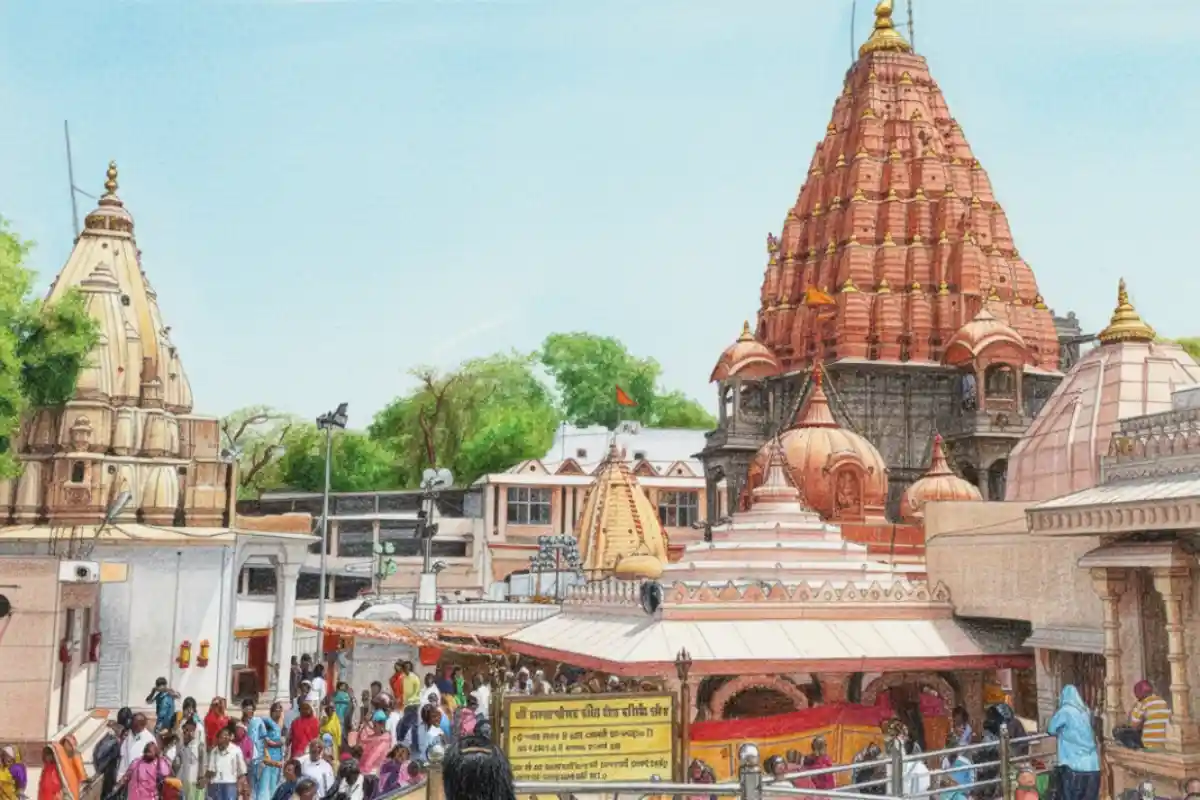
What makes Mahakaleshwar Temple unique?
Mahakaleshwar is one of the 12 Jyotirlingas dedicated to Lord Shiva, located in Ujjain, Madhya Pradesh, on the banks of the Shipra river. What sets it apart from the other 11 is the direction its Shivling faces: south.
According to the Shiv Puran, south is Yama's direction, the direction of death. Only Shiva in his Mahakal form, the Lord of Time, can face that direction and hold authority over it. Devotees come here specifically for that protection: from untimely death, and toward moksha, liberation from the cycle of rebirth.
There's a second layer to why this matters. Most Jyotirlingas are worshipped through fixed daily rituals that don't change much year to year. Mahakaleshwar adds the Bhasma Aarti on top of that: a ritual using sacred ash, performed only here among all 12 sites, at a time when most of the city is still asleep. That combination, direction plus ritual plus timing, is what pilgrims mean when they call this temple one of a kind.
Key highlights
- Only south-facing Jyotirlinga among Shiva's 12 sacred Jyotirlingas in India.
- Bhasma Aarti (sacred ash ritual) is performed daily before sunrise, around 4:00 AM.
- Temple architecture blends Maratha, Bhumija, and Chalukya styles across a multi-level complex.
- Located inside Ujjain city, on the Shipra river, one of Hinduism's Sapta Puri (seven sacred cities).
- Nearest airport: Devi Ahilya Bai Holkar Airport, Indore, roughly 55-60 km away.
- Once every 12 years, the temple sits at the center of the Simhastha Kumbh Mela.
The legend behind Ujjain's Shakti Kendra status
Per the Shiv Puran, Shiva manifested in Ujjain to destroy the demon Dushana and protect his devotee Chandrasena. That event is why Ujjain carries the status of a Shakti Kendra, a spiritual epicenter, and it's part of why kings and poets kept returning to it over the centuries.
Emperor Vikramaditya ruled from here and is still remembered as one of Indian history's most cited kings, the reference point for the Vikram Samvat calendar still used in parts of India today. Kalidasa, widely considered classical India's greatest Sanskrit poet, wrote several of his works while based in or inspired by Ujjain. Adi Shankaracharya, the philosopher who reorganized Hindu monastic tradition, treated the city as a major Shaivite center on his travels across the subcontinent.
That history is why the city still runs on temple bells and "Har Har Mahadev" chants at dawn, and why a visit here reads as much as a history lesson as a religious one.
Architecture and sacred symbolism
The temple complex sits on multiple levels, and each level does something different. The main sanctum, at ground level, houses the self-manifested (Swayambhu) Shivling, the one facing south. Below it, an underground chamber holds a separate shrine, one of the details that surprises first-time visitors who expect a single-level structure.
The build itself mixes three architectural traditions. Maratha influence shows up in the temple's later additions and its overall maintenance style, since the Marathas historically funded and expanded the site. Bhumija elements appear in the tower design, a north-Indian temple style built around a stepped, pyramidal shikhara. Chalukya influence shows in the stone carving work on pillars and door frames.
Around the main sanctum, smaller shrines are dedicated to Parvati, Ganesh, Kartikeya, and Nandi, Shiva's vehicle. Walking the full complex means moving through this entire family of deities before or after the main darshan, not just the single Shivling.
The shikhara (spire) is the part you'll see from outside the complex, a tall stepped tower visible above the surrounding rooftops. Inside, expect stone pathways, carved pillars, sandalwood fragrance, and the sound of temple bells layered under whatever ritual is running at that hour. First-time visitors often say the atmosphere, not any single visual detail, is what stays with them.
Darshan timings, entry rules, and dress code
Getting your visit right starts with knowing the schedule and what the temple expects from you at the door.
| What | Timing / rule | Notes |
|---|---|---|
| Temple opens | 4:00 AM | Opens with the Bhasma Aarti |
| General darshan | Until 11:00 PM | With breaks through the day for puja rituals |
| Bhasma Aarti booking | Advance online booking required | ID verification needed, seats are limited |
| VIP Darshan / Abhishek Puja | Separate paid passes | Booked online, faster entry, closer sanctum access |
| Dress code (men) | Dhoti or Indian wear | Regular shirt-pants allowed for standard darshan |
| Dress code (women) | Saree, salwar-kameez, or modest ethnic wear | Shorts, sleeveless tops, and western casual wear aren't allowed |
| Belongings | Shoes, belts, mobile phones in lockers | Lockers available near the entrance |
| Photography | Banned inside the Garbhagriha | Exterior temple photos are fine |
Sources: Mahakaleshwar Temple visitor guidance, general pilgrim advisories. Timings and fees shift around festivals and administrative decisions, so confirm the current schedule and prices on the official Mahakaleshwar booking portal before you travel.
Costs and budgeting for the trip
General darshan at Mahakaleshwar is free. Your actual spend on this trip comes from travel, stay, and whatever paid passes you choose, not the temple entry itself.
- VIP Darshan and Abhishek Puja passes: carry a separate fee on top of free general darshan; rates change periodically, so check the official portal for the current price before you book.
- Stay: budget guesthouses run ₹600-1200/night, mid-range hotels ₹1500-2500/night, and higher-end resorts ₹4000-8000/night. Dharamshalas near the temple offer a cheaper, simpler option for pilgrims who want walking-distance access.
- Local transport: autos and cabs within Ujjain are inexpensive; the bigger cost is the Indore-Ujjain transfer, whether by taxi, bus, or train.
- Food: Ujjain has a wide range of vegetarian dining near the temple and in the main market, from ₹100-150 basic thalis to ₹400+ sit-down restaurant meals.
A realistic 2-day, 1-night budget trip for one person, covering a mid-range stay, local transport, food, and no VIP passes, lands in the ₹3,000-5,000 range depending on how you travel to Indore. Add VIP Darshan or Abhishek Puja and it moves up from there.
How to reach Ujjain and where to stay
Ujjain connects easily by all three modes of transport.
- By train: Ujjain Junction links directly to Indore (55 km), Bhopal, Delhi, and Mumbai, with regular trains like the Avantika Express and Malwa Express.
- By air: Devi Ahilya Bai Holkar Airport in Indore is about 55 km away, roughly 60-90 minutes by taxi or government bus.
- By road: State and private buses run from Indore, Bhopal, and other MP cities. NH-52 is the direct route if you're driving.
For a stay, options range from ₹600-1200/night guesthouses like Hotel Shikhar or Yogini Guest House, to ₹1500-2500/night mid-range stays like Hotel Atharva or Hotel Imperial Grand, up to ₹4000-8000/night at Anjushree Resort or Rudraksh Club & Resort. Several dharamshalas near the temple also offer simple rooms within walking distance for pilgrims who want to stay close.
If you're attending the 4 AM Bhasma Aarti, staying within walking distance or a short auto ride of the temple matters more than the hotel's amenities. A 20-minute cab ride at 2 AM through an unfamiliar city adds stress you don't need before a pre-dawn ritual.
The Bhasma Aarti and Night Aarti
The Bhasma Aarti is the temple's central ritual. Priests offer sacred ash to the Shivling at 4:00 AM, with chants, fire lamps, and drums, marking the transient nature of life. It's the ritual most associated with Mahakaleshwar specifically, and the reason many pilgrims plan their whole trip around a single morning.
The Night Aarti (Shayan Aarti) runs around 10:30 PM and marks the deity's rest for the night. It draws a fraction of the morning crowd and gives a quieter, more contemplative alternative if the 2:30 AM wake-up isn't realistic for your trip.
Families traveling with young kids or elderly parents often push themselves through the pre-dawn Bhasma Aarti because it's the ritual everyone talks about. The 10:30 PM Shayan Aarti gets you the same temple, the same darshan, and a real chance to actually stand near the sanctum instead of managing a security queue in the dark. It's the better call if your group isn't built for a 2:30 AM start.
Risks and practical things to plan around
None of these are reasons to skip the trip, but they're worth planning for rather than discovering on the day.
- Crowd density: Mondays, Mahashivratri, and Shravan month push queues far beyond a normal weekday. If you have flexibility, avoid these windows for a calmer visit.
- Pre-dawn logistics: a 2:30 AM arrival means arranging transport, security, and possibly a wake-up call the night before. Confirm your hotel or driver can actually get you there on time.
- Heat: summers (March-June) get hot in Ujjain. Carry water, avoid mid-afternoon walking between sites, and dress for both the weather and the temple's dress code at once.
- Booking scams: third-party sites sometimes sell Bhasma Aarti or VIP Darshan slots that aren't valid. Book only through the official temple portal.
- Limited mobility access: the underground shrine and stone pathways aren't fully step-free. If you're traveling with someone who has mobility limitations, ask temple staff about the accessible route before you queue up.
Who this trip works well for, and who should plan differently
Works well for
- Devotees seeking the Bhasma Aarti specifically: this ritual doesn't exist at the other 11 Jyotirlingas, so it's worth building the trip around.
- History-minded travelers: between Vikramaditya, Kalidasa, and the Jantar Mantar, Ujjain rewards visitors who want more than a single darshan.
- Pilgrims combining multiple Jyotirlingas: Omkareshwar is only 140 km away, making a 2-site trip realistic in one visit.
Plan differently if you
- Can't manage a 2:30 AM start: take the Shayan Aarti instead of forcing the Bhasma Aarti with young kids or elderly family members.
- Are traveling during Shravan or Mahashivratri: expect long queues and book everything, stay included, well in advance.
- Have mobility limitations: check with temple staff about the accessible route before committing to the standard queue.
Expert Tip — Ritu Sharma
"Everyone plans their whole trip around the 4 AM Bhasma Aarti and then treats the rest of the day as filler. That's backwards. The Shayan Aarti at 10:30 PM gives you the same sanctum access without the 2:30 AM security queue, and it leaves you rested enough to actually take in Sandipani Ashram or the Jantar Mantar the next morning instead of running on two hours of sleep. Pick the aarti that fits your body clock, not the one that photographs better."
A worked example: a 2-day Mahakaleshwar trip
Situation
A couple flying into Indore for a focused 2-day, 1-night Mahakaleshwar visit, without extending to other Jyotirlingas.
Day 1: Land in Indore by early afternoon, taxi to Ujjain (60-90 minutes), check into a mid-range hotel within walking distance of the temple. Evening: Ram GhatRam Ghat, the most prominent bathing ghat in Ujjain., then the 10:30 PM Shayan Aarti if the Bhasma Aarti slot didn't come through in time.
Day 2: 2:30 AM arrival for the Bhasma Aarti (booked weeks in advance), rest through the morning, then Sandipani Ashram and the Jantar Mantar in the afternoon before heading back to Indore for an evening flight.
Key lesson: booking the Bhasma Aarti slot early is the single most time-sensitive part of this trip. Everything else, hotel, transport, sightseeing, can be arranged on short notice; the aarti slot usually can't.
Festivals and when to visit
Mahashivratri turns the temple into its busiest version: flowers, lamps, all-night processions and bhajans. Shravan month (July-August) and Nag Panchami also bring heavy footfall. Once every 12 years, the Simhastha Kumbh Mela takes over the whole city, pulling in saints, yogis, and millions of pilgrims for the sacred bath at the Shipra.
If you want a calmer visit outside of festival season, October to February is the easier window, and 5 AM-7 AM on a weekday sees noticeably shorter queues than a Monday or weekend.
Tips for first-time pilgrims and families
- Book through the official site only: for Bhasma Aarti or VIP Darshan, third-party sites are where most scams happen.
- Travel light: leave phones, leather items, and valuables outside; carry only what you need.
- Use the elderly/differently-abled lane if you're traveling with seniors. Strollers aren't allowed, so carry infants in arms.
- Pack for the season: March-June runs hot, so carry water and light cotton clothes; winter mornings get cold enough for a layer.
- Extend the trip to Ram Ghat, Sandipani Ashram, and the Jantar Mantar observatory, all inside Ujjain city itself.
- Confirm your dress code items the night before: a dhoti or saree isn't something you want to be sourcing at 2 AM.
Beyond the temple: nearby pilgrimage sites
Ujjain sits inside what's sometimes called the Sacred Triangle of Madhya Pradesh:
- Omkareshwar Jyotirlinga (140 km): another of Shiva's 12 Jyotirlingas, on an island in the Narmada river.
- Maheshwar (150 km): Narmada river ghats and handloom sarees.
- Indore (55 km): Ujjain's transit gateway and a food destination in its own right.
None of these require a separate trip from a base city. If you've already flown into Indore for Mahakaleshwar, adding a day for Omkareshwar or Maheshwar extends the same trip rather than starting a new one.
Ujjain's place in India's living heritage
Long before it was a pilgrimage stop, Ujjain was the capital of the Avanti kingdom and a center of astronomy. The Vedha Shala (Jantar Mantar), built by Raja Jai Singh II, still tracks celestial movement today, linking the city's scientific history to its spiritual one.
Kalidasa wrote about its moonlit nights and sacred ghats. Adi Shankaracharya built up its standing as a Shaivite center. That layering, myth, astronomy, poetry, ritual, is what makes Ujjain more than a single-temple visit. Walk from the temple to the Shipra ghats at dusk and you're covering ground that's carried this exact mix of function for over a thousand years.
Final take
Mahakaleshwar's uniqueness comes down to one fact: it's the only Jyotirlinga facing south, tied to Shiva as Mahakal, ruler of time and death. Everything else, the Bhasma Aarti, the architecture, the Simhastha connection, builds on that. Plan around the 4 AM Bhasma Aarti if the ritual itself is the reason for your trip, or the quieter Shayan Aarti if you'd rather skip the pre-dawn queue and still get a full darshan. Either way, book the aarti slot first and build the rest of the trip around it, not the other way around.
Comments
No comments yet. Be the first to share your thoughts!
Leave a Comment