

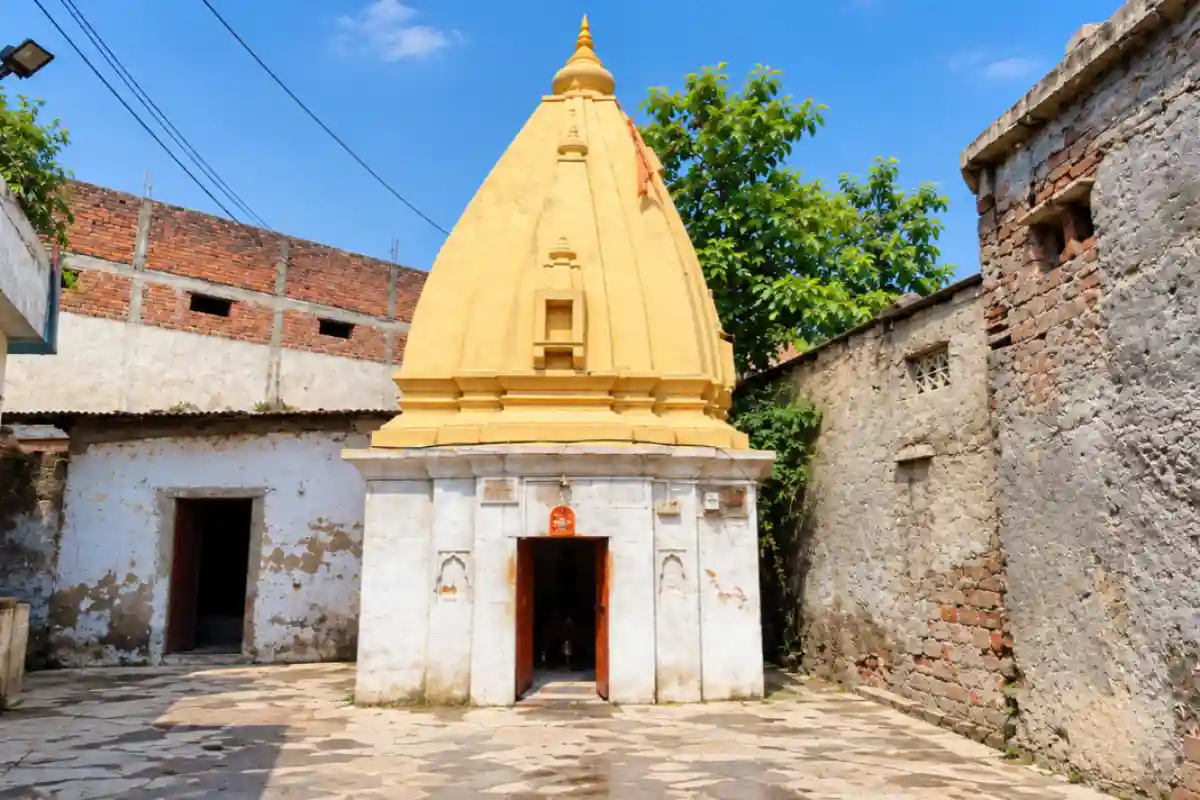
What is Kapaleshwar Mahadev in Ujjain?
Kapaleshwar Mahadev is the eighth of the 84 Mahadev lingas of Ujjain. Its story is in the Skanda Purana, Avantya Khanda, Chaturashiti Linga Mahatmya, chapter 8. According to the text, merely seeing this linga destroys the sin of brahmahatya, and Shiva himself gave it its name.
The text's form of the name is Kapaleshvara, "Lord of the skull". It is also spelled Kapaleshwar.
Local accounts place the temple in the Bilotipura area of old Ujjain, near the Rajput Dharamshala. Some accounts describe it in the Anant Peth area.
At a glance
- Shiva enters a yajna in Mahakalavana in Kapalika dress, and the brahmanas insult and beat him.
- The skulls Shiva throws keep reappearing, until the brahmanas recognise him and perform homa with Shatarudriya mantras.
- Shiva reveals that he is himself bound by the sin of severing Brahma's fifth head, and a voice from the sky sends him to Avanti.
- At the linga the skull falls from his hand, and he names the linga Kapaleshwar.
What are the main facts about Kapaleshwar Mahadev?
| Item | Details |
|---|---|
| Basis of the name | The skull that fell from Shiva's hand, and the linga found covered in skulls |
| Deity | Shiva, in linga form |
| Source text | Skanda Purana 5.2.8 (Avantya Khanda, Chaturashiti Linga Mahatmya, chapter 8) |
| Position among the 84 | Eighth |
| Time of the story | Vaivasvata Kalpa, the start of Tretayuga (per Tagare's translation) |
| Characters | Shiva, Parvati, Brahma, the brahmanas of the yajna |
| Location in the text | Mahakalavana, near the "gajarupa" deity |
| Narrator | Shiva (Shri Rudra), speaking to Parvati |
The tale of Brahma's fifth head is often told with Kalabhairava as the one who cuts it. In the Kapaleshwar chapter Shiva tells it in the first person, as his own act, and Bhairava's name does not appear anywhere in the chapter. The place of release here is Mahakalavana.
What is the Skanda Purana story of Kapaleshwar Mahadev?
Shiva tells the story to Parvati. At the very start of the chapter he names the eighth deity: know him as Kapaleshwar, whose mere sight removes the sin of brahmahatya.
The yajna in Mahakalavana and the Kapalika dress
In the Vaivasvata Kalpa, at the start of Tretayuga, a divine yajna was under way in Mahakalavana under Brahma's guidance. Shiva took the dress of a Kapalika: shaved head, torn cloth, a khatvanga, cremation ash and ornaments of skulls. With a skull in his hand he walked into the yajna assembly.
The brahmanas scolded him as a sinner, said the skull was impure and that the sacrificial altar was not for him.
The 12-year vow and the Daksha yajna
Shiva introduced himself as a Kapalika brahmana. He said he had taken the "Kapala vow", which lasts 12 years, to destroy the sin of brahmahatya. The brahmanas answered by recalling the Daksha yajna, where even Mahadeva had been left uninvited as impure.
The request for food and the beating
Shiva said, let me stay a little, I will eat and go. The brahmanas beat him with sticks, kicks and fists, and threw clods of earth at him.
The flood of skulls
Shiva laughed. He threw the skull onto the altar spread with kusha grass and vanished like the flame of a lamp. The brahmanas picked up the skull and threw it out of the pavilion, and another identical skull appeared. This went on: per the text, hundreds, thousands, lakhs and crores of skulls appeared and were thrown out.
Recognition and the Shatarudriya homa
Then the learned brahmanas understood that this was the work of Mahadeva, who wears the Ganga and the moon. They praised him and offered homa in the fire with Shatarudriya mantras. Pleased, Shiva told them to ask for a boon.
The one boon they asked for
The brahmanas said that without knowing it they had struck a brahmana-clad Shiva, and so the sin of brahmahatya had fallen on them. They asked for nothing except freedom from that sin.
The primordial linga and Shiva's own story
Shiva said that where they had heaped the skulls there lay a primordial linga (the text's word), hidden by the passing of time. Then he told his own story: he too had once cut Brahma's fifth, radiant head. The skull stuck to his palm, and he found no release though he visited every tirtha.
The voice from the sky
A bodiless voice then told him to go to Avanti. By the voice, Mahakalavana is the sacred region he himself had created, and there, near the "gajarupa" deity, is a great linga whose darshan will destroy the sin (Skanda Purana 5.2.8):
तस्मिन्क्षेत्रे महालिङ्गं गजरूपस्य सन्निधौ ।
विद्यते पश्य देवेश ब्रह्महत्या प्रणश्यति ॥
Meaning: in that region, near the deity in elephant form, there is a great linga. O Lord of the gods, see it, and the sin of brahmahatya will be destroyed.
The skull falls, and the naming
Shiva quickly went there and saw the great linga standing with the skull in hand. At that moment the skull slipped from his hand and fell to the ground. Shiva said: this is Kapaleshwar Deva. The brahmanas also saw the linga, covered with many skulls, and felt fulfilled, so on earth the linga became famous as Kapaleshwar.
What fruit does the Skanda Purana promise for seeing Kapaleshwar Mahadev?
The phalashruti of the chapter lists these fruits:
- Mere darshan destroys grave sins, including brahmahatya.
- Worship on the chaturdashi removes all sins committed in thought, word and body.
- Even one who worships by chance receives desires that are hard to reach, and the text names prosperity, health and victory over enemies.
- A grave sinner, freed from sin, becomes a leader of Shiva's ganas.
- One who has darshan regularly for a year sees Shiva's beloved abode after death.
The text does not say which fortnight, bright or dark, goes with the chaturdashi, or in which month.
Which popular claims about Kapaleshwar Mahadev do not match the Purana?
Online retellings of this story carry several details that differ from the text. Checked against it, they come out like this.
| Popular claim | In the Skanda Purana | Status |
|---|---|---|
| The story begins with brahmahatya and the voice from the sky, and the yajna comes later | The story begins with the yajna. The background of brahmahatya and the voice is told later by Shiva to the brahmanas | Order reversed |
| The skull fell, broke, and then appeared whole | Shiva himself threw the skull on the altar and vanished. No breaking is mentioned | Added detail |
| The brahmanas kicked the skull away | The kicks were aimed at Shiva. The skull was thrown out of the pavilion | Incorrect |
| Shiva worshipped the linga | The text says he "saw" the linga, with no separate worship | Differs from the text |
| Brahma and the other gods saw the linga in the heap of skulls | The brahmanas saw it. The gods are not mentioned in this episode | Differs from the text |
| The voice from the sky called it an "ancient (anadi) linga" | The word "primordial" comes in Shiva's own speech, not in the voice | Differs from the text |
| This linga is linked to Anadikalpeshwar (the fifth) | The chapter does not mention Anadikalpeshwar | Unconfirmed |
| "Gajarupa" is Ganesha or some specific deity | The text says only "the deity in elephant form" and does not identify him | Unconfirmed |
| Special fruit in Ashadh, Shravan and on Mahashivratri | The chapter has only the chaturdashi | Tradition |
| The temple is near MahakaleshwarExplore the divine Mahakaleshwar Jyotirlinga in Ujjain. | The text gives no hint of today's location | Unconfirmed |
| The age and builder of the temple | The text gives no date or builder for any temple structure | Unverified |
In his note Tagare writes that this story shows the linga's power to remove the sin of brahmahatya and that the theme is repeated elsewhere in the Skanda Purana. In one episode of the Avantikshetra Mahatmya too, a skull is set on the ground and a fine linga appears at that very spot. The Kapaleshwar story differs in that it adds a yajna, the insult to a Kapalika and a miracle of endless skulls.
What else do people ask about Kapaleshwar Mahadev?
Who is the gajarupa deity?
In the Kapaleshwar story the voice from the sky places the linga "near the gajarupa deity". Tagare renders this as "the deity in the form of an elephant". The text does not say who that is. No source mentions an elephant image near the present temple either, so no identification can be claimed.
Why did the brahmanas incur brahmahatya?
In the Kapaleshwar story the brahmanas beat the Kapalika-dressed Shiva with sticks and kicks. Once they recognised him, they said that a fatal blow to a brahmana-clad person had brought brahmahatya upon them. They asked for release from exactly this sin and for no other boon.
Should the chaturdashi worship be in the bright or the dark fortnight?
The Skanda Purana says only "chaturdashi" for Kapaleshwar. It does not say whether this is the bright or the dark fortnight, and it names no month. No confirmed information was found on which chaturdashi the temple observes today.
What are the darshan timings of Kapaleshwar?
No confirmed official darshan timing is available for Kapaleshwar Mahadev. Ask a local priest for the exact timings before you go.
Where does Kapaleshwar sit in Ujjain's 84 Mahadev tradition?
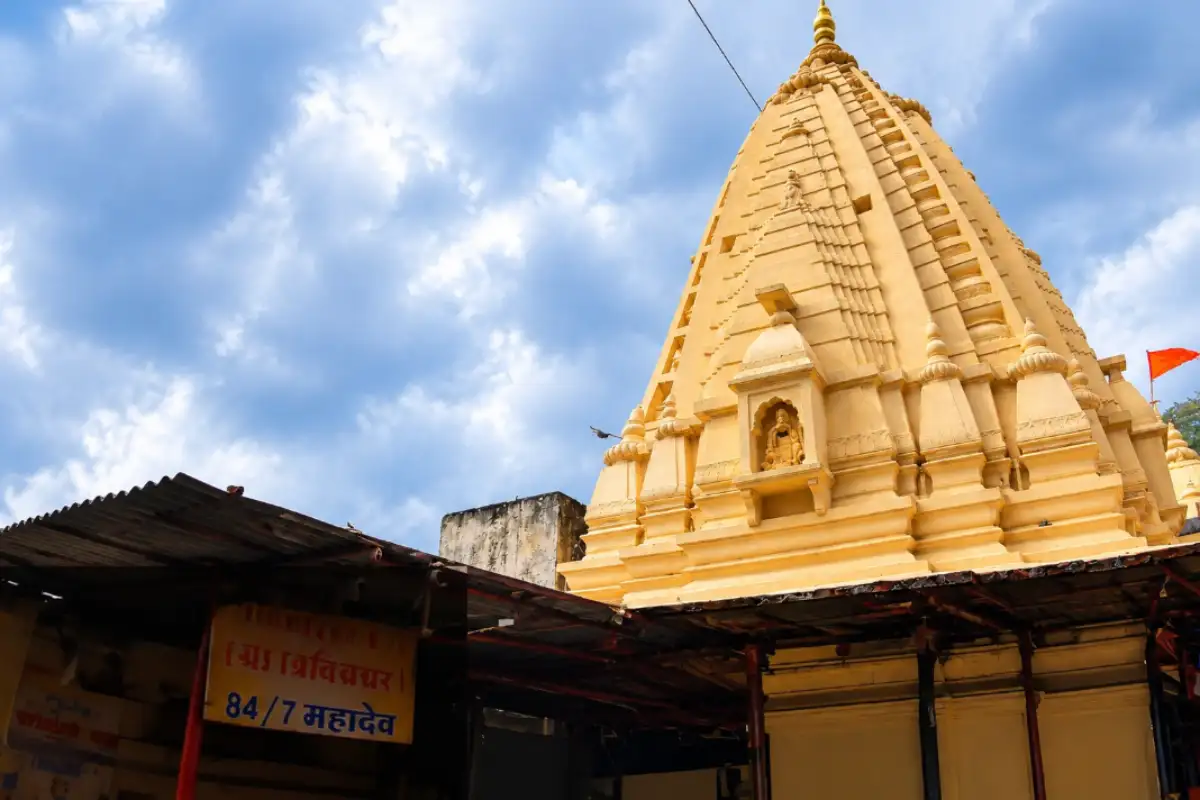
In the order of the Chaturashiti Linga Mahatmya, Agastyeshwar is first, Guheshwar second, Dhundheshwar third, Damarukeshwar fourth, Anadikalpeshwar fifth, Svarnajwaleshwar sixth, Trivishtapeshwar seventh and Kapaleshwar eighth. The ninth is Svargadvareshwar, which some local lists write as Svarnadwarpaleshwar.
By local accounts the seventh and ninth lingas are close to Mahakal, while the eighth lies toward old Ujjain. So the order in the Purana and the geographic order of today's yatra do not run in a straight line.
For the full list, see the complete guide to Ujjain's 84 Mahadev temples.
After Kapaleshwar, which linga does the 84 Mahadev story move to?
The Kapaleshwar chapter ends with the line: the sin-destroying power of Kapaleshwar Deva has now been told to you, so listen next to the account of Svargadvareshwar. The next chapter is about the ninth linga.
Comments
No comments yet. Be the first to share your thoughts!
Leave a Comment