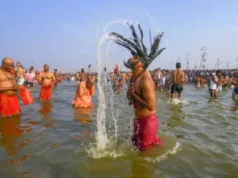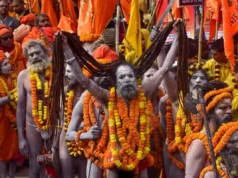



Prayagraj—earlier known as Allahabad—is one of the oldest, holiest, and most culturally significant cities of India. The city stands where the rivers Ganga, Yamuna, and the mystical Saraswati meet, forming the sacred Triveni Sangam, a site believed to cleanse the deepest sins and grant spiritual liberation. Every twelve years, this land hosts the Kumbh Mela, the world’s largest spiritual gathering, where millions of devotees, saints, akharas, and pilgrims assemble for the Shahi Snan.
This pillar page presents a deeply researched, multi-dimensional exploration of Prayagraj, connecting its history, mythology, geography, pilgrimage routes, cultural layers, and modern transformations.
The Historical and Mythological Foundation of Prayagraj
Prayagraj holds a unique position in Hindu cosmology. Ancient scriptures identify the region as Prayag, meaning “the place of sacrifice”, where Lord Brahma is believed to have performed the first yajna after the creation of the universe. Several Puranas describe the Sangam as the point where all tirthas reside temporarily, making it the king of pilgrimage centers.

Over centuries, Prayagraj flourished under empires—Maurya, Gupta, Mughals, and British—but its sacred identity never diluted. Even the Mughal emperor Akbar, impressed by its religious prominence, named his fort city Ilahabas—which later evolved into Allahabad. In 2018, the government restored its ancient identity by officially renaming it Prayagraj.
Its connection with India’s freedom struggle is equally strong. The city was home to the Nehru family, hosted historic Congress sessions, and served as an intellectual hub for writers, reformers, and scholars.
Triveni Sangam – The Confluence of Three Sacred Rivers
The Triveni Sangam is Prayagraj’s spiritual heart. It is the meeting point of:
- Ganga – symbol of purity and liberation
- Yamuna – symbol of love and devotion
- Saraswati – the mystical river representing wisdom and knowledge
Though Saraswati is not visible on the surface, scriptures and riverbed studies describe its subterranean flow beneath the Sangam.
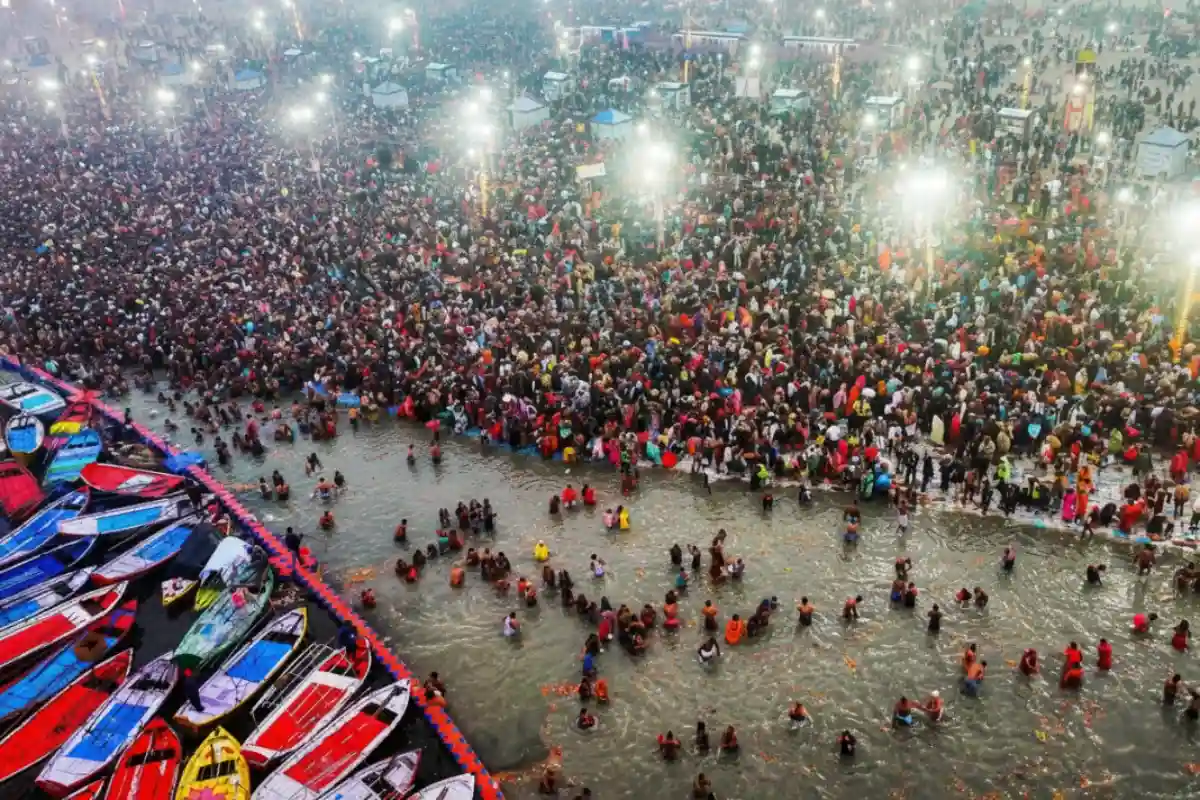
Why Sangam is considered spiritually supreme?
- Bathing here is believed to wash away karma of past lives.
- The site is referenced in Ramayana, Mahabharata, and Puranas.
- Akbar built the massive Allahabad Fort at this very point to guard the sacred confluence.
- Major yatras and rituals begin and end at the Sangam.
Every day, thousands of devotees perform snan, puja, pind daan, and charity activities. During Kumbh seasons, the Sangam becomes the geographical and spiritual center of world attention.
Kumbh at Prayagraj – The World’s Largest Gathering of Humanity
The Kumbh Mela at Prayagraj takes place every 12 years, with an Ardh Kumbh every 6 years. It is recognized globally for its scale, organization, spiritual energy, and cultural presence.
Why Prayagraj Kumbh is unique?
- The presence of Triveni Sangam makes it the holiest among all Kumbh locations (Haridwar, Nashik, Ujjain).
- Astrological configurations—when Jupiter enters Taurus and Sun is in Capricorn—trigger the sacred snan dates.
- Akharas take the Shahi Snan, an extraordinary royal bath procession.
- Millions participate in a 24-hour cycle during peak days.
- International bodies document it as a human phenomenon representing collective faith.
Major rituals of Prayagraj Kumbh
- Shahi Snan (royal bath by akharas)
- Panchagni Tap
- Kalpavas (month-long meditation on riverbanks)
- Ganga Aarti
- Darshan of Naga Sadhus
- Maha Punya Kal Snan
The Kumbh is not just a gathering—it is a living heritage of faith, discipline, astronomical precision, and communal harmony.
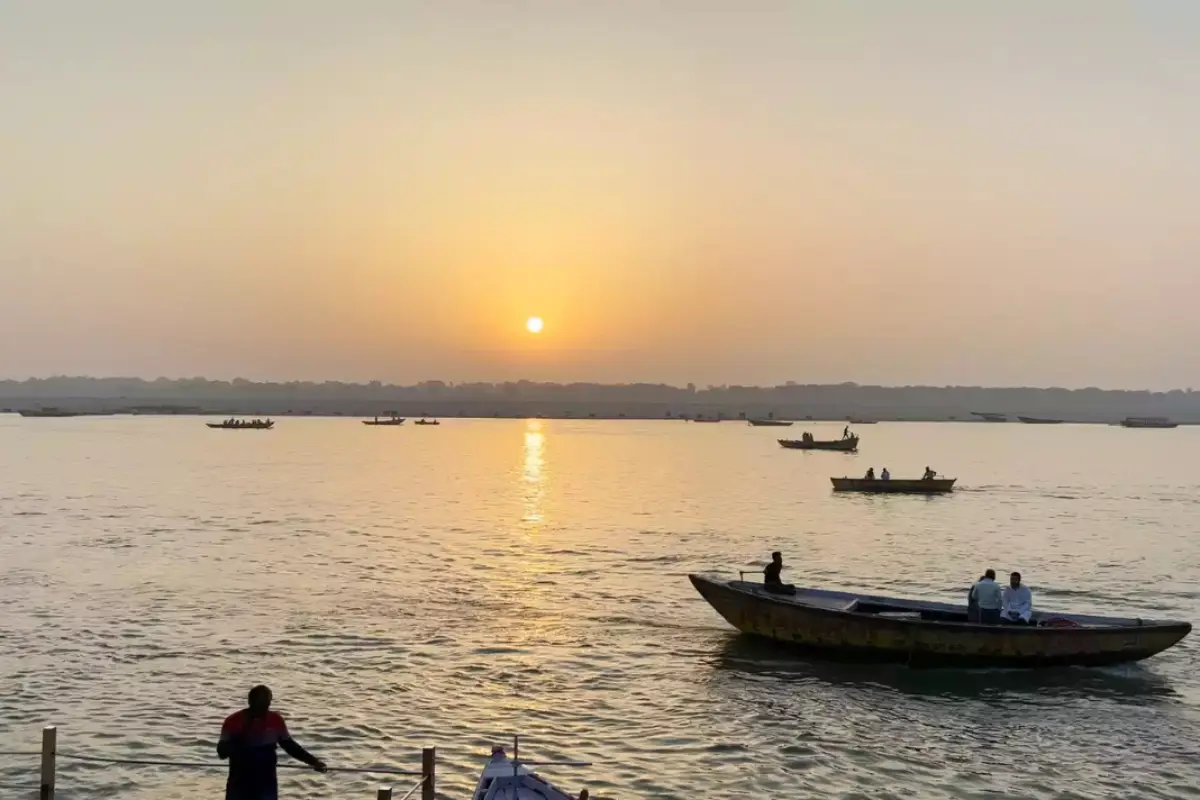
The Holy Land of Prayagraj – Temples, Heritage, and Sacred Geography
Prayagraj is also known as Teertharaj—the king of pilgrimage sites. Apart from Sangam and Kumbh, the city hosts numerous temples and heritage locations deeply rooted in history.
Key spiritual landmarks
1. Bade Hanuman Ji Temple
Located near Sangam, this reclining Hanuman idol is believed to be self-manifested.
2. Alopi Devi Shaktipeeth
A rare Shaktipeeth where no idol exists; instead, devotees worship a wooden cradle known as “doli”.
3. Akshayavat Tree
Located inside the fort, this eternal fig tree is believed to survive destruction across ages.
4. Patalpuri Temple
A subterranean temple inside Allahabad Fort, referenced in ancient texts.
5. Nagvasuki Temple
Dedicated to the serpent king Vasuki, located on the Yamuna bank.
The city is also home to Anand Bhavan, Swaraj Bhavan, and several colonial-era institutions, making it a cultural confluence.
City of Sangam – Modern Infrastructure & Pilgrim Facilities
Prayagraj has undergone major infrastructural transformation in recent years:
- Multi-lane roads connecting Sangam, city centre, and railway stations
- Four-lane approach roads for easy access
- Smart signage for pilgrims
- Digital route management during Kumbh
- Shipra and Yamuna ghats beautification projects
- Improved sanitation and river-cleanup systems
The Prayagraj Mela Authority serves as a backbone for large gatherings, ensuring water supply, medical care, transport flow, and safety arrangements.
Travel Guide: How to Reach Prayagraj
Prayagraj is well-connected to major Indian cities.
By Air
Bundelkhand Airport and Prayagraj Airport connect to Delhi, Bengaluru, and Kolkata.
By Rail
Prayagraj Junction (formerly Allahabad Junction) is a major rail hub.
By Road
National Highways connect Prayagraj with Varanasi, Kanpur, Lucknow, and Madhya Pradesh.
Best time to visit
October to March, with festival peaks during Makar Sankranti, Magh Mela, and Kumbh periods.
Rituals & Pilgrimage Practices at Sangam
Pilgrims commonly perform:

- Snan (holy dip)
- Tarpan and Pind Daan
- Daan (charity rituals)
- Deep Daan and Aarti
- Gurudakshina
- Kalpavas (30-day stay at Sangam area)
Priests (pandits) conduct rituals as per traditional Vedic customs. Many families return annually, making Sangam a generational pilgrimage site.
Culture, Literature & Intellectual Heritage of Prayagraj
Prayagraj has nurtured poets, writers, and thinkers for centuries.
Famous personalities associated with the city include:
- Harivansh Rai Bachchan
- Mahadevi Verma
- Ram Chandra Shukla
- Firaq Gorakhpuri
- Sumitranandan Pant
- Jawaharlal Nehru (Anand Bhavan)
The city hosts literary gatherings, book fairs, and research seminars throughout the year.
Prayagraj Today – A Blend of Divinity, Heritage & Modernity
Modern Prayagraj balances spiritual tradition with contemporary growth:
- New bridges and riverbanks
- University-level research on rivers and heritage
- Expanding tourism circuits
- Government-funded cultural restoration
- Safer & cleaner Sangam zones
This transformation strengthens its identity as India’s spiritual capital, attracting visitors beyond pilgrimage—students, researchers, explorers, and global documentary teams.
Prayagraj stands as the meeting point of faith, rivers and civilization — the Triveni Sangam where Ganga, Yamuna and Saraswati unite. Each cluster below reveals a dimension of this holy city — from its cosmic geography to its Kumbh rituals and timeless legends. Drawing from government records on cultural preservation helps understand how sacred sites like Prayagraj continue to be protected for future generations.
FAQs
1. What is Prayagraj most famous for?
Triveni Sangam, Kumbh Mela, ancient temples, and its rich cultural heritage.
2. Why is Triveni Sangam considered sacred?
Because Ganga, Yamuna, and Saraswati meet here, granting immense spiritual merit. Ancient scriptures and detailed archaeological research on Indian rivers further describe the Sangam’s significance and its timeless role in pilgrimage traditions.
3. When is the next Kumbh Mela in Prayagraj?
The next full Kumbh will be held in 2025 with peak snan dates based on astrological positions.
4. What is the best time for a Sangam snan?
Sunrise is ideal. Major snan days include Makar Sankranti, Mauni Amavasya, Basant Panchami, and Maghi Purnima.
5. How many days are needed to explore Prayagraj?
A 2–3 day trip covers Sangam, key temples, heritage sites, and local markets.
Explore the Sacred City of Prayagraj
Prayagraj stands as the meeting point of faith, rivers and civilization — the Triveni Sangam where Ganga, Yamuna and Saraswati unite.
Each cluster below reveals a dimension of this holy city — from its cosmic geography to its Kumbh rituals and timeless legends.
- The Triveni Confluence — Learn the geography and spiritual power of the Sangam.
- Kumbh at Prayagraj — Experience the world’s largest spiritual gathering.
- City of Sangam — Explore Prayagraj’s culture, temples and ghats.
- The Holy Land — Unveil ancient myths and sacred legends of Prayag.
Together, these articles form the complete “Prayagraj Series,” a spiritual journey through the City of the Triveni Sangam.