

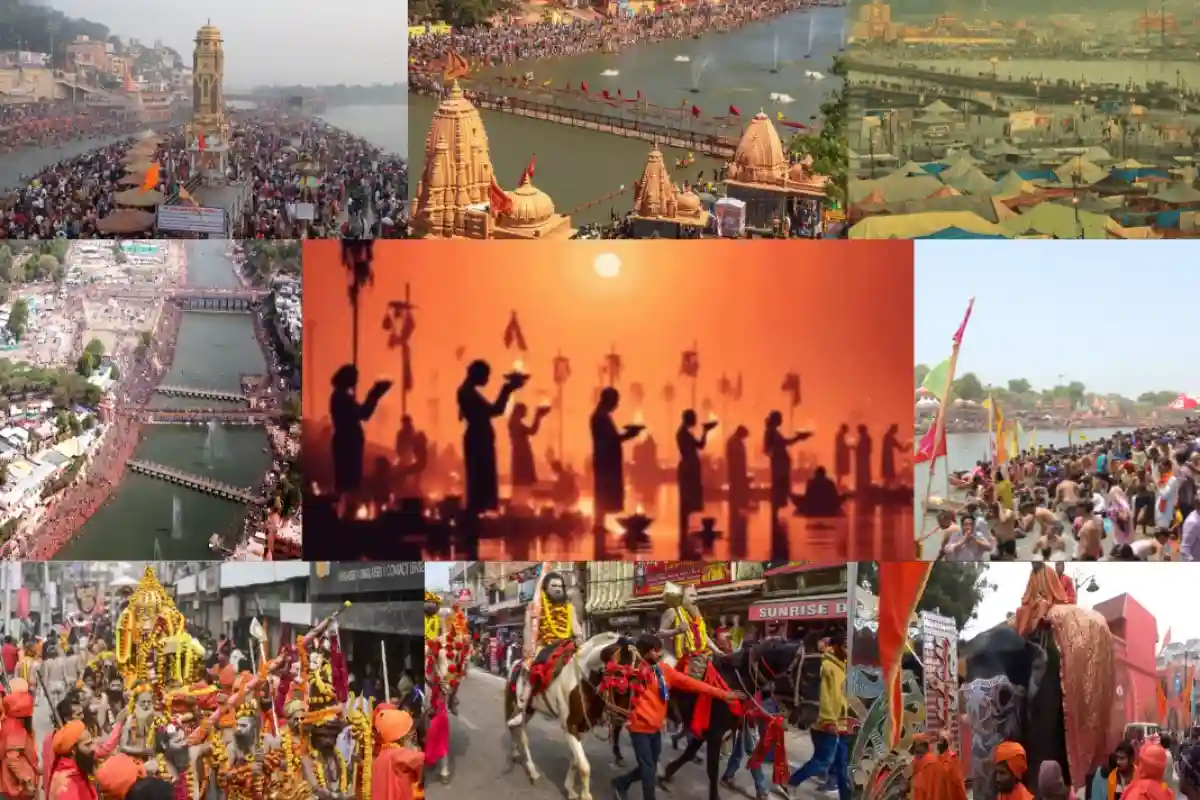

The story of Kumbh Mela goes far beyond the well-known legend of Samudra Manthan. Its roots lie in ancient scriptures, astronomical calculations, linguistic evolution, and early travel records that date back thousands of years. The Kumbh is not only a ritual gathering. It is a cosmic event, a symbolic journey, and a historic tradition that evolved over centuries.
This article explains the meaning of Kumbh, its mythological foundations, its earliest historical mentions, and the concept of eternal cyclical time that shaped the celebration.
What Is Kumbh? The Meaning Behind the Word
The Sanskrit word “Kumbha” means a pot, pitcher, or vessel. In ancient Hindu symbolism, the Kumbha represents:
- Life and creation
- Fertility and abundance
- A container of divine energy
- The Amrit Kalash – the pot of nectar that grants immortality
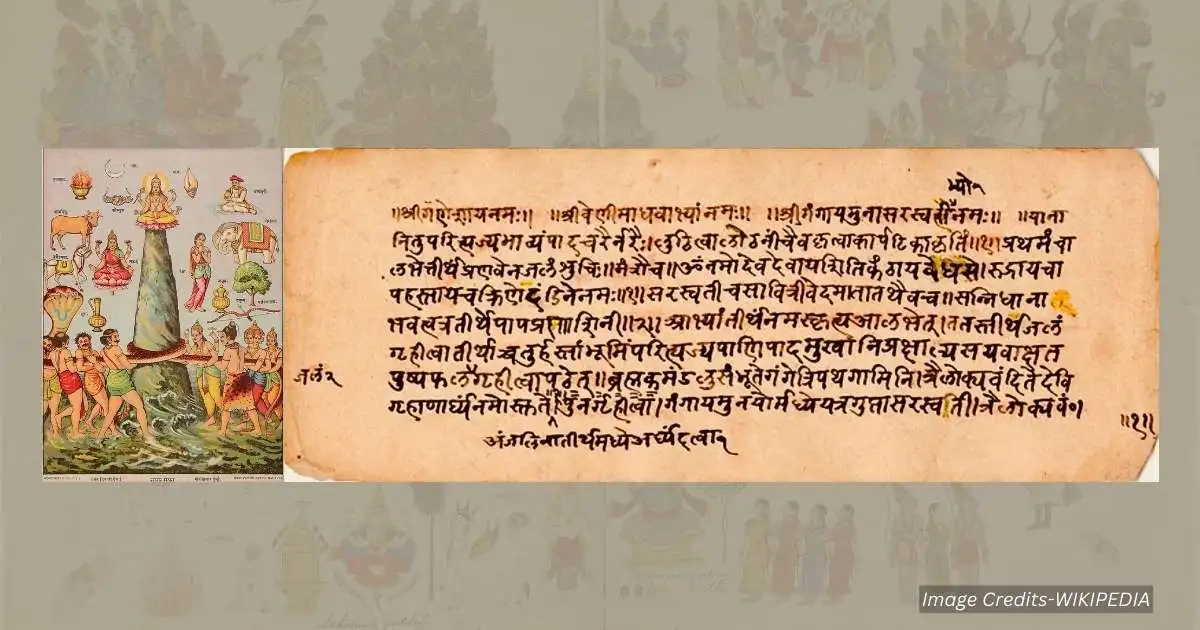
The word appears across Vedic texts in spiritual, ritualistic, and cosmic contexts. Thus, before the festival existed, the symbol of the pot itself carried deep meaning in the spiritual imagination of India.
Etymology & Nomenclature of Kumbh
Meaning of “Kumbha” in Sanskrit
“Kumbha” comes from the root kuṁbha, meaning:
- A sacred pot used in rituals
- A symbolic container of life
- A cosmic vessel carrying the essence of immortality
In Vedic rituals, the Kumbha is filled with water, herbs, and sacred energy. It represents the womb of creation.
Mythical Context Behind the Name
The famous Samudra Manthan (Churning of the Ocean) story explains how gods and demons churned the cosmic ocean to obtain the nectar of immortality. The Amrit was stored in a divine pot called the Kumbha. During the struggle for possession of the pot, drops of nectar fell at four places:
- Ujjain
- Prayagraj
- Haridwar
- Nashik-Trimbak
These sites became the four Kumbh Mela locations.
Why Different Names Exist
Depending on the planetary alignment:
- Kumbh Mela – when Jupiter and Sun align in specific zodiac signs
- Maha Kumbh – occurs once in 144 years
- Ardh Kumbh – every 6 years
- Simhastha Kumbh (Ujjain) – when Jupiter enters Simha Rashi (Leo)
Therefore, the term “Kumbh” is not only mythological — it is astronomical, linguistic, and symbolic.
Mythological Story of Kumbh Mela
The foundational story of Kumbh Mela comes from the Bhagavata Purana, Vishnu Purana, and Mahabharata: To save the universe, gods and demons worked together to churn the ocean of milk and retrieve the Amrit (nectar of immortality).
The nectar was stored in a Kumbha. When the demons tried to seize it, the gods fled, holding the pot for 12 divine days — equivalent to 12 mortal years. During this chase, four drops fell on Earth, sanctifying the four Kumbh cities.
Thus, the Kumbh Mela commemorates the cosmic moment when immortality touched Earth. This forms the spiritual backbone of the festival.
Historical Origins: Earliest References to Kumbh
Mythology forms only one part of the story. Several scriptural, literary, and travel sources show how the idea of Kumbh evolved historically.
Kumbh in the Rigveda (1500–1200 BCE)
While the Rigveda does not mention “Kumbh Mela” directly, it contains symbolic references to:
- A pot of celestial nectar
- A vessel of Soma, the divine drink
- The act of ritual cleansing and purifying baths
- Cosmic cycles linked to the movement of gods
Verses speak of a Kumbha filled with immortal essence, establishing the earliest conceptual roots of the tradition.
These metaphors later shaped the imagery used in the Kumbh Mela story.
Bhagavata Purana and Puranic Literature
The Bhagavata Purana gives the most detailed narration of Samudra Manthan.
Key elements relevant to Kumbh Mela:
- Storage of Amrit in a Kumbha
- The twelve-day chase, creating the 12-year cycle
- Association with divine bathing and purification
The Purana connects the cosmic event with earthly manifestation, giving the festival its religious legitimacy.
Kalidasa’s Literary Evidence (4th–5th Century CE)
Classical poet Kalidasa references large pilgrimages and ritual baths in Raghuvamsha and Kumarasambhavam.
He describes:
- Royal rituals on sacred rivers
- Bathing festivals timed to planetary alignments
- Crowds of devotees assembling at auspicious moments
Although the term “Kumbh Mela” does not appear, his works show that ritual river gatherings were already organized traditions.
Hiuen Tsang’s Travel Notes (7th Century CE)
The Chinese Buddhist pilgrim Hiuen Tsang (Xuanzang) visited India during the reign of King Harsha.
He recorded a huge gathering at Prayaga that resembled the modern Kumbh Mela:
- Millions of people assembled
- Ritual bathing
- Processions of sadhus and monks
- Large-scale charity by the king
- A massive social and spiritual event
His account is considered the earliest historical eyewitness evidence of the Kumbh tradition.
Astronomical Basis of Kumbh Mela
Kumbh is not only mythological — it is based on precise astronomical calculations.
Why the festival occurs only at four places
Each location corresponds to a unique alignment of:
- Jupiter (Guru)
- Sun (Surya)
- Moon (Chandra)
- Zodiac signs (Rashi)
Example:
- Ujjain (Simhastha) happens when Jupiter enters Leo (Simha).
- Prayagraj Kumbh happens when Jupiter enters Taurus and Sun enters Capricorn.
- Haridwar corresponds with Jupiter in Aquarius.
- Nashik aligns with Jupiter in Leo + Sun in Leo.
This astronomical logic is what keeps the Kumbh cycle intact for thousands of years.
Eternal Kumbh and the Concept of Cyclical Time
Hindu cosmology views time as cyclical, not linear.
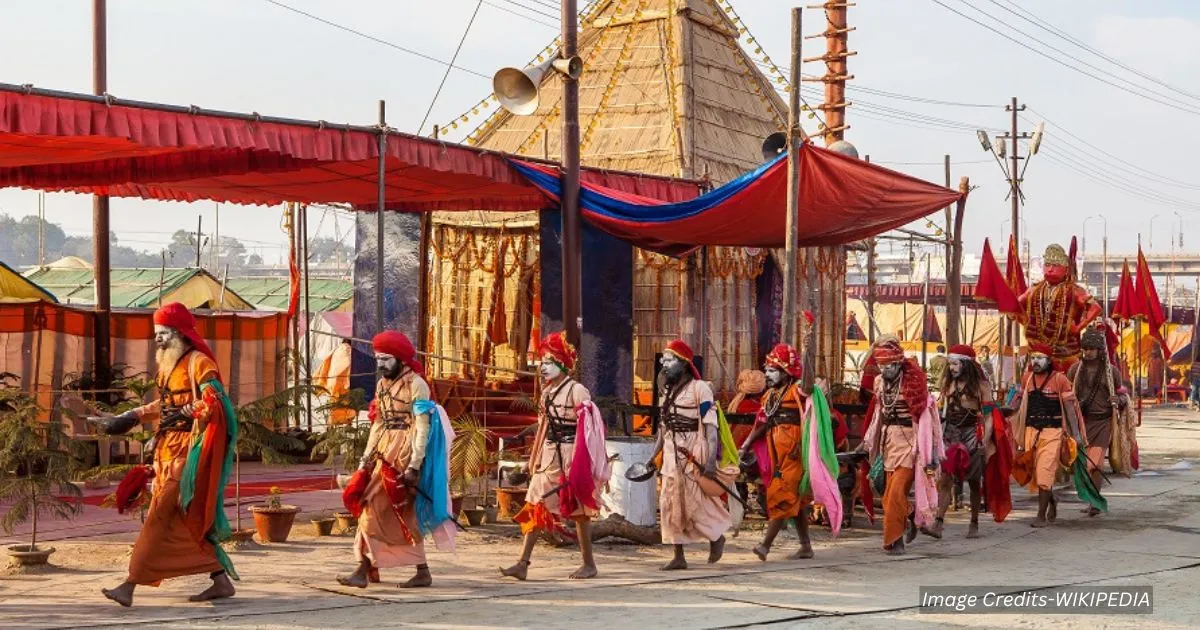
Kalpas and Cosmic Cycles
- One Kalpa = one day of Brahma = 4.32 billion years
- Time is divided into Yugas, Manvantaras, and Kalpas
- Events on Earth repeat in cycles of divine recurrence
Maha Kumbh
The Maha Kumbh at Prayagraj occurs once in 144 years — after 12 complete Kumbh cycles.

It represents:
- Renewal of cosmic order
- Rebalancing of universal energies
- Reinforcement of dharma
Thus, Kumbh is not a festival; it is a cosmic repetition of a divine moment.
Regional Origins of the Four Kumbhs
1. Prayagraj
Linked to:
- Hindu trinity
- confluence of Ganga, Yamuna, Saraswati
- references in Kalidasa and Hiuen Tsang
- the earliest known large-scale spiritual gathering
2. Haridwar
Associated with:
- Drops of Amrit falling on the Ganga
- Vedic rituals and river purification traditions
3. Nashik–Trimbak
Connected to:
- Legend of Rāvana performing penance
- Many references in Puranas about the Godavari river
4. Ujjain (Simhastha)
Linked to:
- Jyotirlinga of Mahakaleshwar
- Position of Jupiter in Simha Rashi
- Ancient texts describing Ujjain as the city of cosmic alignment
Cultural and Spiritual Significance of Kumbh
The Kumbh is the world’s largest spiritual gathering because it combines:
- Mythological meaning
- Scriptural authority
- Astronomical timing
- Historical continuity
- Cultural richness
- Ritual purification and spiritual awakening
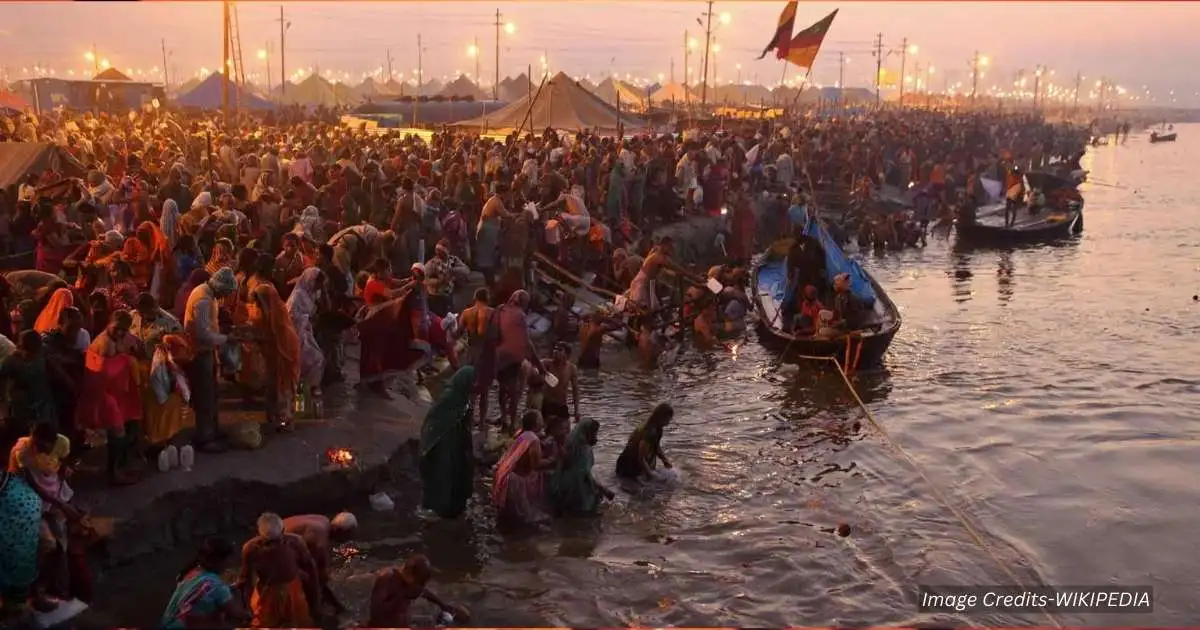
For millions, bathing during Kumbh is believed to:
- Erase past karma
- Purify the soul
- Provide spiritual merit
- Bring one closer to moksha (liberation)
Thus, the Kumbh represents the unity of cosmic time, sacred space, and human devotion.
The story of Kumbh Mela is a fusion of mythology, astronomy, history, and spiritual symbolism. From the churning of the cosmic ocean to Kalidasa’s poetic lines and Hiuen Tsang’s eyewitness notes, the Kumbh stands as a powerful testament to India’s unbroken spiritual tradition. To explore its deeper roots, read more about ancient Hindu cosmology and cyclical time that shaped the very foundation of the Kumbh Mela’s divine timing.
It is not just the story of a festival — It is the story of time, faith, and the eternal search for immortality.
FAQs
1. What is the meaning of Kumbh?
Kumbh means a pot or vessel in Sanskrit. It symbolizes creation, life, and the Amrit Kalash from Samudra Manthan.
2. What is the story of Kumbh Mela?
Its origin comes from the Samudra Manthan legend and early scriptural references in the Rigveda, Puranas, and historical accounts by Hiuen Tsang.Scholars trace this lineage through ancient Vedic and Puranic texts that describe how divine nectar, cosmic alignment, and human faith converged to create the world’s largest spiritual gathering.
3. Why is Kumbh Mela celebrated every 12 years?
The 12-year cycle is based on the movement of Jupiter, which takes 12 years to complete one revolution.
4. Which four cities host the Kumbh Mela?
Prayagraj, Haridwar, Nashik-Trimbak, and Ujjain.
5. What is Maha Kumbh?
The Maha Kumbh occurs once every 144 years, after 12 ordinary Kumbh cycles.
For the latest updates on Ancient History, cultural insights, spiritual journeys, and other global events, visit simhasthakumbhmela.com first.
What are your thoughts on the meaning of “Kumbh” and its connection to the Kumbh Mela? Share your views in the comments below and don’t forget to share this article with others!

