


The Legendary Origins of the Kumbh Mela are rooted in ancient stories, cosmic symbolism, and timeless mythological events that shaped India’s spiritual landscape.
Before Kumbh became a physical gathering on Earth, it was a celestial story—a divine drama involving gods, demons, immortality, the cosmic ocean, and the battle between dharma and adharma.
This article decodes the mythological backbone of Kumbh Mela, the symbolism of the sacred Kumbha (pot), the meaning of Amrit, the celestial chase of the gods and demons, and the cosmic geography behind the four sacred cities.
It is the story that explains why Kumbh exists, why it is sacred, and why millions still gather under the same sky to repeat the same cosmic memory.
What Does “Kumbh” Symbolize? The Mythic Pot of Creation
The word Kumbh means pot or pitcher, but in the Hindu imagination, it represents something far greater:
- The womb of creation
- A vessel of divine consciousness
- The Amrit Kalash holding the nectar of immortality
- The balance of cosmic elements—earth, water, fire, air, sky
In spiritual iconography, the Kumbha contains:
- Water (creation)
- Leaves (life)
- Gold (divinity)
- Thread (cosmic order)
- Nectar (immortality)
It is considered a microcosm of the universe. This is why the most important element of the Kumbh Mela is not the crowd, not the river— It is the Kumbha of Amrit, the pot that held the nectar of immortality.
The Central Legend: Samudra Manthan — The Cosmic Churning
The heart of the Legendary Origins lies in the Samudra Manthan, one of the greatest cosmic events described in:
- Bhagavata Purana
- Vishnu Purana
- Mahabharata
Why the Gods Needed the Nectar of Immortality
The devas lost their strength after Sage Durvasa’s curse. The asuras (demons) began to overpower them. To restore cosmic balance, Lord Vishnu advised the gods:
“To churn the ocean of milk with the demons and obtain Amrit, the nectar of immortality.”
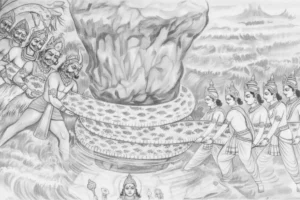
The Cosmic Churning Begins
- Mount Mandara was used as the churner
- The serpent Vasuki acted as the rope
- The devas held the tail, and the asuras held the hood
- Vishnu incarnated as Kurma (Tortoise) to support the mountain
The churning produced:
- Halahala poison
- Kamadhenu
- Airavata
- Kaustubha
- Goddess Lakshmi
And finally—the Amrit Kalash, the divine pot holding immortality.
The Battle for the Amrit: A Divine Chase Across the Universe
As soon as the Amrit Kalash appeared:
- The devas wanted it for restoring cosmic order
- The asuras wanted it for power
A fierce celestial struggle began.
The Devas Escape With the Pot
The devas snatched the Kumbha containing Amrit and fled. The asuras chased them across heaven, earth, and cosmic skies.
This chase lasted 12 divine days.
1 divine day = 1 Earth year, so the chase lasted 12 Earth years— the reason Kumbh Mela follows a 12-year cycle.
The Four Sacred Drops: How the Earth Became a Part of the Legend
During the chase, according to Puranic tradition, four drops of Amrit fell on Earth at four riverside locations:
- Prayagraj – at the Triveni Sangam
- Haridwar – on the banks of the Ganga
- Nashik – on the Godavari
- Ujjain – on the Shipra river
These four places became the permanent seats of the Kumbh.
Every Kumbh Mela reenacts the moment when nectar touched these lands.
Why Each City Has Its Own “Legendary Connection”
1. Prayagraj – Where Creation Begins
According to mythology:
- The first drop fell here
- Brahma performed the first yajna at this site
- The confluence of Ganga, Yamuna, Saraswati is considered the navel of the universe (Brahma Nabhisthan)
Prayagraj is the most ancient and sacred Kumbh site.
2. Haridwar – Where Immortality Meets the Ganga
The nectar fell on the lap of the Himalayas here. This location symbolizes:
- Purification
- Liberation
- The sanctity of the Ganga
Haridwar’s Kumbh is associated with divine cleansing and rebirth.
3. Nashik – Where Rāvana’s Story Intersects the Kumbh
Nashik’s connection is tied to:
- Rāvana worshipping Lord Shiva
- Legends involving the Godavari
- Amrit falling near Panchavati
This makes Nashik’s Kumbh both mythological and historical.
4. Ujjain (Simhastha) – The Kumbh of the Zodiac Lion
Ujjain’s Kumbh is unique because it is linked to Leo (Simha).
Here, the Amrit drop is believed to have fallen in the city of Mahakal, where:
- Shiva protects time
- Astral energies align
- Jupiter enters Simha Rashi (Leo), triggering the Simhastha cycle
Ujjain is the cosmic center of time, making its Kumbh astrologically important.
Why 12 Years? The Astronomical Logic Behind the Legend
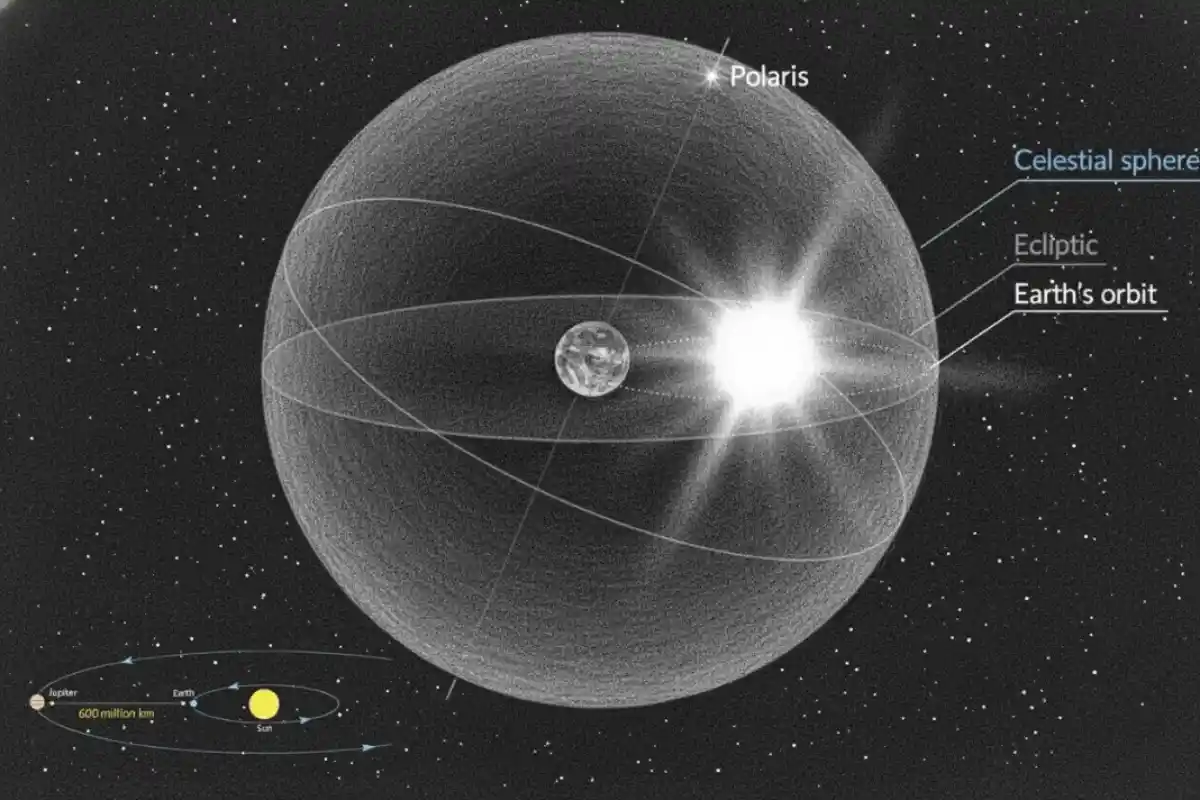
The Samudra Manthan story hides a deeper astronomical truth:
- Jupiter (Guru) takes 12 years to orbit the Sun
- The Sun shifts zodiac signs every 30 days
- Kumbh is held when Guru + Surya + Moon align over the rivers where nectar fell
This transforms myth into celestial science.
The Deeper Meaning of the Amrit: What Does “Immortality” Symbolize?
“Amrit” is often mistaken as a physical nectar. In spiritual symbolism, Amrit represents:
- Wisdom
- Self-realization
- Liberation
- Knowledge of the eternal Self
Kumbh Mela reenacts the inner search for immortality. The nectar drop falling on Earth symbolizes that: Immortality is accessible to human consciousness through purity, pilgrimage, and knowledge.
Why the Churning Happened: The Universal Message Behind the Legend
The legend teaches a powerful spiritual philosophy:
1. The ocean = human consciousness
2. The mountain = the mind
3. The serpent = desire
4. The poison = ego and negativity
5. The nectar = truth and liberation
The journey of churning represents the journey of inner transformation. This is why millions gather at the Kumbh—not for mythology, but for self-renewal.
The Role of Gods and Demons: Symbolism of Duality
Devas and Asuras are not just beings—they are forces inside every human:
- Asura = ego, anger, greed
- Deva = purity, discipline, devotion
Churning symbolizes the struggle inside every human mind. The lesson: Only through discipline and inner effort can one attain the nectar of wisdom.
The Cosmic Geography of the Four Drops
Ancient seers believed that spiritual energy lines (nadi, leylines) intersect at four places on Earth. Where these energy flows meet rivers, the drops of nectar are believed to have landed.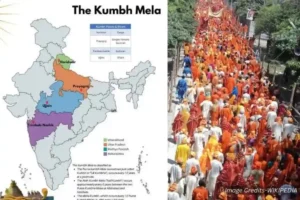
These cities were selected not randomly, but due to:
- Astronomical importance
- Geographical energy points
- Ancient pilgrim routes
- Scriptural wisdom
This is why Kumbh is not held elsewhere.
Why Kumbh Is Called “Cosmic Memory on Earth”
Every Kumbh Mela is seen as a reenactment of the celestial chase.
- The bathing ritual symbolizes receiving Amrit
- The gathering symbolizes unity of seekers
- The timing matches the ancient cosmic alignment
The festival keeps the myth alive in human consciousness.
Role of Mahadev in the Legendary Origins
Although Vishnu leads the Samudra Manthan story, Kumbh’s deeper spiritual power comes from Shiva:
- Shiva drank the poison Halahala
- He protected creation from destruction
- His neck became blue—Neelkantha
- He is the lord of time (Mahakal) in Ujjain
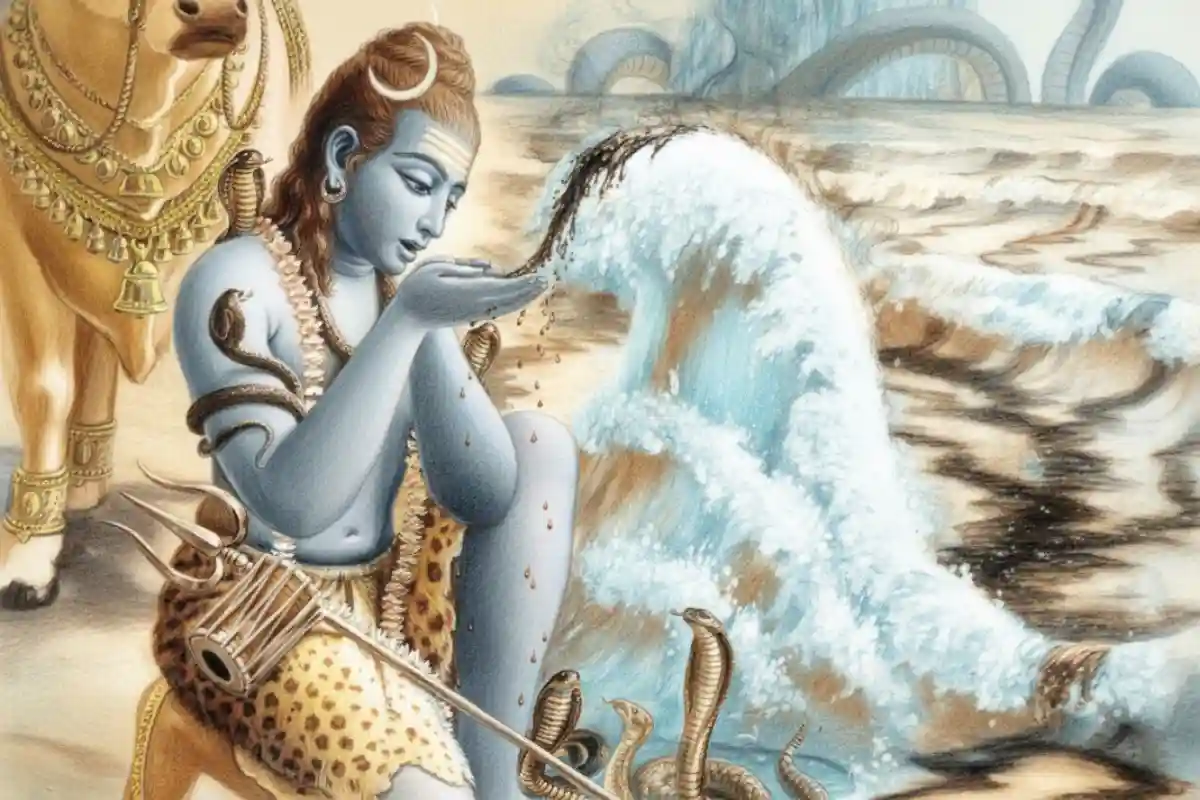
This is why Ujjain Kumbh is intensely associated with Shiva’s cosmic play.
The Purpose of Kumbh in Human Life
The legends point to one central truth: Kumbh is a pathway to inner immortality, not physical immortality.
People visit the Kumbh to:
- Cleanse mind and soul
- Release karmic burdens
- Practice devotion
- Connect with saints and gurus
- Realign with cosmic cycles
The “nectar” is symbolic of the state of enlightenment.
The Legend Lives Through the People
The Legendary Origins of the Kumbh Mela are not just stories. They are cosmic metaphors, astronomical wisdom, and spiritual teachings woven into one.
The Kumbh survives because people continue to relive the cosmic story every time they take a holy dip.
It is the only event on Earth where:
Myth
- Time
- Astronomy
- Geography
- Human devotion
all come together to create something eternal.
The Kumbh survives because people continue to relive the cosmic story every time they take a holy dip. It remains a timeless convergence of faith, mythology, and cosmic order — where every seeker reenacts the celestial search for immortality through purity and devotion. To understand its deeper roots, explore the Samudra Manthan narrative and the spiritual symbolism of Amrit that forms the foundation of the Kumbh’s divine legacy.
FAQs
1. What is the legendary origin of the Kumbh Mela?
It comes from the Samudra Manthan story, where gods and demons fought for the Amrit Kalash, and drops of nectar fell at four locations.Ancient scriptures and Puranic traditions in Hindu cosmology describe how this celestial event gave rise to Earth’s holiest gatherings at Prayagraj, Haridwar, Nashik, and Ujjain.
2. What does the Kumbh symbolize?
It symbolizes the cosmic pot of creation filled with immortality, purity, and divine wisdom.
3. Why did Amrit fall at four places?
During the divine chase, four drops fell on Earth at Prayagraj, Haridwar, Nashik, and Ujjain—making them sacred.
4. What is the deeper meaning of Amrit?
Amrit represents the essence of immortality—spiritual liberation, not physical eternal life.
5. Why do millions gather at Kumbh?
People believe that bathing during Kumbh aligns them with cosmic energies, purifies karma, and grants spiritual merit.
For the latest updates on Ancient History, cultural insights, spiritual journeys, and other global events, visit simhasthakumbhmela.com first.
What are your thoughts on the meaning of “Kumbh” and its connection to the Kumbh Mela? Share your views in the comments below and don’t forget to share this article with others!