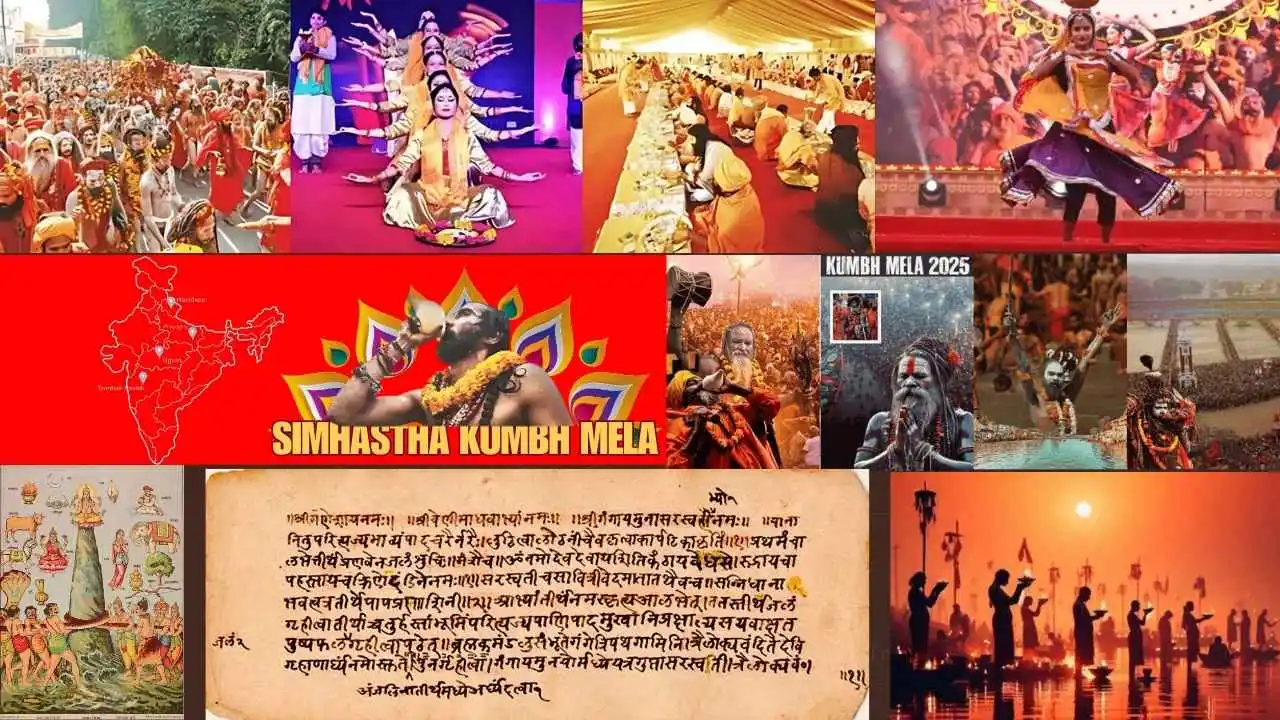


The Kumbh Mela is not just a festival; it is the world’s oldest continuous spiritual gathering, a living tradition that has evolved for more than 3000 years. From Vedic references to medieval descriptions, from Mughal-period observations to British-era documentation, and finally to modern-day grand organization, the history of the Kumbh represents the unbroken spiritual heritage of India.
This master page explains why the ‘History of Kumbh’ is so huge, how it evolved across civilizations, and how its myths, legends, rituals, and akharas shaped one of the most iconic gatherings in human civilization.
What Makes Kumbh the Oldest Living Tradition
The Kumbh Mela stands apart as a civilizational phenomenon. Its antiquity, continuity, scale, and spiritual depth make it unique in the world.
1. Ancient Origins
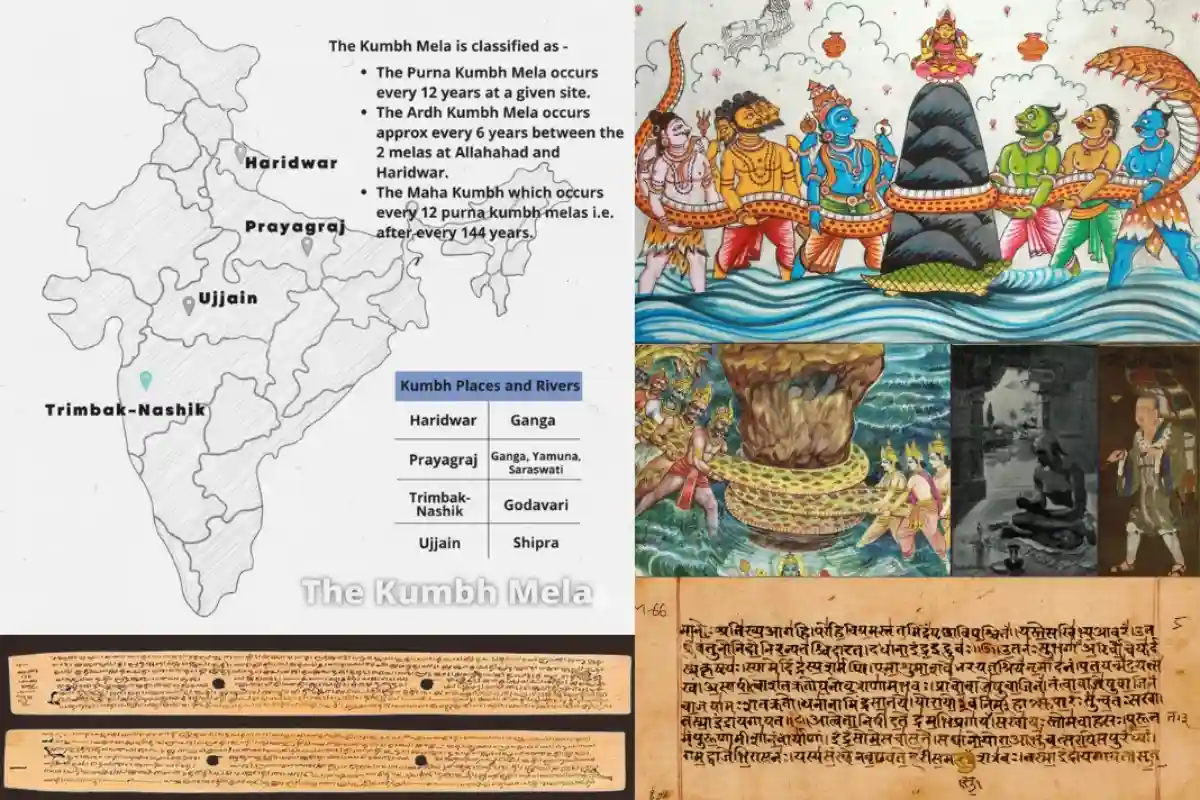
Earliest references to ritual bathing during auspicious planetary alignments occur in the Rigveda, which speaks of purification through sacred rivers. Later texts like the Mahabharata, Bhagavata Purana, and Vayu Purana detail the cosmic legend of the Samudra Manthan, linking the Kumbh (‘pot of nectar’) with divine events.
2. Mention Across Eras
The Kumbh tradition remained alive across dynasties:
- Mauryan Period (321–185 BCE): Pilgrimage routes and river traditions flourished.
- Gupta Period (320–550 CE): First large-scale record of astronomical gatherings.
- Harsha Period (7th century CE): Chinese traveller Hiuen Tsang (Xuanzang) describes a massive congregation in Prayaga.
- Medieval Era: Expansion of Akharas, Naga sanyasis, Vaishnav and Shaiv paramparas.
- Mughal Period: Despite political variations, pilgrimages continued.
- British Era (1800s): First formal administrative records, crowd management manuals, and large-scale documentation.
3. Continuity of Faith
No other festival has such unbroken continuity. Every 12 years, across millennia, lakhs to crores of devotees gather for the act of spiritual purification.
Overview of the 3 Clusters
This pillar page links to your three major clusters that together explain the entire history narrative.
The Story of Kumbh
This cluster explains how the Kumbh narrative evolved across time. It begins with the meaning of the word “Kumbh”, its symbolism in Hindu cosmology, and the earliest references in Vedic and Puranic literature. It covers the development of the tradition across dynasties — from the Vedic age to the Gupta age, from Harsha’s era to British documentation — showing how the Kumbh transformed from scattered ritual gatherings into a structured, astronomical, pan-Indian tradition.
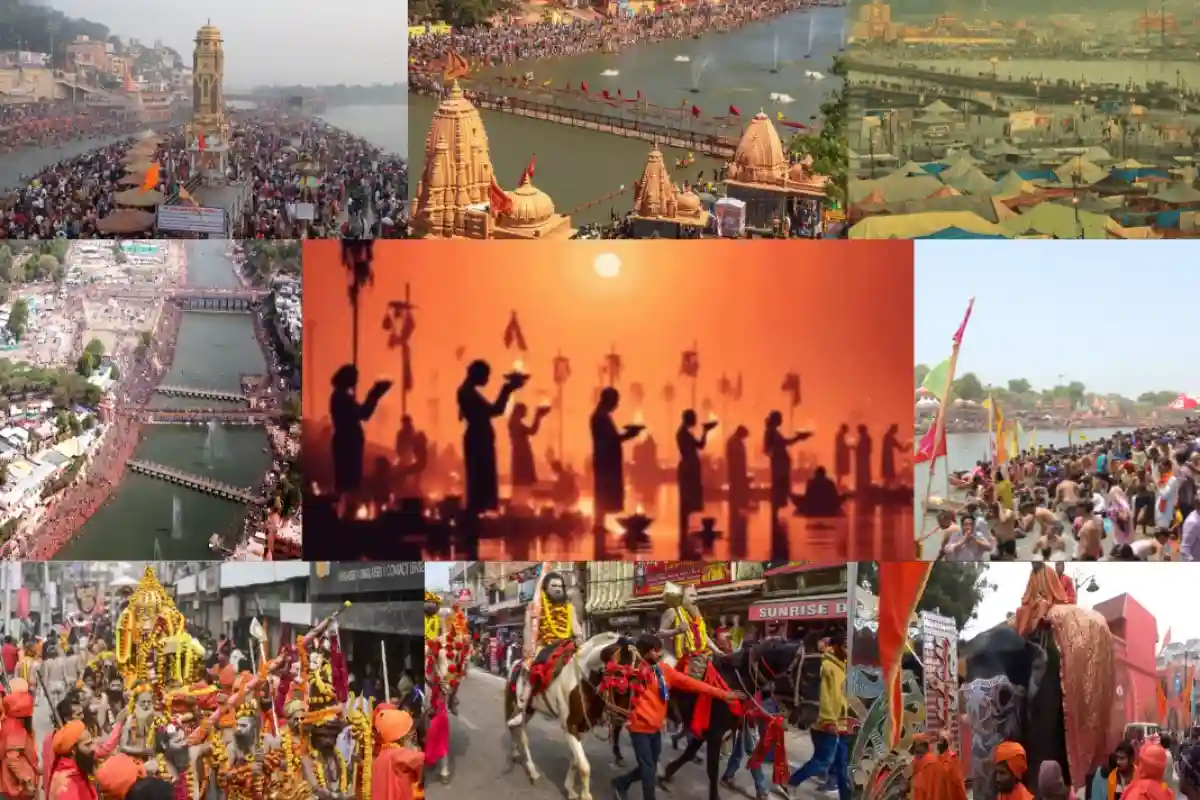
You will learn how bathing rituals (Snan), the significance of planetary alignments, and the emergence of pilgrimage routes shaped the Kumbh over centuries. This cluster establishes the historical backbone of the event.
Legendary Origins
This cluster explores the mythological foundations of the Kumbh Mela. It examines the grand cosmic episode of Samudra Manthan, the battle between devas and asuras, and the significance of the Nectar Pot (Amrit Kalash). It explains how drops of nectar sanctified the four Kumbh cities — Prayagraj, Haridwar, Ujjain, Nashik — giving each its divine identity.

The cluster also covers the astrological science behind the Kumbh: why it occurs at specific planetary alignments involving Jupiter, Sun, and Moon. It merges cosmology, astronomy, and mythology into one framework, offering readers a deep understanding of how belief and celestial science come together.
Chapters of Faith
This cluster focuses on the living spiritual traditions that define the Kumbh. It covers the daily rituals, royal baths (Shahi Snan), Parikrama paths, Akhara processions, and the role of Naga sadhus, Mahants, Acharyas, and Shree Mahants.
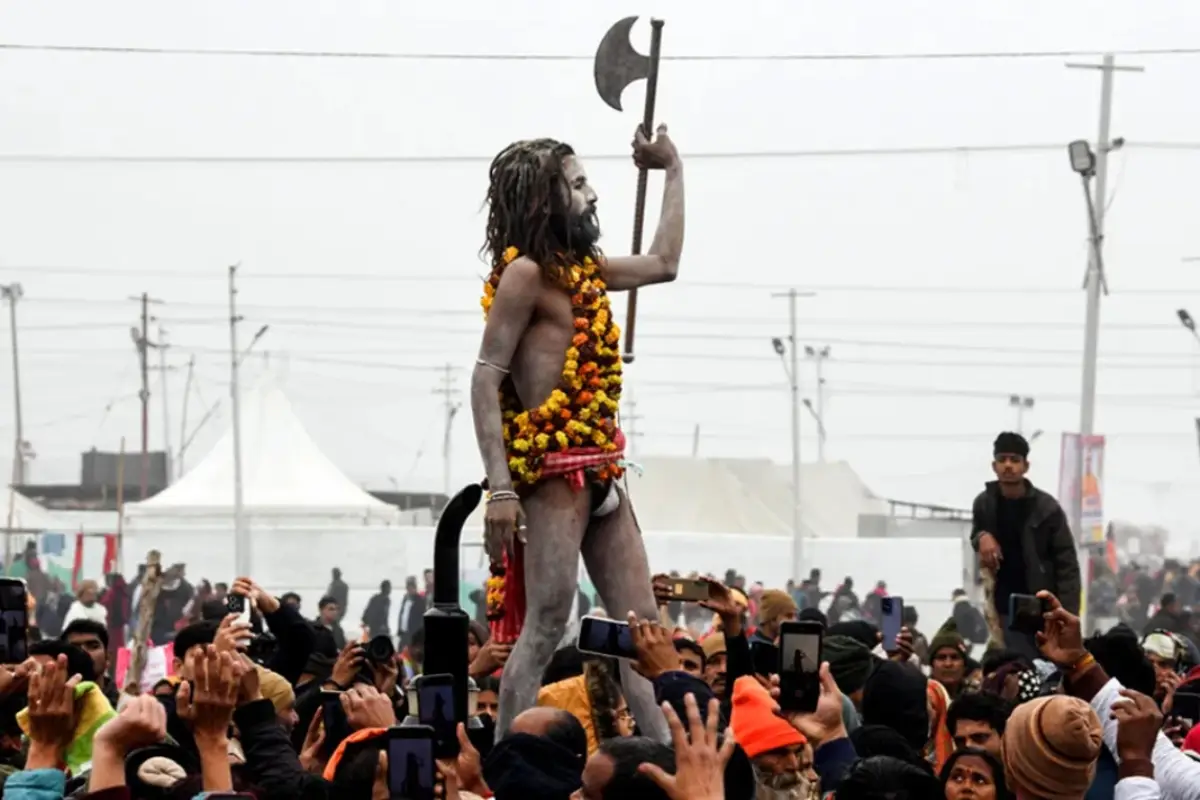
It explains how the spiritual energy of the Kumbh is maintained through ancient practices like Aarti, Yajnas, Homas, Deep Daan, Ganga/Shipra worship, and the Peshwai procession marking the formal arrival of Akharas. This cluster highlights how devotion, discipline, and thousands of years of parampara form the ‘living chapters’ of the Kumbh.
Timeline of Kumbh Mela
A clear historical progression connecting Ancient → Medieval → Colonial → Modern India.
1. Ancient Era (1500 BCE – 500 CE)
- Rigveda mentions river purification rituals.
- Early pilgrimage concepts form.
- Astronomical gatherings begin in Gupta period.
2. Early Medieval Period (500–1200 CE)
- Kalidasa’s works refer to sacred rivers and ritual bathing.
- Hiuen Tsang (Xuanzang) documents a major congregation at Prayaga during King Harsha’s time.
- Philosophical and spiritual orders expand.
3. Late Medieval Period (1200–1700 CE)
- Expansion of Akharas under Shaiv, Vaishnav, and Udasi traditions.
- Formation of Naga sanyasi warrior groups.
- Establishment of royal bath procession order.
4. Mughal Period (1526–1857)
- Despite political fluctuations, pilgrimages continue.
- Mughal chronicles mention large crowd gatherings.
5. British Period (1857–1947)
- First administrative manuals for Kumbh.
- Introduction of crowd management, sanitation planning.
- Gazetteers and British surveys document scale and rituals.
6. Modern India (1947–present)
- Massive expansion in infrastructure.
- Scientific crowd management.
- UNESCO recognition (Intangible Cultural Heritage aspects acknowledged globally).
- 2016 Ujjain and 2019 Prayagraj Kumbh set new benchmarks.
- Digital management, environmental protocols, global participation.
Academic & Scriptural References
1. Scriptural Sources
- Rigveda: Purification and sacred rivers.
- Bhagavata Purana: Story of Samudra Manthan.
- Vayu Purana & Matsya Purana: Early references to ritual gatherings.
- Mahabharata: Pilgrimage significance.
2. Classical & Literary Sources
- Kalidasa’s Raghuvamsa: Descriptions of sacred river traditions.
- Puranic Cosmology explaining Amrit, Kumbha, and celestial alignments.
3. Historical & Travel Accounts
- Hiuen Tsang (Xuanzang): Describes large Prayaga gatherings in 7th century.
- Al-Biruni: Notes Indian bathing festivals.
- British Gazetteers (1800s–1900s): Administrative descriptions.
4. Government & Academic Sources
- Archaeological Survey of India (ASI) studies on ancient pilgrimage routes.
- UNESCO documentation recognizing India’s intangible heritage.
- Indian Council of Historical Research (ICHR) papers on Kumbh origins.
- State Government reports on Simhastha, Maha Kumbh, Ardh Kumbh.
- Scholarly works from BHU, Oxford, and other universities.
Why the History of Kumbh Is Huge
A final summary section to strengthen your pillar.
The Kumbh Mela’s history is vast because it merges mythology, astronomy, spirituality, politics, tradition, and human devotion. No other festival in world history demonstrates:
- 3000+ years of uninterrupted continuity
- A mix of cosmic mythology + scientific astronomy
- A living monastic system (13 Akharas)
- A structured tradition across 4 sacred cities
- Mass participation scaling from lakhs to crores
- Cross-dynasty survival from Vedic times to modern India
It is a living archive of India’s spiritual, cultural, and civilizational memory that scholars continue to study through government records on cultural preservation
FAQ
Q1. What is the historical origin of Kumbh Mela?
The Kumbh Mela traces its roots to Vedic-era river rituals and Puranic accounts of the Samudra Manthan, evolving over 3000+ years into a structured spiritual gathering.
Q2. Which ancient texts mention the Kumbh tradition?
Key references appear in the Rigveda, Bhagavata Purana, Vayu Purana, Matsya Purana, Mahabharata, and classical works of Kalidasa.
Q3. Who first documented the Kumbh Mela historically?
The earliest external record is from the 7th-century traveller Hiuen Tsang, who described massive gatherings during King Harsha’s rule in Prayaga.
Q4. How did the Kumbh evolve during the medieval and British eras?
The medieval era saw the rise of Akharas and Naga traditions, while British records formalized crowd management, routes, and administrative planning.
Q5. Why is the Kumbh considered the world’s largest spiritual gathering?
Its unbroken continuity, astronomical timing, massive participation, sacred river rituals, and deep cultural heritage make it unmatched globally.
Explore the Kumbh Mela Chronicles
The Kumbh Mela is not just a festival — it is a 3,000-year continuum of faith, culture and civilization. The following chapters unveil how it evolved through myth, history, and devotion — from its ancient Vedic roots to its modern global scale.
Read on Simhastha Kumbh Mela –- The Story of Kumbh — Understand its Vedic origins and cosmic symbolism.
- Legendary Origins — Explore the Puranic stories and historic turning points.
- Chapters of Faith — Discover the rituals, akharas and royal processions of devotion.
Together, these articles form the complete “History of Kumbh Series” — a comprehensive journey through myth, memory and modernity.